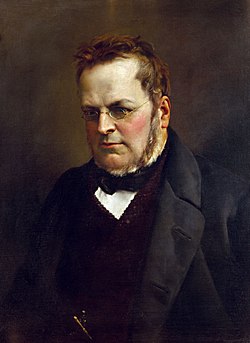
Monument to Camillo Benso Cavour - Bergamo
Europe,
Italy,
Bergamo,
The Monument to Camillo Benso Cavour, a significant work that celebrates one of the key figures of the Italian Risorgimento, was inaugurated in 1881. This monument testifies to Cavour’s crucial role in the struggle for national unity. Its presence here, in Piazza Cavour, reflects the importance that Bergamo places on historical memory and the progress of the country. As we observe it, we delve into not only the artistic beauty of this structure but also its historical roots and the context in which it is situated.Origins and HistoryTo understand the significance of the monument, it is useful to explore the historical context in which it exists. Camillo Benso Cavour, born in 1810, was a prominent politician and statesman in the struggle for the unification of Italy. He was the Prime Minister of the Kingdom of Sardinia and played a fundamental role in Italian unification. Cavour distinguished himself for his diplomatic skill and liberal vision, tirelessly working towards the modernization of the country.The idea of erecting a monument dedicated to Cavour emerged shortly after his death in 1861. However, it was only in 1881, after a long process of design and fundraising, that the foundation stone was laid. The monument was designed by the sculptor Giovanni Battista D’Albertis, an artist who had other important commissions in the Bergamasca region. This sculpture is not only a tribute to the great statesman but also a symbol of the national aspirations of a tumultuous era.The construction of the monument involved several phases and extended over several years. The inauguration in 1881 represented not only a moment of celebration for Cavour but also an occasion for reflection on national unity and the future of the country. The work was completed thanks to the contributions of many citizens, thus representing a collective affection towards Cavour’s figure and his legacy.After its erection, the monument has undergone various restorations. The most significant interventions took place in the 20th century to preserve the beauty of the stone and the sculptures that adorn it. Today, the monument stands before us as a testimony not only to the art of the time but also to a crucial moment in Italian history.What to Observe, in OrderAs we approach the monument, the first thing that strikes us is its imposing facade. In the center, the figure of Cavour stands out, portrayed with a serious and determined expression that reflects his role as a leader. The statue, approximately three meters high, is made of white Carrara marble, a precious material that enhances the strength and charisma of the character.Now let’s observe the base of the monument. It is decorated with bas-reliefs that represent significant scenes from Cavour’s life. These reliefs depict key moments of his career, such as diplomacy and the political battles that led to the unification of Italy. One relief represents the struggle for freedom, while another illustrates the moment of the proclamation of national unity. These details offer visitors a visual snapshot of Italian history.As we move around the monument, we can notice the Corinthian columns that frame it. This architectural style, characterized by tall and slender columns with decorated capitals, is typical of neoclassicism. This stylistic choice suggests a connection with the art and architecture of ancient Rome, evoking the idea of greatness and power.Now, let us turn our gaze to the surrounding area. The monument is located in a lively square, always animated by citizens and tourists. This strategic position highlights Cavour’s importance within the urban context of Bergamo. From here, we can also admire some historical buildings that surround the square, testifying to the cultural richness of the city.If we wish to explore further, we can approach the rear of the monument, where we find a series of inscriptions. These dedications evoke the impact that Cavour had on Italian history and the gratitude of those who saw his work as fundamental to the country’s progress. The inscriptions are carefully engraved, showcasing the attention to detail that characterizes this work.Finally, let us look up at the sky. The interplay of light and shadow on Cavour’s statue creates a suggestive atmosphere, especially during sunset. This moment allows us to appreciate the monument in a different light, almost as if it were telling its story in a new way.Context and ConnectionsNow that we have explored the monument, it is interesting to reflect on the broader context in which it is placed. Piazza Cavour is a central point in Bergamo, rich in history and culture. Here, visitors can find other significant institutions. In fact, just a short distance from the monument is the Teatro Donizetti, dedicated to the famous Bergamasque composer Gaetano Donizetti. This venue is an important site for cultural events and performances, making the square a vibrant center of artistic activity.Not far away stands the Angelo Mai Civic Library, one of the reference points for culture and research in Bergamo. In addition to housing a rich collection of books, the library works to preserve and promote local cultural heritage. Both of these places testify to a commitment to education and culture that continues to thrive in this part of the city.Finally, if we move towards the Basilica di Santa Maria Maggiore, we can notice how the architectural variety of the area speaks to Bergamo’s historical richness. This basilica is famous for its splendid Baroque interiors and works of art, offering further reflection on the history and culture that characterize our journey.CuriositiesA few curiosities about the monument and its subject can enrich our visit. First, it is interesting to know that the monument also drew attention for its inauguration, which attracted many public figures and citizens to the event. This highlights Cavour’s importance not only in Bergamo but throughout Italy.Secondly, the methods by which the monument was designed reflect an era in which public art was a powerful means of communication. Artists of the time, including D’Albertis, used monuments and statues to convey political and social messages, making people aware of their history.Finally, the monument has undergone various transformations over the years, including restoration work carried out in the 1990s, during which the details of the sculptures were restored to preserve their original beauty.We hope that this visit to the Monument to Camillo Benso Cavour has been interesting and encourages you to further discover Bergamo and its extraordinary beauties. We suggest exploring the nearby Teatro Donizetti and the Angelo Mai Civic Library for an enriching cultural experience. Enjoy your exploration!
Read More