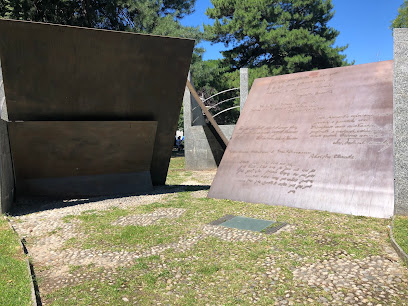
Monument to the European Resistance, Como
Europe,
Italy,
Como,
Welcome to the European Resistance Monument, located in the historic city of Como, a powerful and meaningful symbol that commemorates the value of freedom and resistance during the conflicts of the twentieth century. Inaugurated in 1965, this monument is dedicated to all those who, during World War II, fought against all forms of oppression and discrimination. This site is emblematic not only for its historical significance but also for its role in the collective identity of the city, serving as a landmark that invites reflection on memory and the meaning of freedom. The historical period that led to its creation is crucial for understanding not only the fate of Europe but also that of many citizens of Como who sacrificed their lives for freedom. The European Resistance Monument stands in a very particular context, marked by events that changed the course of history. World War II devastated the European continent and, in particular, Italy, causing a profound sense of crisis and social rupture. After the war, in the fifties and sixties, there was a felt need to honor not only the victims but also the valiant fighters for freedom, and to commemorate the sacrifice of those who fought against Nazi-fascist occupation. The design of the monument was entrusted to the local architect Franco Albini, who conceived a work that deviated from traditional monumental representations. The objective was to create not just a commemorative structure but a place for gathering and reflection. Construction began in 1962 and was completed three years later, with the inauguration taking place on September 15, 1965. The shape of the monument was designed to symbolize resistance and rebirth. Using materials such as granite, Albini succeeded in endowing the monument with a solidity and durability that represent the ideal of a living memory never to be forgotten. Additionally, the monument has been the subject of various restoration and recovery interventions over the years to preserve its structural integrity and significance. In this context, it is interesting to note that the choice of Como is not accidental. This city, located on the border with Switzerland, was an important center of partisan activity and transiting for many resistors during the war. Therefore, the monument stands not only as a tribute to those who fought but also as a beacon of hope and rebirth for all future generations. As you approach the monument, the first thing that strikes you is its majestic facade, which, although seemingly simple, communicates a message of great strength. The tall and slender structure rises above the surrounding landscape, capturing the attention of passersby. Its position, facing Lake Como, creates a visual dialogue with the water, symbolizing a connection between memory and the future. Continuing the visit, we observe the particular use of local granite. This material is not only aesthetically pleasing but also symbolic. In fact, granite represents the hardness and solidity of the values of freedom and justice, which were defended by the partisans. These details are not accidental; the architect wanted to create a work that spoke through its own materiality. Inside the monument, you will find a series of iconographic elements that tell the story of the Resistance. On its walls, names and phrases are engraved that commemorate the fallen and the heroic actions of the resistors. These elements are not merely decorative but serve as a collective memory, inviting visitors to reflect on those who sacrificed their lives for freedom. One aspect that merits attention is the arrangement of the spaces. The choice of an open area around the monument allows visitors to approach and pause, creating a reflective atmosphere. This open design suggests inclusivity and the importance of community in safeguarding historical memory. Moreover, try to notice the play of light and shadow that occurs throughout the day. Natural light interacts with the surfaces of the monument, creating suggestive effects that invite thought and contemplation. The architecture itself becomes a symbol of dialogue between the past and the present, an invitation to remember. Finally, don’t forget to take a look at the surrounding panorama. The view that opens up over Lake Como, with its mountains and the sky reflecting in the waters, represents a powerful contrast to the message of struggle and sacrifice present in the monument. This landscape is an integral part of memory itself; the natural beauties of Como have witnessed and experienced significant historical events, making the monument a place of reflection not only artistic but also existential. The European Resistance Monument is set in an urban context rich in history and culture. The city of Como, overlooking the lake, is known for its artistic and architectural wonders. Just a short walk from the monument, you can visit other institutions that recount local and collective history. One of the main attractions nearby is Villa Olmo, an elegant neoclassical building that houses various exhibitions and cultural activities. This villa, built between 1782 and 1797, has witnessed many historical events and represents another piece of the complex history of Como. Another institution nearby is the Teatro Sociale di Como, inaugurated in 1813, a prestigious venue for music and theater that has hosted great artists over the years. This theater exemplifies how culture can emerge even in times of difficulty and can continue to flourish, just like the message proposed by the monument. Finally, we cannot forget the Silk Museum, which bears witness to the city’s textile tradition. Como silk is famous all over the world, and the museum offers insights into the industrial past of the area, which is closely linked to social struggles and historical changes that have taken place in the region. There are some curiosities that could enrich your visit. Did you know that the European Resistance Monument was designed with the intention of being a gathering place? In fact, architect Albini conceived the spaces to encourage community participation, creating a structure that invites people to reflect together. Additionally, it is interesting to note that the monument is part of a memory pathway that involves other commemorative sites throughout Italy. This demonstrates how the memory of the Resistance is a crucial theme not only for Como but for the entire country. Finally, in 2015, on the occasion of the fiftieth anniversary of its inauguration, the monument hosted a series of events and celebrations that engaged citizens and local institutions, testament to the historical and cultural importance of this place.
Read More