Monumental Cemetery of Milan
Europe,
Italy,
citta,
Porta Volta
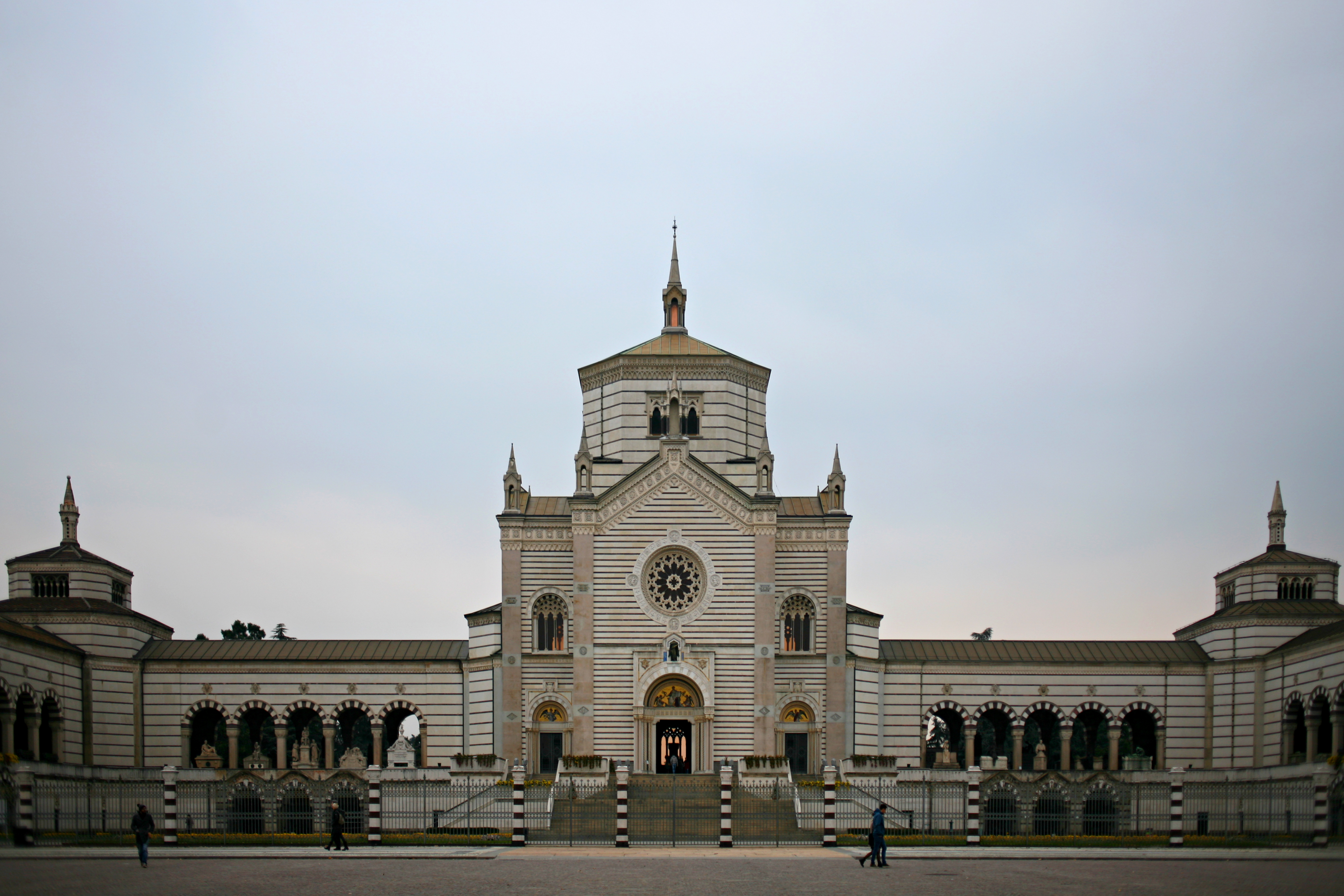
The Monumental Cemetery of Milan is one of the most emblematic and fascinating places in the city, a true open-air work of art that tells the history and culture of Milan through its tombs and monuments. Inaugurated in 1866 and designed by architect Carlo Maciachini, the cemetery covers an area of approximately 250,000 square meters and houses an extraordinary collection of sculptures, obelisks, temples, and chapels, representing a wide range of architectural and artistic styles.
From the beginning, the Monumental Cemetery was conceived as a place that could go beyond the simple function of burial, becoming a true “temple of memory” for the city. Its design reflects the typical eclecticism of the time, combining elements of Gothic, Lombard and Pisan Romanesque, with Byzantine inserts, creating a harmonious and imposing whole. The main entrance is dominated by the Famedio, an imposing neo-Gothic building that houses the tombs of some of the most illustrious personalities in Milanese and Italian history, including Alessandro Manzoni, poet and novelist, author of “The Betrothed”.
Walking through the cemetery, you can admire the chapels of the great Milanese families, true masterpieces of funerary architecture. Each chapel tells a story, not only of the family buried there, but also of Milanese society at the time. The Campari chapel, for example, is one of the most remarkable, with its modern architecture and sculptures celebrating the industrial success of the family that created the famous aperitif. Other examples include the Bernocchi chapel, with its elegant and sober lines, and the Toscanini chapel, dedicated to the great orchestra conductor Arturo Toscanini.
The cemetery is also a resting place for many illustrious figures from the worlds of politics, art, literature, and science. Among these are the tombs of Salvatore Quasimodo, Nobel Prize winner for literature, Filippo Turati, one of the fathers of Italian socialism, and Leo Valiani, historian and politician. The presence of these tombs underlines the importance of the Monumental Cemetery as a place of collective memory, where the lives and works of great Milanese figures are remembered and celebrated.
One of the most fascinating aspects of the Monumental Cemetery is its extraordinary artistic variety. Funerary sculptures range from the realism and eclecticism of the late 19th century, to Art Nouveau and Symbolism of the early 20th century, to the 1930s and the contemporary era. This stylistic diversity reflects the cultural and social changes in Milan and Italy over the centuries. Among the most significant works are the sculptures of Medardo Rosso, Adolfo Wildt, and Giannino Castiglioni, who with their creations have helped make the cemetery an open-air museum.
One of the most curious anecdotes about the Monumental Cemetery concerns the Campari family chapel. The structure, characterized by modern and imposing architecture, is also known for an urban legend that claims it is possible to find a giant bottle of Campari inside, the famous aperitif invented by the family. Although it is just a legend, this anecdote testifies to the cultural and social influence that some of the families buried at the Monumental Cemetery have had on the city of Milan and beyond.
Read More