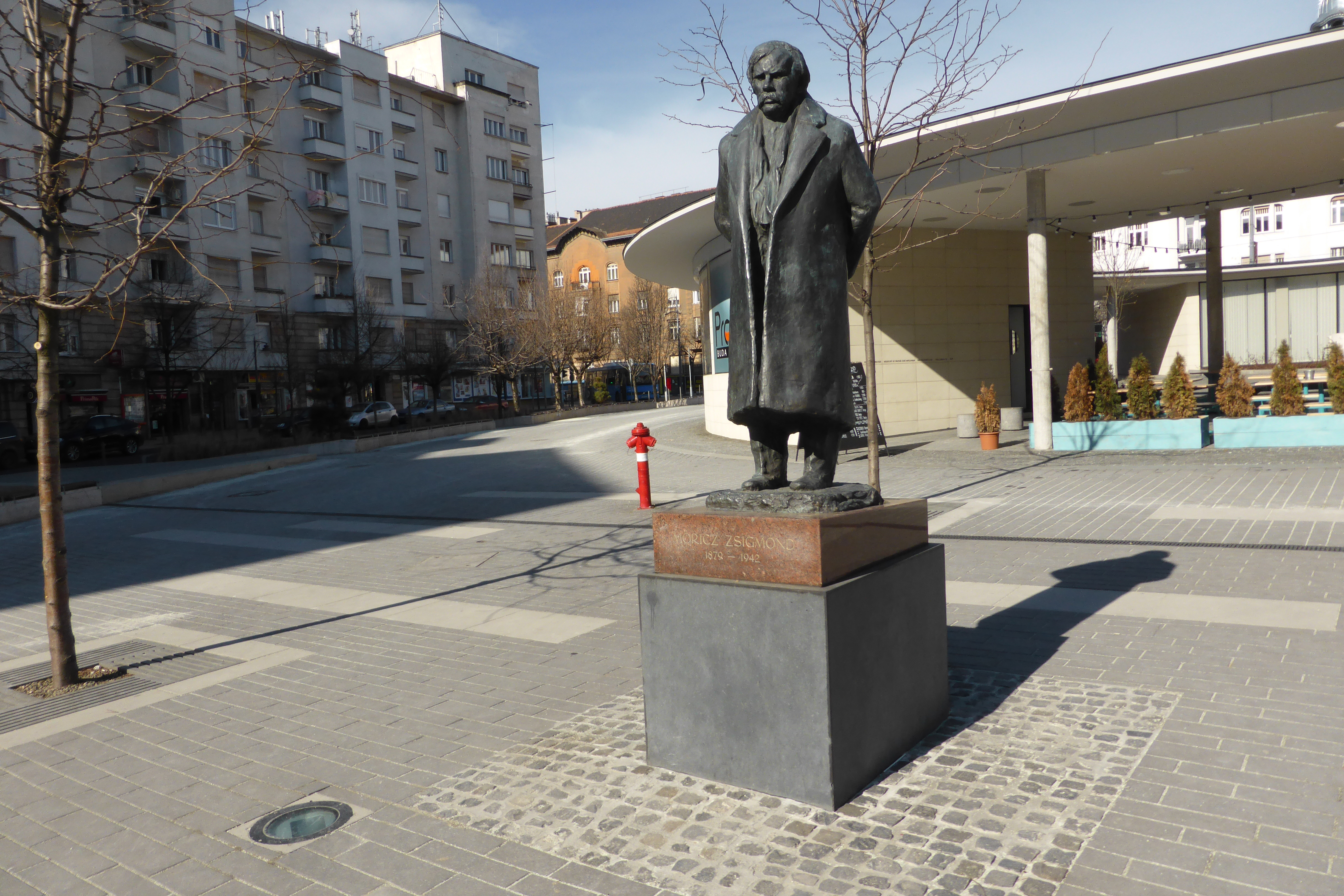
Móricz Zsigmond Square
Europe,
Hungary,
Budapest, citta,
Újbuda
Móricz Zsigmond Square, located in the heart of the Újbuda district in Budapest, represents a significant crossroads in the city’s urban life, intertwining history, culture, and modernity. Named after the famous Hungarian writer Zsigmond Móricz, known for his realistic portrayals of Hungarian rural and urban life, this square is a vibrant transport hub and a place of historical memory.
The history of Móricz Zsigmond Square dates back to the period between the two World Wars, when it was developed as part of Budapest’s urban expansion. Originally named after Miklós Horthy, regent of Hungary, the square was renamed in 1945, reflecting the post-war political changes. During the Hungarian Revolution of 1956, the square was the scene of clashes between rebels and Soviet forces, an event that deeply marked the historical memory of the place.One of the most distinctive elements of the square is the “Gomba” (the Mushroom), a pavilion built in 1942 to serve as the terminal of the HÉV station. This modernist building, designed by József Schall, has been a functional and visual landmark for decades. Originally housing shops and an electrical transformer for the tram network, the Gomba’s function has changed several times over the years, from a railway terminal to a commercial space, and most recently to a cultural and community center after a thorough restoration completed in 2014.The restoration of the Gomba was a significant project, led by the architects of Hetedik Műterem, who preserved the original structural elements while adapting the building to modern needs. The result is an elegant multifunctional space, open on three sides and enriched by a slatted roof supported by circular columns. The restoration included cleaning and restoring the well, adding pebbles and perennial plants in the surrounding area, and creating new spaces for cafes and cultural activities.The strategic location of Móricz Zsigmond Square makes it a crucial node in Budapest’s transportation system. It is served by numerous tram and bus lines, as well as metro line 4, facilitating access to various parts of the city. This constant flow of commuters and visitors contributes to the vitality of the square, which serves as a dynamic and lively meeting point.In addition to its practical function, Móricz Zsigmond Square is surrounded by important thoroughfares such as Bartók Béla út, Villányi út, Fehérvári út, and Karinthy Frigyes út, connecting different areas of the city and offering a wide range of commercial and cultural opportunities. The proximity to the Allee shopping center and Kosztolányi Dezső Square, which houses the picturesque Feneketlen-tó (bottomless lake), adds further appeal to the area, providing green spaces and leisure opportunities just a short walk from the urban hustle and bustle.The square is also a focal point for cultural and social life. Along Bartók Béla út, there are numerous art galleries, cafes, and venues that contribute to creating a vibrant and creative environment. Places like 4 Street Coffee and Wikinger offer ideal refreshment spots for anyone looking to take a break during the bustling activity of the square.The figure of Zsigmond Móricz, after whom the square is named, is celebrated for his contribution to Hungarian literature. His works, including “Légy jó mindhalálig” and “Sárarany,” offer a penetrating insight into Hungarian society of his time, exploring universal themes through the lens of local experiences. His connection to the square is a tribute to his cultural and literary legacy.
Read More