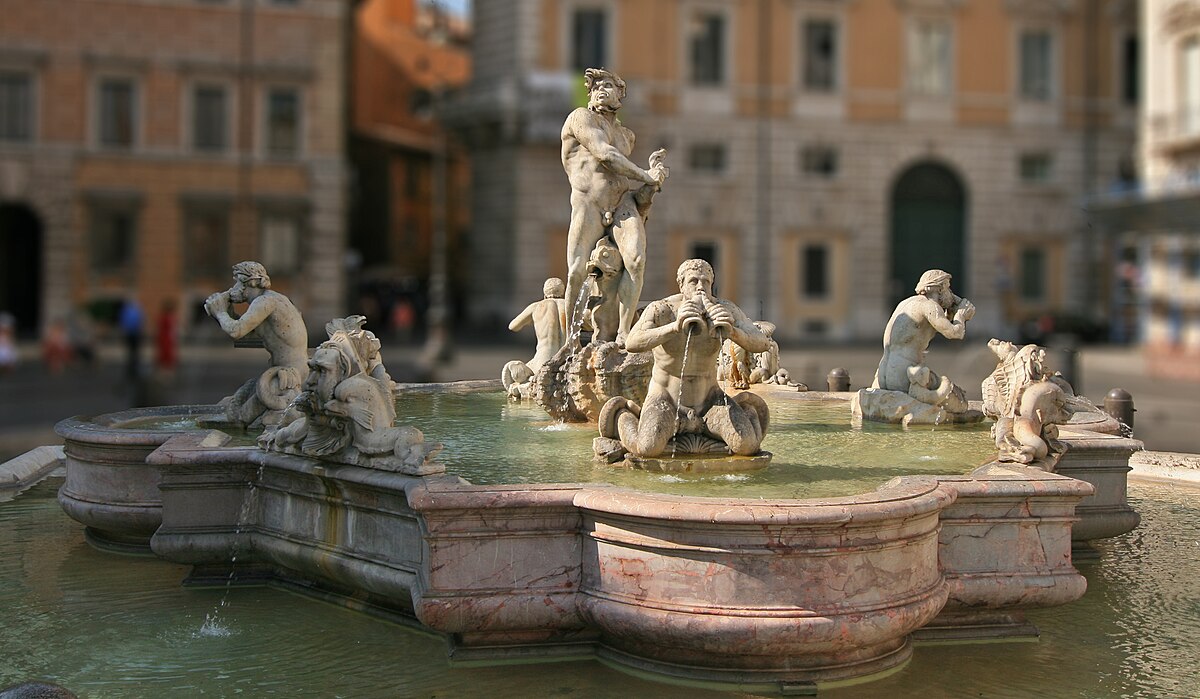
Moro Fountain
Europe,
Italy,
citta,
Rione II - Trevi
The Fountain of the Moor, located in the southern corner of Piazza Navona in Rome, is one of the jewels of Roman Baroque. This fountain, designed by Giacomo della Porta in 1575 commissioned by Pope Gregory XIII, represents a perfect meeting point between Renaissance architecture and the Baroque sculptures that decorate it. Originally, the fountain consisted of a simple rectangular marble basin and four tritons spouting water.
In 1653, Pope Innocent X decided to renovate the fountain and commissioned Gian Lorenzo Bernini to transform it. Bernini, one of the most famous architects and sculptors of the Baroque period, added a statue of a Moor wrestling with a dolphin in the center of the fountain, from which the fountain takes its name. This sculpture, created by Giovanni Antonio Mari, depicts a powerful man of African origin with the typical muscular features of Bernini’s works. Around the central figure, Bernini kept the original tritons but slightly modified them to harmonize with the new central statue.The Fountain of the Moor, along with the Fountain of the Four Rivers and the Fountain of Neptune, helps make Piazza Navona one of the most spectacular urban spaces in Rome. Piazza Navona itself is a masterpiece of Baroque urban planning, built on the site of the Stadium of Domitian, an ancient Roman stadium from the 1st century AD that gave the square its elongated and curvilinear shape. The three fountains, placed in strategic points of the square, not only served to decorate it but also to provide it with drinking water, improving the hygiene conditions and daily life of the inhabitants.The choice of the iconographic theme of the Moor wrestling with the dolphin fits into the Baroque tradition of using exotic and dynamic subjects to surprise and fascinate the viewer. The figure of the Moor is characterized by a vigorous expression and a torsional movement that suggests intense physical effort. This dynamic representation is typical of Bernini’s style, who was a master at capturing movement and emotion in his works.A distinctive element of the fountain is the use of water not only as a decorative element but also as an integral part of the sculpture. The tritons blowing water from their musical instruments and the shells from which water gushes contribute to creating an effect of lightness and fluidity that contrasts with the solidity of the marble. This play of contrasts is another distinctive feature of the Baroque, aiming to create an interaction between the viewer and the artwork through illusion and movement.Over the centuries, the Fountain of the Moor has undergone several restoration interventions to preserve its beauty and structural integrity. One of the most significant restorations was in 1874, when the Municipality of Rome replaced the original triton sculptures, now deteriorated, with copies made by Luigi Amici. The central statue of the Moor was also replaced with a copy, while the original, after careful restoration, was placed in municipal museums to further protect it from the damage of time and weather agents.
Read More