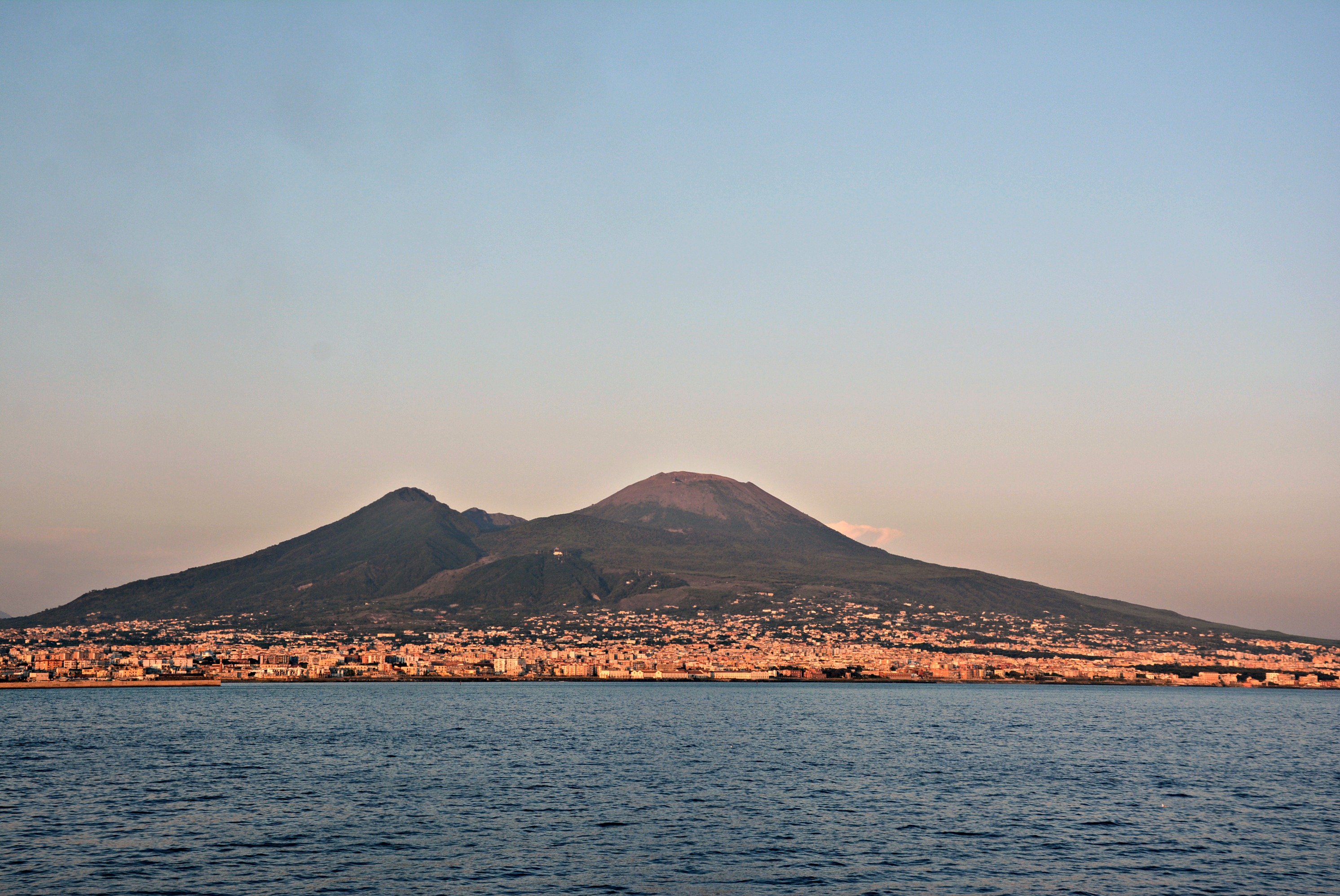
Mount Vesuvius
Europe,
Italy,
citta,
San Sebastiano al Vesuvio
Mount Vesuvius, one of the most famous and studied volcanoes in the world, rises majestically in the Bay of Naples. This active stratovolcano is known for its devastating eruption in 79 AD, which buried the Roman cities of Pompeii, Herculaneum, Stabiae, and Oplontis under a sea of ash and pumice, preserving them for centuries and offering today an extraordinary glimpse into ancient life.
Vesuvius is a complex volcano, composed of a more recent cone, called the Gran Cono, which rises within the caldera of an older volcano, Mount Somma. This formation, known as Somma-Vesuvius, was formed about 17,000 years ago. The valley separating the two cones, the Valley of the Giant, is a testament to the numerous eruptions that have shaped the landscape.
Vesuvius eruptions are characterized by a variety of volcanic styles, ranging from effusive eruptions, with relatively fluid lava flows, to explosive eruptions, which are much more devastating. Explosive eruptions, like the one in 79 AD, are known as “Plinian”, named after Pliny the Younger who described the eruption in one of the earliest historical accounts of a volcanic event. These eruptions generate columns of gas, ash, and rock that can reach tens of kilometers in height and deposit layers of pyroclastic material at considerable distances from the volcano.
In addition to the eruption in 79 AD, Vesuvius has had many other significant eruptions. The eruption in 1631 was particularly destructive, causing thousands of casualties and destroying numerous communities. The last significant eruption occurred in 1944, during World War II, causing significant damage to surrounding villages and Allied military equipment.
Vesuvius represents a constant threat to the populations living on its slopes and nearby. Approximately three million people reside in the metropolitan area of Naples, making Vesuvius one of the most dangerous volcanoes in the world. Italian authorities maintain constant monitoring of volcanic activity and have developed evacuation plans to mitigate risks in case of a future eruption.
Despite its dangers, Vesuvius is also a source of great fertility. Its slopes are covered with volcanic soils rich in minerals, ideal for agriculture. One of the most famous crops is the grapes used to produce Lacryma Christi wine, one of the wine specialties of the region.
Read More