Museum of Alchemists and Magicians
Europe,
Czech Republic,
Prague,
Hradčany
The Museum of Alchemists and Magicians in Prague is a fascinating place that offers visitors a unique glimpse into the mysterious world of alchemy and the occult arts. Located in a historic building in the Malá Strana district, this museum not only tells the stories of famous alchemists and magicians who operated in Prague, but also explores the intersection between science, magic, and myth in the city’s history.
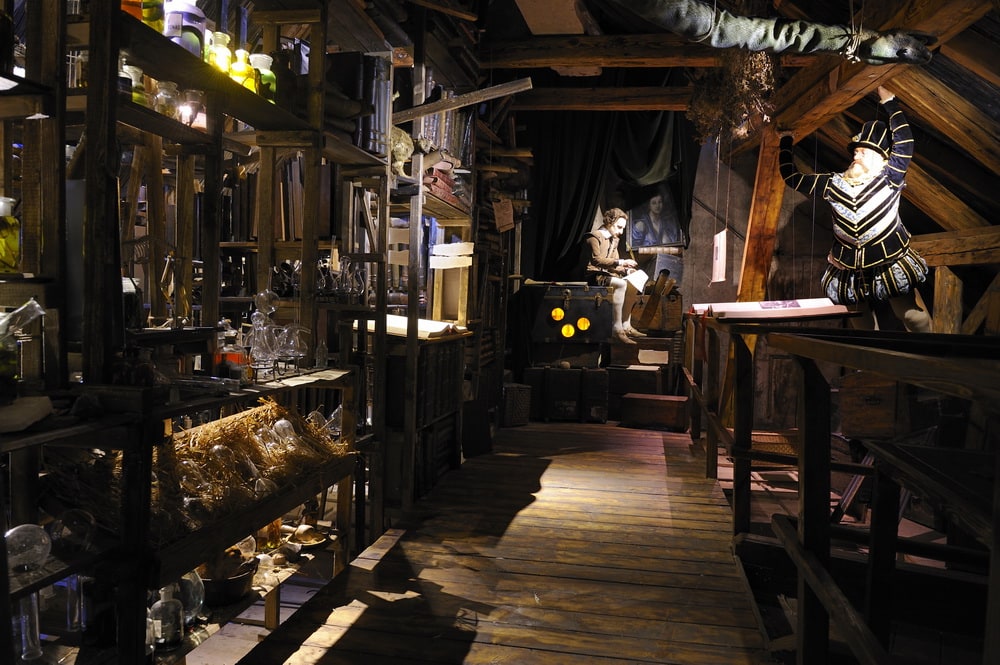
The building that houses the museum is itself a significant piece of Prague’s history. It is said that the alchemist Edward Kelley, known for his association with the famous magician John Dee, lived and worked here in the 16th century. Kelley, an English adventurer and mystic, was a controversial figure, known for his claims of transmuting metals into gold and his esoteric practices. Kelley’s presence in Prague under the patronage of Emperor Rudolf II, a great lover of alchemy and a patron of the arts and sciences, helped make the city a hub for European occultism.The museum is divided into different sections that guide visitors through the history of alchemy and magic. One of the first areas explored is the reconstruction of Kelley’s alchemical laboratory. This room is furnished with tools and equipment used by alchemists of the time, such as stills, furnaces, and jars. The reconstruction provides a vivid idea of what the laboratories where these enigmatic scholars attempted to unravel the secrets of matter and life must have looked like.Another section of the museum is dedicated to alchemy in art and literature. Here, visitors can admire artworks and manuscripts illustrating alchemical symbolism, such as the Ripley manuscripts and paintings depicting the process of the Great Work, the ultimate goal of alchemy aiming to transform lead into gold and seek the elixir of long life. This part of the museum emphasizes the lasting influence that alchemy has had on culture and the collective imagination. An interesting section of the museum examines how many alchemical practices laid the foundation for the development of modern chemistry. Through experiments and demonstrations, visitors can see how alchemical research contributed to the understanding of chemical processes and the discovery of new elements and compounds.The museum also provides an overview of the lives of magicians and alchemists who operated in Prague and its surroundings. Among these, in addition to Kelley and Dee, there is also the famous Rabbi Loew, the legendary creator of the Prague Golem. The legend of the Golem, a creature made of clay and animated by Kabbalistic spells, is one of the most fascinating stories associated with the city and represents a bridge between alchemy and Jewish mysticism.An interesting anecdote concerns Emperor Rudolf II himself, who not only welcomed alchemists and magicians to his court, but was also a practitioner of the occult arts. Rudolf II is often depicted as an eccentric ruler, who devoted much of his reign to the search for immortality and forbidden knowledge. His court in Prague became a center of attraction for scholars and adventurers from all over Europe, making the city a true crossroads of esoteric ideas and practices.The museum is particularly attentive to engaging visitors through interactive experiences. During the visit, one can see practical demonstrations of alchemical experiments and attend presentations explaining the principles behind magical and alchemical practices. This approach makes the visit not only educational but also engaging and fun.
Read More