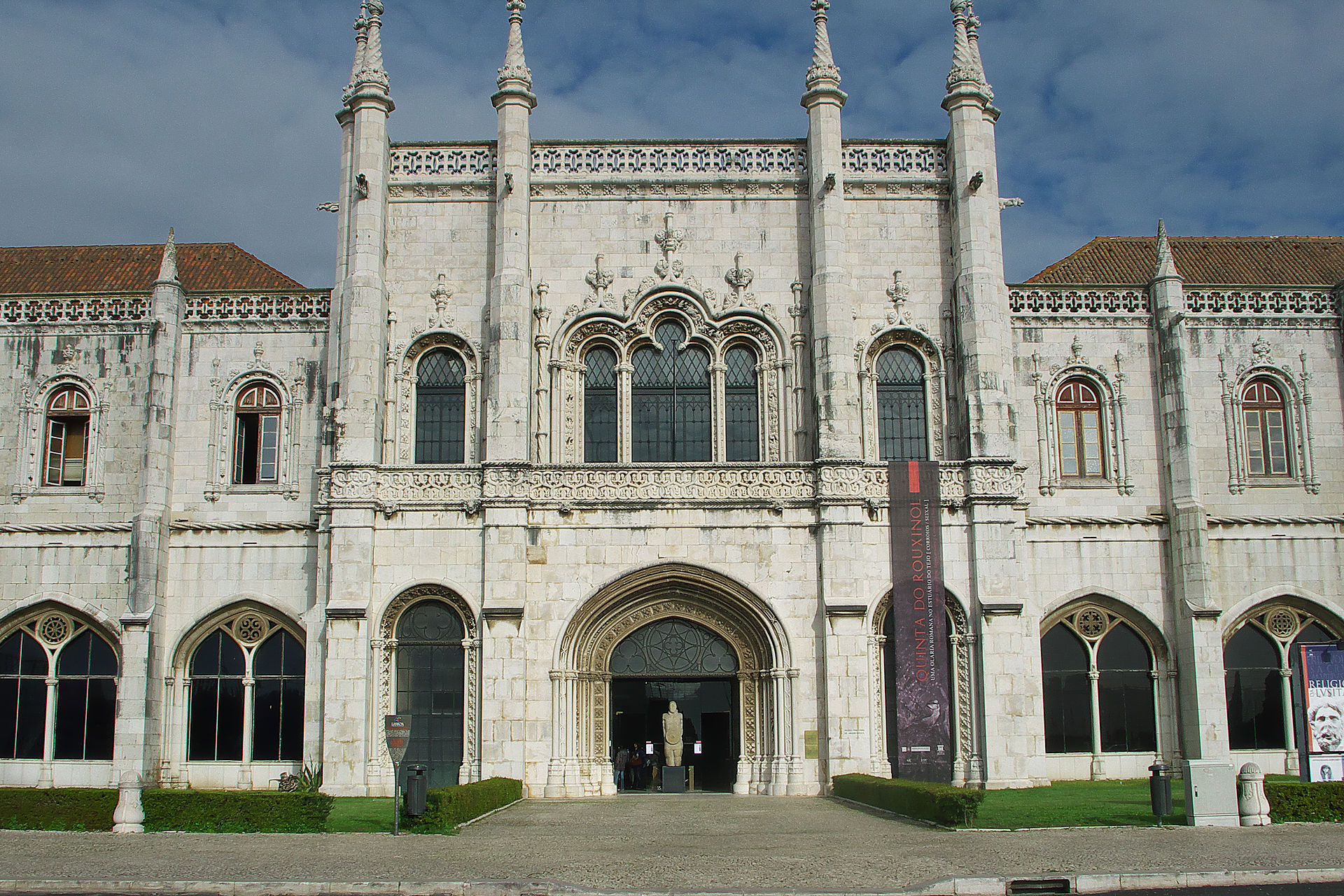
National Museum of Archaeology
Europe,
Portugal,
citta,
Belém
The National Archaeology Museum of Lisbon, founded in 1893 by the archaeologist José Leite de Vasconcelos, is one of the most important institutions in Portugal dedicated to archaeology. Located in the former dormitory of the Jerónimos Monastery, in the Belém district, the museum offers a comprehensive overview of the history and culture of Portugal through its archaeological finds.
The museum’s collection is extraordinarily rich and diverse, including artifacts ranging from the Paleolithic to the Middle Ages. Among the most significant pieces are ancient jewelry, ceramics, sculptures, and mosaics, many of which come from archaeological excavations carried out between 1930 and 1960. The jewelry section is particularly relevant, with over 1,000 pieces of gold jewelry dating from prehistory to antiquity. Among these stand out the treasures of Herdade do Álamo and Baião, as well as the torcs of Vilas-Boas.The epigraphy collection is one of the best in the country, with funerary, votive, and honorary inscriptions covering various historical periods, mainly from the Roman era. These finds offer a glimpse into the life and religious practices of ancient communities. Of particular interest are the inscriptions from the Sanctuary of S. Miguel da Mota, related to the worship of Endovelicus, a pre-Roman deity.The museum also boasts an impressive collection of classical sculptures, including statues of togati from Mértola and an Apollo from Herdade do Álamo. Also of great importance are the sarcophagi from Tróia and Castanheira do Ribatejo, representing a remarkable example of funerary art of the time. Additionally, the collection of Celtic sculptures, such as the “Guerrieri Galleci” and the zoomorphic statues of the “Verraco,” testify to the cultural richness of the pre-Roman period in the Iberian Peninsula.One of the most interesting anecdotes concerns the discovery of numerous Roman mosaics in southern Portugal, especially in the Roman villas of Torre de Palma and Milreu. These mosaics, decorated with scenes from classical mythology, such as the labors of Hercules and the journey of Ulysses, mainly date back to the 3rd century AD and represent one of the most refined examples of mosaic art of the time.The museum also houses a valuable Egyptian collection, including human and animal mummies, decorated sarcophagi, and various everyday objects, offering a fascinating glimpse into the life and beliefs of ancient Egypt. This section is enriched by vintage photographs and other artifacts that contextualize the importance of cultural exchanges between the Egyptian world and other civilizations of the Mediterranean.Located in Praça do Império, the National Archaeology Museum is easily accessible by public transport, such as tram line 15 or the train from Cais do Sodré station. Its location next to the Jerónimos Monastery, a UNESCO World Heritage Site, makes the museum a must-visit for those exploring Lisbon, allowing them to delve into the rich history of Portugal in a historical and cultural context of great charm.
Read More