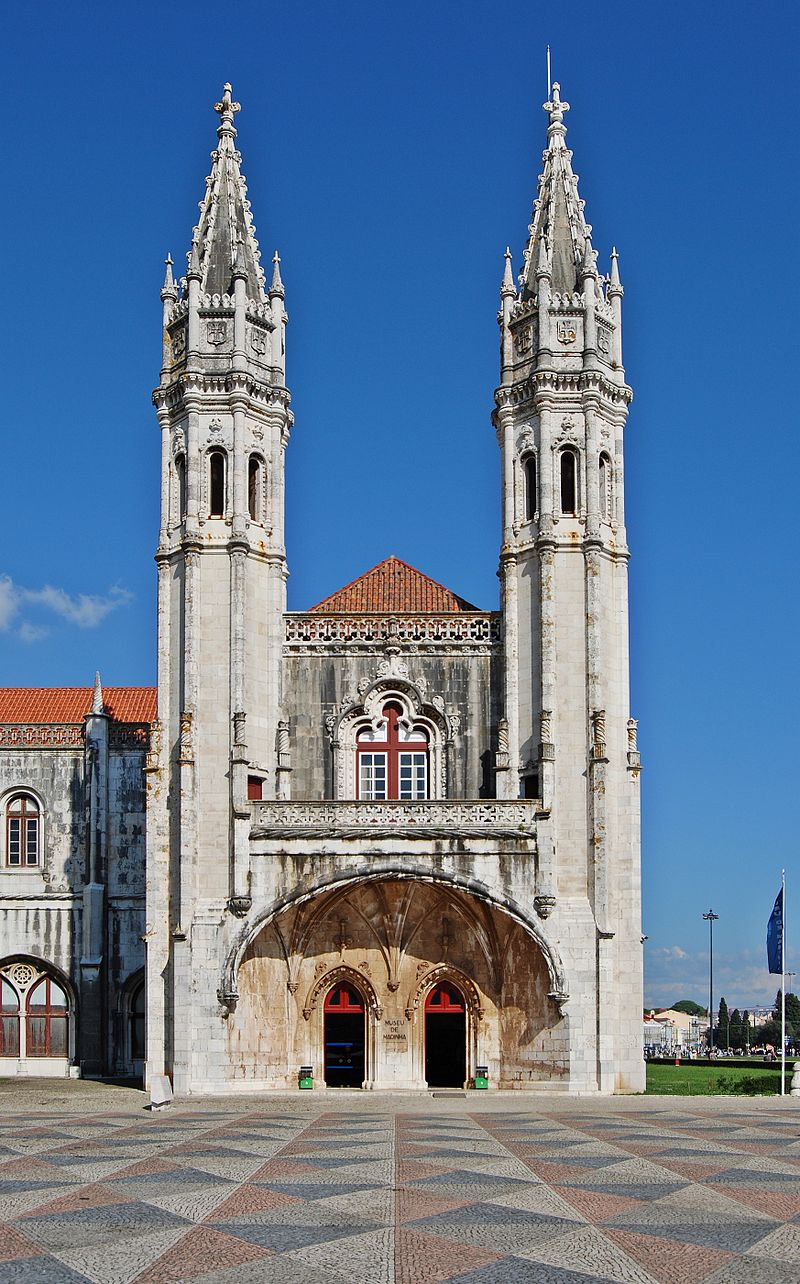
Navy Museum
Europe,
Portugal,
citta,
Belém
The Maritime Museum of Lisbon, located in the west wing of the Monastery of Jerónimos in Belém, is a celebration of Portugal’s rich maritime history. Founded on July 22, 1863 by royal decree of King Luís I, a navy officer, the museum offers a vast collection ranging from Roman times to the present day, with a particular focus on the Age of Discoveries.
Upon entering the museum, visitors are greeted by a series of exhibition rooms that wind through 50,000 square meters, of which 16,050 are dedicated to permanent exhibitions. The museum tour begins with a collection of ship models illustrating the evolution of shipbuilding, both civilian and military. These models are carefully arranged in chronological order, offering a visual journey through centuries of technological progress and innovation.One of the highlights of the museum is the collection of navigation instruments, which includes the largest collection of astrolabes in the world. These instruments, used to measure the height of stars on the horizon, were essential for navigation and represent the ingenuity and expertise of Portuguese navigators. The collection also includes compasses, sextants, and quadrants, each with a unique story to tell.Statues of historical figures linked to Portugal’s maritime history, such as Vasco da Gama, adorn the museum halls. Particularly fascinating is the wooden figure of the Archangel Raphael, said to have accompanied Vasco da Gama on his journey to India. These artifacts are not only works of art, but symbols of an era of exploration and discovery that defined Portugal as one of the world’s leading maritime powers.Another element of great interest is the Pavilhão das Galeotas, which houses life-size reproductions of the boats used by the Portuguese royal family in the 18th century. These beautifully decorated and meticulously reconstructed boats offer a glimpse into the opulent and ceremonial life of the royal court. Among the exhibitions, a library collects ancient texts on astronomy, history, cartography, geography, and arithmetic, as well as maps, plans, and atlases dating back to the 16th century. This rich archive, which includes approximately 120,000 images and 20,000 photographs donated by collector Henrique Maufroy de Seixas, is an invaluable resource for scholars and enthusiasts of maritime history.The museum building itself, a neo-Manueline style annex begun in 1850, adds another layer of historical charm. This architectural style, characterized by intricate decorative details and a sense of grandeur, reflects the golden age of Portuguese exploration.The museum’s history is marked by numerous transfers and expansions. After a fire in 1916 that destroyed part of the collection, the museum found a temporary home in the Palácio das Laranjeiras in 1949. It was only in 1962, thanks to the intervention of Admiral Américo Tomás, that the museum permanently moved to its current location in the Monastery of Jerónimos.
Read More