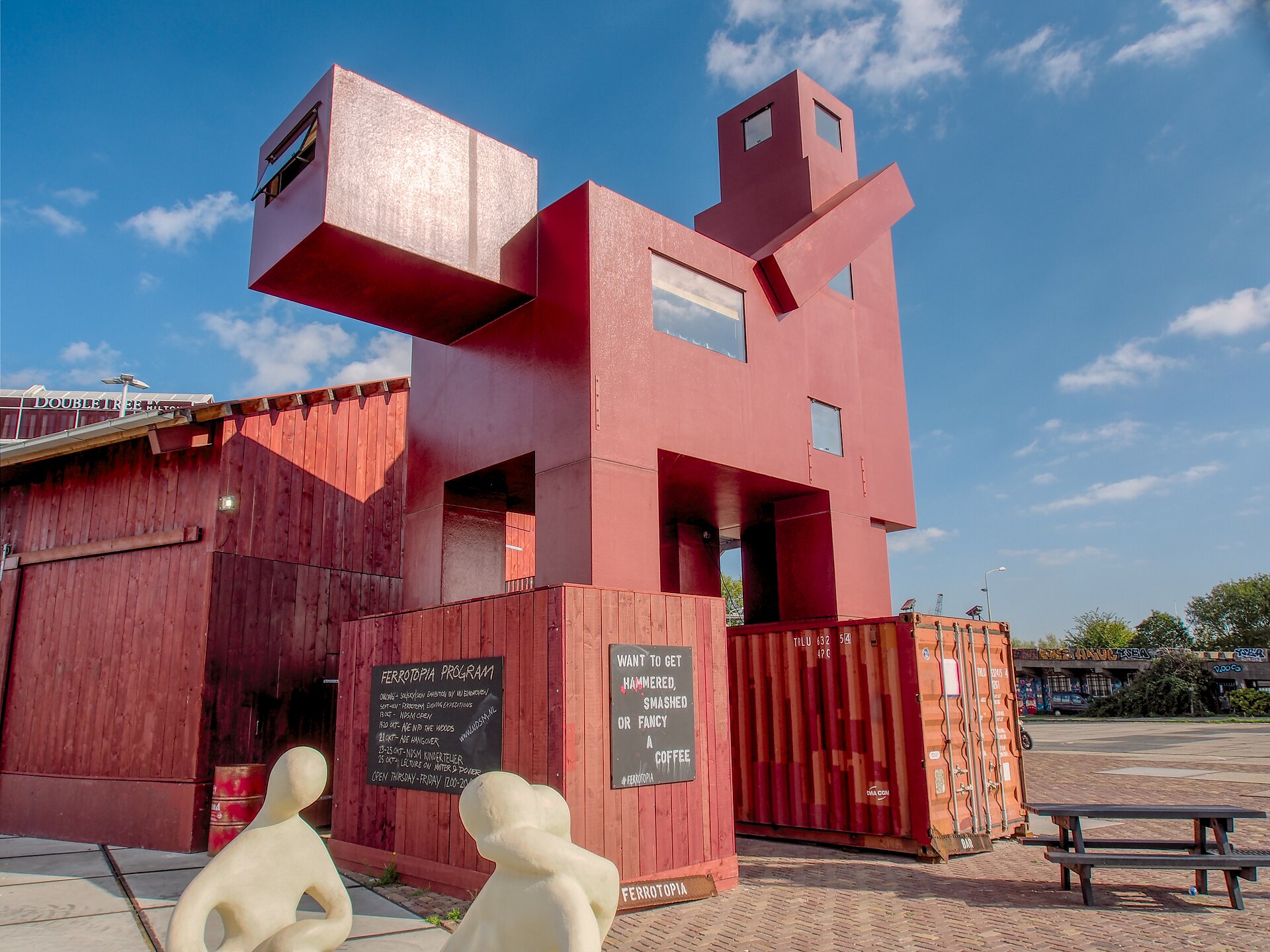
NDSM Wharf
Europe,
Netherlands,
Amsterdam, citta,
Noord
The NDSM Wharf in Amsterdam, located on the northern banks of the IJ river, is an extraordinary example of urban regeneration that transforms a decaying industrial area into a vibrant cultural and artistic center. Originally a significant shipyard, NDSM is now a dynamic and innovative place that attracts artists, creative entrepreneurs, and visitors from all over the world.
The history of the NDSM Wharf begins in the 1930s when the Nederlandsche Dok en Scheepsbouw Maatschappij (NDSM) established one of the largest and most modern shipyards in Europe here. During its heyday, NDSM employed thousands of skilled workers in the construction and repair of large merchant and passenger ships. The shipyard was a pillar of the Dutch industry and significantly contributed to the local economy. However, with the oil crisis of the 1970s and increasing international competition, the shipyard went into decline and was forced to close in 1984, leaving a vast area in a state of abandonment.After years of inactivity, in the early 2000s, a group of artists and creatives known as Kinetisch Noord took the initiative to transform the site into a center for art and culture. With the support of the Amsterdam municipality, which saw the project as an opportunity to revitalize the area, the shipyard began to be reborn. The industrial sheds were converted into art studios, galleries, offices for startups, and spaces for cultural events. This transformation has led NDSM to become one of the most creative and dynamic neighborhoods in Amsterdam.Today, NDSM is a place where industrial history meets contemporary creativity. Among its main attractions is the STRAAT Museum, the largest street art museum in the world, housed in a former ship welding shed. With its 8,000 square meters of exhibition space, the museum features works by internationally renowned artists, offering an immersive experience in urban art. Other buildings host temporary exhibition spaces, artist studios, and offices for creative enterprises, creating an eclectic and stimulating environment.One of the most well-known events held at NDSM is the IJ-Hallen, the largest flea market in Europe, which takes place monthly inside a huge naval hangar. Here, hundreds of vendors offer a wide range of products, from vintage clothing to antique furniture, attracting visitors from all over the region. This market is not just a place of commerce but also a social and cultural meeting point where hidden treasures can be discovered and the vibrant atmosphere of NDSM can be experienced.The neighborhood is also famous for its trendy bars and restaurants, many of which are built using recycled materials. Pllek, for example, is a popular urban beach bar made from shipping containers, offering live music and a sandy beach to relax on. Noorderlicht Café, with its greenhouse-inspired architecture, is another iconic NDSM spot, known for its outdoor concerts and breathtaking views of the IJ river. These venues not only offer excellent food and drinks but are also centers of sociality and creativity, where artists and visitors can meet and exchange ideas.One of the most interesting anecdotes concerns the transformation of an old shipyard crane into a luxury boutique hotel, the Crane Hotel Faralda. This unique structure offers three luxury suites with panoramic views of Amsterdam and features an outdoor jacuzzi at the top of the crane. This project exemplifies the innovative spirit of NDSM, which transforms unexpected industrial elements into unique hospitality experiences.NDSM is also an important landmark for Amsterdam’s cultural events. Every year it hosts music, art, and performance festivals that attract thousands of participants. These events range from electronic music concerts to visual art festivals and theatrical performances, contributing to making NDSM an internationally relevant cultural center.The regeneration of NDSM has been made possible by a shared vision of sustainability and creativity. The NDSM-werf foundation, which manages the site, promotes initiatives that improve urban quality of life and the usability of public spaces. The area is an example of how a decaying industry can be transformed into a vibrant and sustainable neighborhood, where industrial history is respected and reinterpreted in a modern key.
Read More