New Garden
Europe,
Germany,
citta,
Potsdam
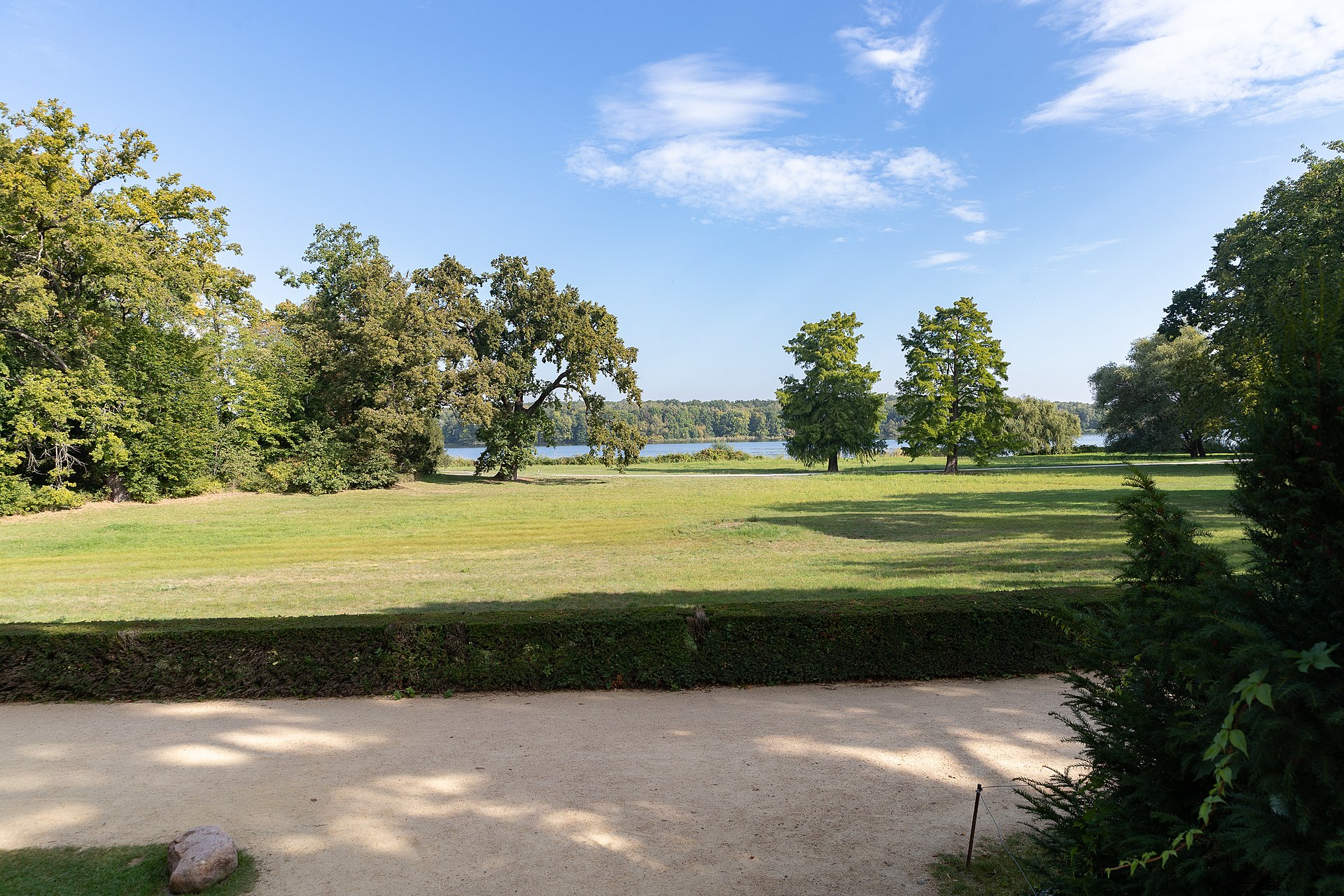
The Neuer Garten in Potsdam is a historic park covering an area of over 100 hectares, located between the Heiliger See and Jungfernsee lakes. Its history dates back to 1787, when Frederick William II of Prussia commissioned its creation, desiring a garden that reflected a new style, in contrast to the baroque gardens of the time. The project was entrusted to Johann August Eyserbeck, who created an English landscape garden, characterized by large lawns, winding paths, and panoramic views.
The garden houses several architecturally and historically significant structures. Among these, the Marmorpalais (Marble Palace) stands out, built between 1787 and 1792 according to the designs of Carl von Gontard and Carl Gotthard Langhans. This building, with its neoclassical style, represents a transition towards a new artistic era and introduced an aesthetic already widespread in the rest of Europe.Another prominent feature of the Neuer Garten is the Cecilienhof, the last palace built by the Hohenzollern dynasty. Constructed between 1913 and 1917 for Crown Prince William and his wife Cecilie, the palace is known for hosting the Potsdam Conference in 1945, during which the Allied leaders Stalin, Truman, and Churchill (later replaced by Attlee) decided the future of post-war Germany. The Cecilienhof is designed in the style of an English country house, with bricks and wooden beams that give it a rustic and mysterious charm.The park is not only an example of landscape architecture but also a place rich in esoteric symbolism. Frederick William II, a member of the Masonic lodge and the Rosicrucians, had some structures built that reflected these affiliations. For example, the palace kitchen was designed as a semi-submerged temple, while the icehouse was shaped like a pyramid, used to store ice collected from the lakes during winter.The Neuer Garten has undergone several restoration and renovation interventions over the centuries. In 1816, Peter Joseph Lenné, a young gardener, was tasked with redesigning the garden on behalf of Frederick William III. Lenné transformed the garden into a more open landscape space, while maintaining the original structure and enhancing it with new perspectives and visual connections to surrounding gardens like Sacrow, Pfaueninsel, Glienicke, and Babelsberg.During the Cold War period, a part of the garden was used by the Russian military forces and the KGB, becoming a “forbidden city” inaccessible to the public. After German reunification, restoration works were undertaken to bring the garden back to its former glory. The Shell Grotto, for example, built between 1791 and 1794 as a refuge for Frederick William II, was restored after decades of neglect and decay.Today, the Neuer Garten is a highly attractive tourist destination, open to the public and easily accessible. In addition to its historical and architectural elements, the garden offers spaces for relaxing walks, cultural events, and guided tours. Among the main attractions are the Gotische Bibliothek (Gothic Library), used by Frederick William II, and the Orangerie, with its entrance decorated with sphinxes and Egyptian statues.
Read More