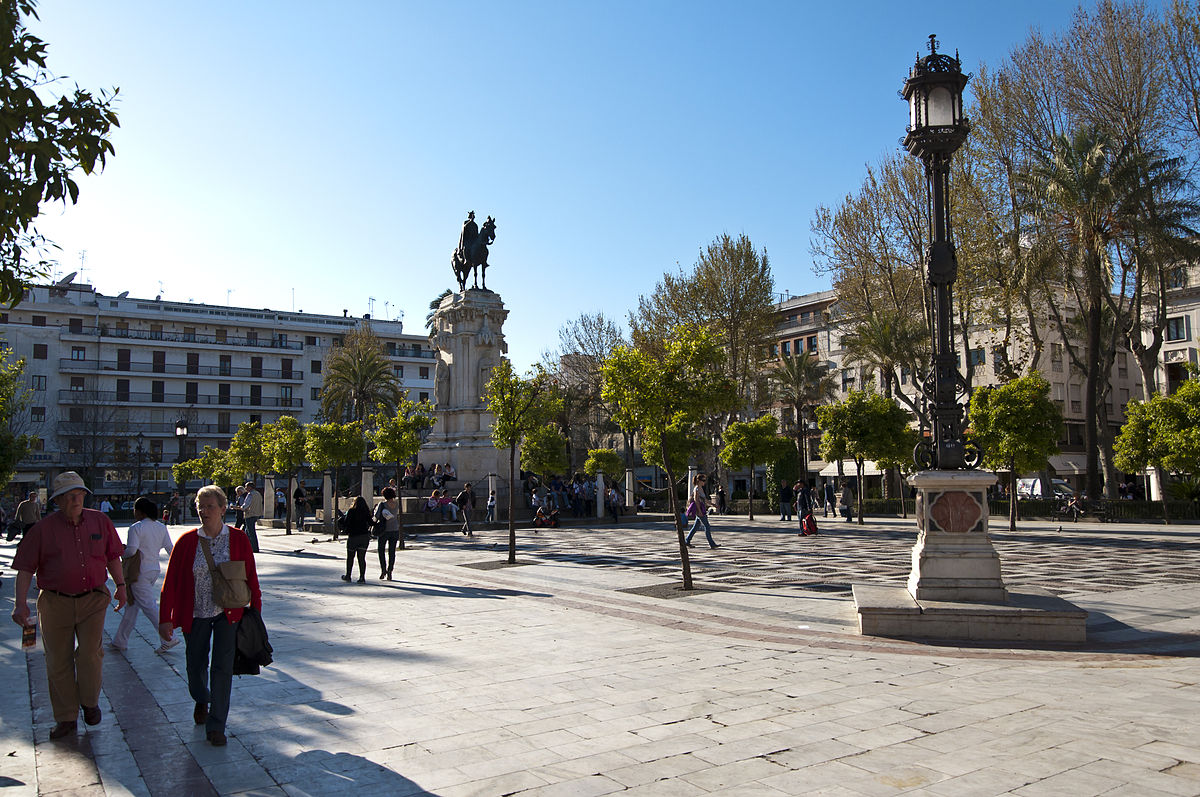
New Square
Europe,
Spain,
Seville,
El Centro
Plaza Nueva in Seville, one of the most representative public spaces in the city, is a crossroads of history, culture, and architecture. Located in the heart of the historic center, the square is home to the majestic Ayuntamiento, the city hall of Seville, and stands out for its harmonious mix of architectural styles that tell the rich history of the city.
The land on which Plaza Nueva stands has a long history dating back to the Middle Ages. From 1270 to 1840, the site was occupied by the Convent Casa Grande de San Francisco, a vast monastic complex that included the convent itself, the hospital of the Franciscan Terceros, and the College of San Buenaventura. During the Napoleonic occupation in the 19th century, the convent suffered serious damage, culminating in a fire in 1810. Following the confiscation of ecclesiastical property in 1835, the convent was finally demolished, making way for the creation of the current square, completed in 1856.Over the years, Plaza Nueva has seen numerous name changes, reflecting the political turmoil in Spain. Initially known as Plaza de la Infanta Isabel in 1857, the square was renamed Plaza de la Libertad in 1868 during the revolutionary uprisings, then Plaza de la República in 1873, and again Plaza de San Fernando in 1875 during the Restoration. The name Plaza Nueva, by which it is known today, was officially established only in 1931, during the Second Republic.The central monument of the square is the imposing equestrian statue of Fernando III, the king who conquered Seville for the Christians in 1248 and was later canonized. The monument, designed by architect Juan Talavera y Heredia and sculptor Joaquín Bilbao, was inaugurated in 1924 and is one of the most recognizable symbols of the square.Plaza Nueva is surrounded by buildings of great historical and architectural value. The Ayuntamiento, with its 18th-century Plateresque facade, dominates the eastern side of the square. The Capilla de San Onofre, the only remaining part of the original convent, still preserves altars from the 17th century and represents a valuable testimony of the area’s religious past.Among other notable buildings is the Edificio Telefónica, designed in 1926 by architect Juan Talavera y Heredia, which with its Baroque style blends perfectly into the historical context of the square. Another example of remarkable architecture is the Philips building, built in the 1960s by architect Alfonso Toro Buiza, representing an example of the classic rationalism typical of the time.Plaza Nueva is also a lively center of social and cultural activities. The weekly market held in the square attracts both residents and tourists, offering a variety of artisanal products and local specialties. The numerous cafes and restaurants around the square, such as the renowned Casa Morales, offer visitors the opportunity to taste traditional Andalusian cuisine in a historic and charming setting.In the evening, the square transforms into a vibrant meeting place, with street performers and musicians enlivening the atmosphere. Seville’s lively nightlife finds one of its focal points in Plaza Nueva, making it a must-visit destination for those who want to immerse themselves in the festive soul of the city.
Read More