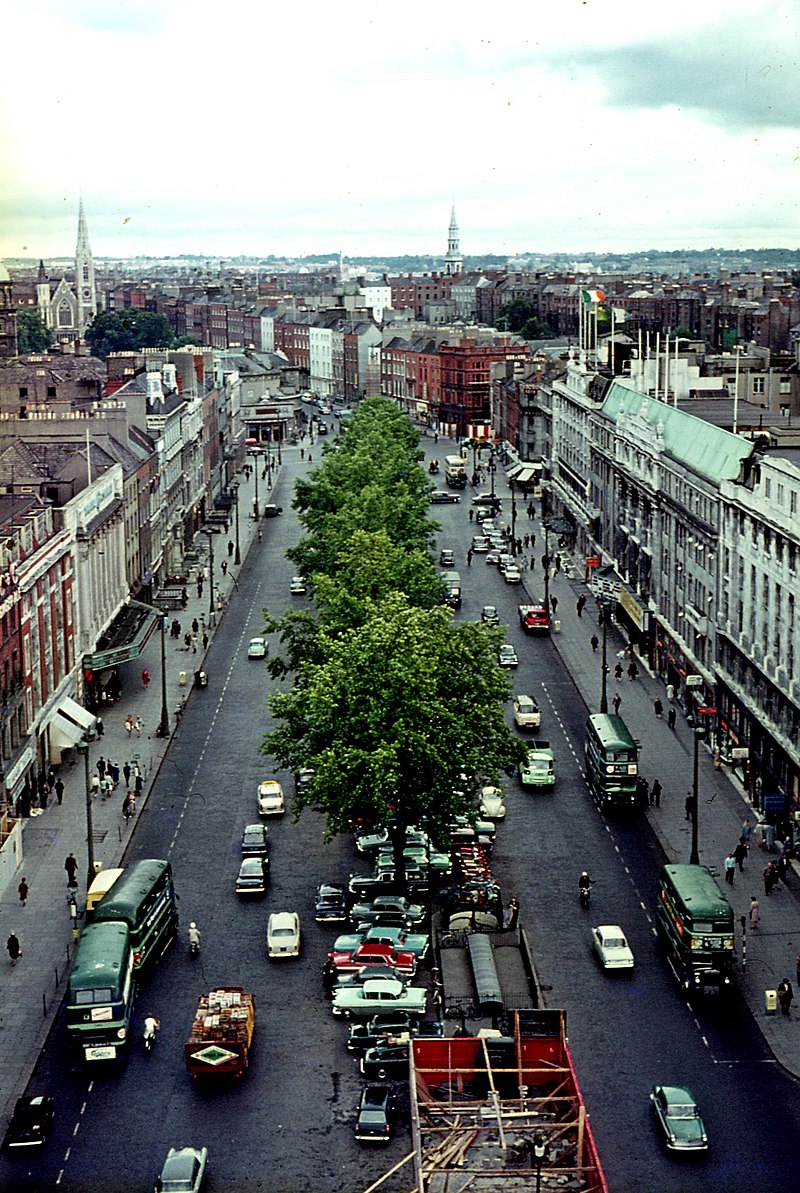
O'Connell Street
Europe,
Ireland,
citta,
Dublin 1
O’Connell Street, the main street of Dublin, is a bustling artery of the Irish capital, rich in history, culture, and urban vitality. This street, which runs from Parnell Square in the north to the River Liffey in the south, is one of the city’s most iconic places, as well as the nerve center of many commercial and social activities.
The history of O’Connell Street is intrinsically linked to the development of Dublin. Originally known as Sackville Street, the street was designed in the 18th century by Luke Gardiner, an influential real estate developer, as part of his plan to transform Dublin into a modern and elegant city. Sackville Street was intended to become one of the widest and most prestigious streets in Europe, with grand Georgian buildings and ample public spaces.In 1924, after the birth of the Irish Free State, the street was renamed O’Connell Street in honor of Daniel O’Connell, one of the greatest Irish political leaders of the 19th century, known as “The Liberator” for his role in the campaign for Catholic emancipation. The statue of O’Connell, erected in 1882 at the southern entrance of the street, is one of Dublin’s most recognizable landmarks. This imposing monument depicts O’Connell in Roman attire, surrounded by allegorical figures representing faith, loyalty, and patriotism.O’Connell Street has played a crucial role in many significant historical events. During the Easter Rising of 1916, the General Post Office (GPO), located in the heart of the street, was one of the main theaters of the rebellion. The rebel leaders, including Patrick Pearse and James Connolly, used the GPO as their headDistricts, and the building’s facade still bears the marks of the fighting. Today, the GPO is not only an important post office but also a museum that tells the story of the uprising and Irish independence.Another significant monument on O’Connell Street is the statue of James Larkin, a trade union leader and socialist politician who played a fundamental role in the struggles for workers’ rights in Ireland. The statue, located in front of the GPO, depicts Larkin with his arms raised, in a posture that evokes his passionate speeches and his commitment to social justice.One of the most recent and controversial developments on O’Connell Street is the Spire of Dublin, also known as the Monument of Light. This imposing stainless steel obelisk, 120 meters high, was erected in 2003 as part of an urban redevelopment project. The Spire has become a modern symbol of the city, visible from many parts of Dublin and a popular meeting point for residents and tourists.O’Connell Street is also an important commercial and entertainment center. The street hosts a wide range of shops, restaurants, cafes, and cinemas, attracting thousands of people every day. One of the most iconic entertainment venues was the Carlton Cinema, an art deco building that closed its doors in 1994 but remains in the collective memory as a symbol of Dublin’s cultural life. The street has also been the subject of numerous redevelopment projects over the years. These projects have aimed to improve the street’s aesthetics, reduce car traffic, and create a more pedestrian-friendly environment. One of the most significant interventions was the creation of wide sidewalks and the installation of new benches, streetlights, and trees, which have contributed to making O’Connell Street a more welcoming and livable place.A curious anecdote concerns the statue of Charles Stewart Parnell, located at the northern end of O’Connell Street. Parnell, another great Irish political leader, is depicted pointing a finger forward. The statue has been the subject of jokes and parodies over the years, with many humorously interpreting the gesture as an indication of where to find the best pub in the city.
Read More