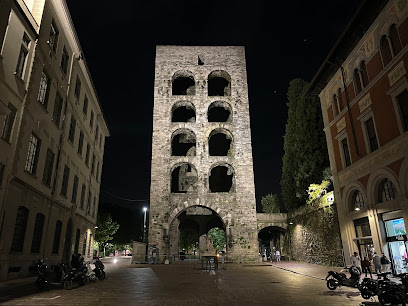
Porta Torre (City Gate), Como
Europe,
Italy,
Como,
The Porta Torre of Como is one of the most recognizable symbols of the city, an important testimony of its history and medieval architecture. This imposing structure represents an example of how the city has protected itself over the centuries, serving as a privileged access point to the old part of Como. The Porta Torre was built in the 14th century, specifically in 1352, and plays a fundamental role in the city’s cultural identity. It is known for its tall tower and elegant battlements, showcasing the skill of the master builders of the time. Over the years, the Porta has undergone several transformations, but its medieval essence has remained intact, making it a musical and visual focal point for visitors and residents alike. The Porta Torre was erected in 1352 during the rule of the Visconti family of Milan, a dynasty that held power over Como for centuries. Its construction represented an optimization of the city’s fortifications, which needed more solid protections and well-controlled access points. This gate, in particular, was part of an impressive system of walls that surrounded the city, built to defend it from external attacks and control entrances. In 1528, an important modification of the original structure led to the restructuring of the Porta. Specifically, it was expanded to accommodate a flow of goods and people on land. This roadway junction represented a crucial transit point for merchants and travelers heading towards the lake or other destinations. With the decline of the Duchy of Milan, the Porta Torre began to experience a slow but steady decay, but in the 19th century, thanks to significant restoration work, it regained its splendor. In the 20th century, further restoration interventions were carried out to preserve the Porta, which is now considered a national monument. Its historical and architectural significance is evident both in the urban context and as a tourist attraction. The Porta Torre, therefore, is not just a piece of architecture, but a custodian of stories and cultures that have intertwined in Como over the centuries. As you approach the Porta Torre, it is impossible not to notice its imposing presence. The structure is characterized by a decorated lunette located above the main entrance. This lunette, originally adorned with murals, is now only partially visible. Be sure to notice the bas-relief that once depicted the city’s patron saints. As you head towards the tower, you can get closer to its battlements. Observing the facade, you will notice the irregular arrangement of the cobblestones, a distinctive feature of medieval fortifications. These materials, tied to local building traditions, were chosen not only for their abundance but also for their ability to withstand attacks. If you venture inside the Porta, you will see how the structure is divided into several floors. In the internal area, there are various loopholes, small openings through which soldiers could defend the entrance without exposing themselves. These architectural details speak of an era when every stone was designed for a specific defensive purpose. Continuing to explore, look up: you will notice the impressive height of the tower, reaching 30 meters. This height not only served to make the Porta more visible but also made it a strategic point from which to survey the entire surrounding area. Finally, don’t forget to stroll around the base of the tower; here, you will find various inscriptions carved into the stone, testimonies from past travelers. Another interesting aspect is the panoramic view from the top of the Porta Torre. Although not always accessible, those fortunate enough to climb will enjoy a spectacular sight of Lake Como and the surrounding mountains. This privileged viewpoint has attracted many artists and photographers over the years, eager to capture the beauty of the landscape. In the square in front of the Porta, take a moment to reflect. This space has seen generations of locals and tourists pass by. Here, the Porta Torre is not just a monument but a landmark where stories of war, commerce, and culture merge. The Porta Torre is set in an urban context rich in history and traditions. Located in the heart of Como, the Porta is easily reachable and close to other important monuments. Just a few steps away is the Cathedral of Como, a masterpiece of Gothic architecture, whose construction began in 1396. This cathedral is an extraordinary example of how art and architecture have integrated into the fabric of city life. Continuing on, we cannot overlook the Basilica of Sant’Abbondio, a Romanesque church that offers a glimpse into Como’s religious history and represents one of the city’s oldest places of worship. Finally, if you have time, I recommend exploring the lakeside promenade, a picturesque area offering beautiful views and a relaxed atmosphere, perfect for a walk. An interesting fact relates to the function of the Porta Torre in the 16th century when it became an important checkpoint. Here, local authorities inspected goods coming in and out of the city, a vital task for maintaining order and security. Moreover, during the restorations of the 20th century, carried out by the Superintendence of Cultural Heritage, important archaeological finds were discovered, including coins and everyday objects dating back to the medieval period. These findings have enriched the historical knowledge of the area and have given the Porta Torre even greater value as an archaeological site. Finally, the symbol of Como, represented also in the city’s coat of arms, includes a stylized image of the Porta Torre, emphasizing its iconic significance within the urban landscape. This attests to how the Porta is not only an access point but also an identity symbol for the people of Como, witnessing historical events and social transformations. The Porta Torre of Como is not just a testimony of a bygone era, but an invitation to explore the historical richness of the city. I encourage you to visit the nearby Cathedral and the Basilica of Sant’Abbondio, two gems that will further enrich your experience in Como. Happy exploring!
Read More