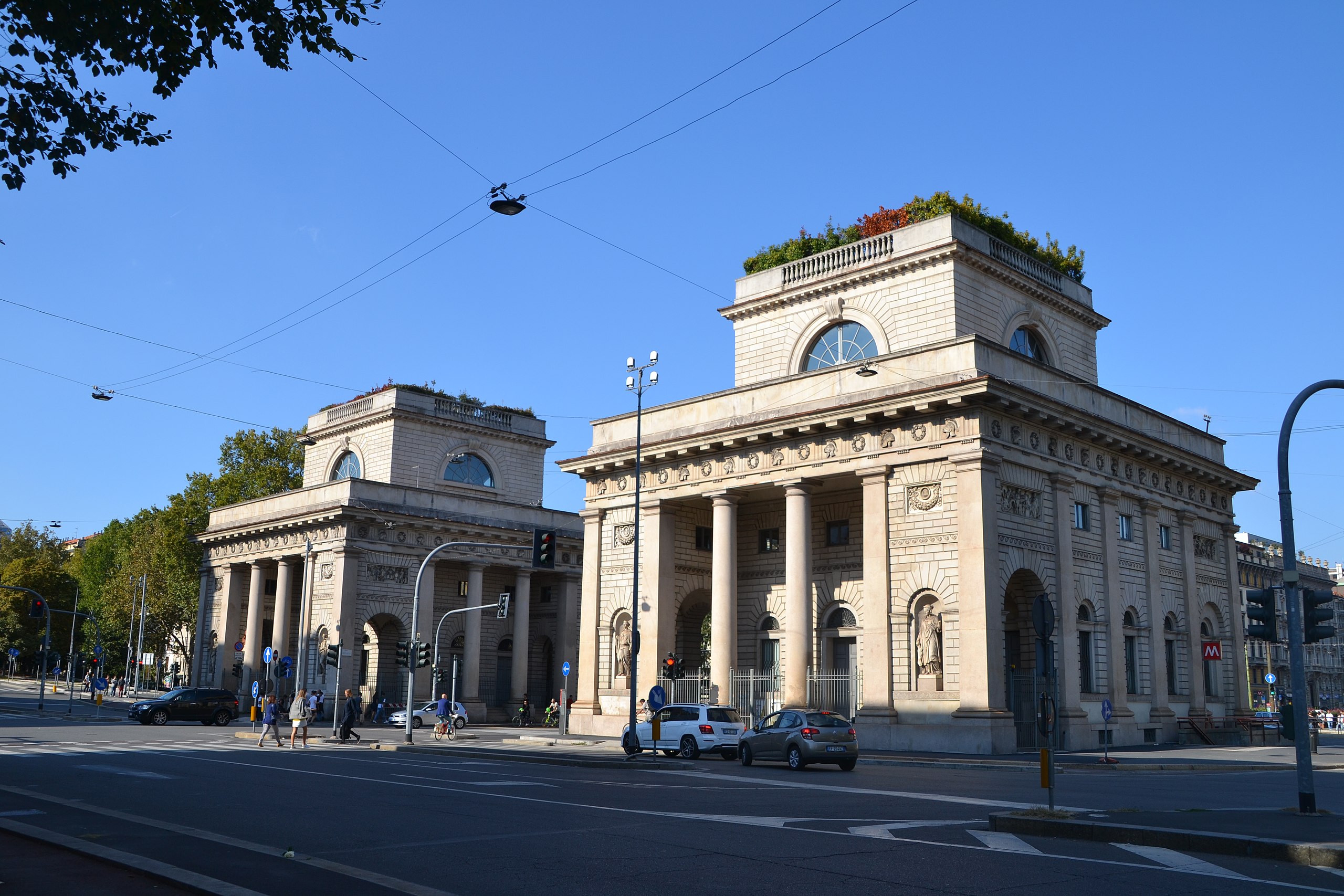
Porta Venezia
Europe,
Italy,
citta,
Porta Venezia
Porta Venezia is one of the six main gates of Milan, rich in history and significance. Originally known as Porta Orientale, it was built along the Spanish walls in the 16th century, and today it presents itself with a neoclassical structure designed by Rodolfo Vantini between 1827 and 1828. The gate, located in Piazza Guglielmo Oberdan, is an emblematic example of neoclassical architecture with its toll booths and Doric columns.
The history of Porta Venezia dates back to Roman times, when it was known as Porta Argentea. Its privileged position made it a fundamental entry point for Milan, especially in the direction of Austria. Over the centuries, the gate underwent several transformations, reflecting the city’s political and social changes. During the Renaissance, the architect Giuseppe Piermarini designed a first monumental renovation, which was then interrupted due to criticism of the project. It was only with the arrival of Napoleon that the conception of the gate changed, transforming it into a celebratory monument rather than a simple defensive structure.The final project, carried out by Vantini, met the need to create an imposing and representative structure. The toll booths, decorated with bas-reliefs and statues depicting episodes from the history of Milan, were completed in 1833. The statues represent allegorical figures such as Eternity, Concord, Justice, and Fidelity, while the bas-reliefs depict key moments such as the foundation of Milan and the entrance of Maximian Herculean.During the Austrian period, Porta Venezia was often used for official celebrations and triumphal entrances. In 1857, on the occasion of the visit of Emperor Franz Joseph I and his consort Elisabeth, a temporary triumphal arch in wood was erected between the two toll booths, reflecting the importance of the gate as a symbol of power and prestige.In 1860, after the Second War of Independence, the gate was renamed Porta Venezia, in homage to the city of Venice, which remained under Austrian rule until 1866. The large square facing the gate was later named after Guglielmo Oberdan, a Julian irredentist executed by the Austrians, strengthening the symbolic bond of the gate with the movement for Italian unification.Today, Porta Venezia is not only an important access route to the city, but also a lively neighborhood characterized by a combination of historic and modern buildings. The nearby Corso Buenos Aires is one of Milan’s main shopping streets, while the Public Gardens Indro Montanelli offer a green oasis in the heart of the city. The Porta Venezia railway station and the metro stop on the red line (M1) make this area easily accessible and frequented by both residents and tourists.An interesting anecdote concerns the plague epidemic of 1630, described in Alessandro Manzoni’s “The Betrothed”. According to chronicles, a deserter soldier of the Landsknechts, Pietro Antonio Lovato, entered Milan through Porta Venezia carrying the plague, which quickly spread throughout the city.Porta Venezia is also known for its proximity to numerous historic and cultural buildings, such as Casa Galimberti and Casa Guazzoni, excellent examples of Liberty architecture. Additionally, the neighborhood is home to the Albergo Diurno Venezia, an elegant underground public bath in Art Deco style, recently restored and open to the public for guided tours.
Read More