Radiant City Le Corbusier
Europe,
France,
Marseille,
8th arrondissement
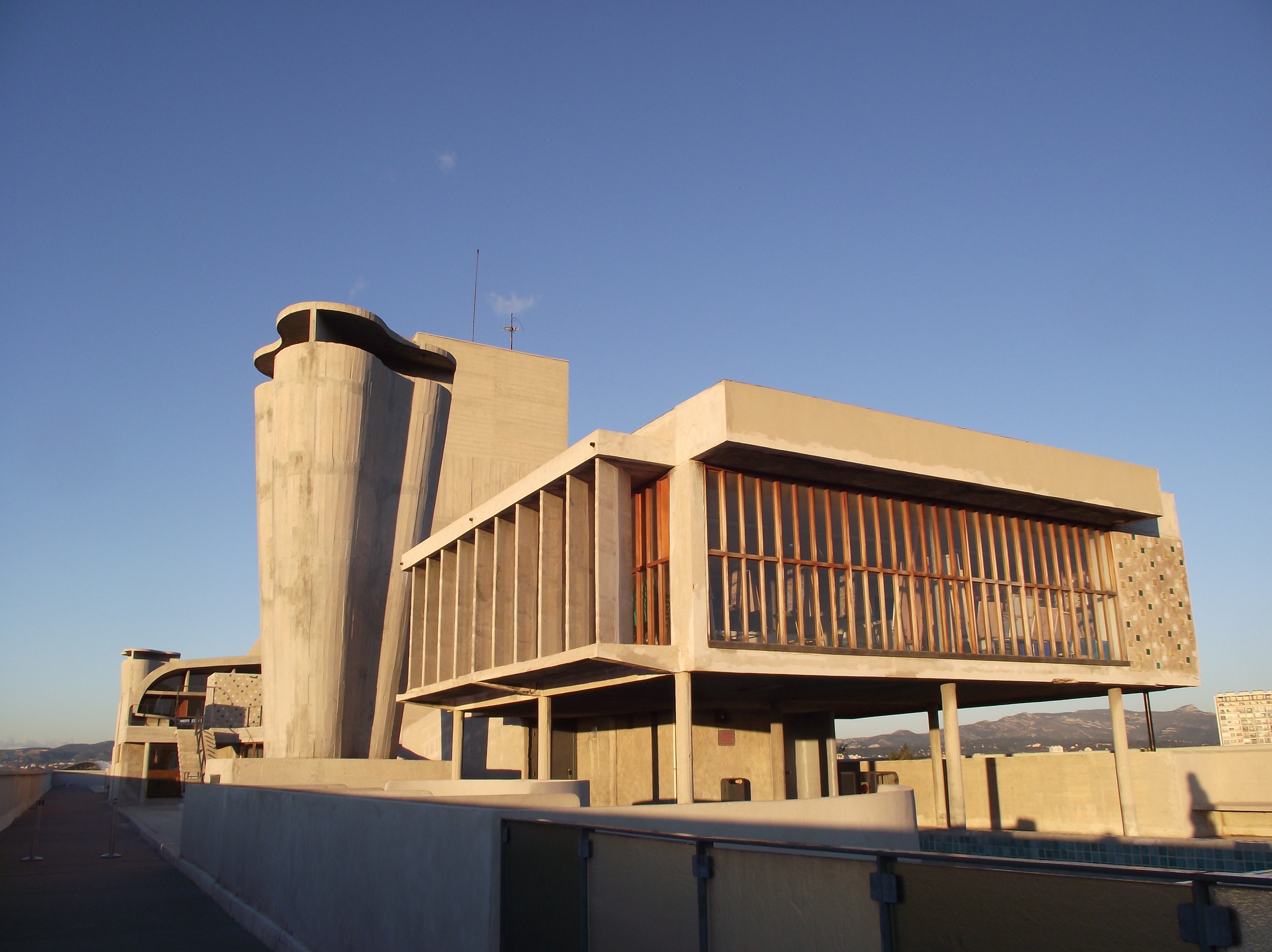
The Cité Radieuse by Le Corbusier in Marseille is one of the masterpieces of modern architecture, a symbol of a revolutionary vision of living and collective life. This work, also known as Unité d’Habitation, represents one of the most accomplished realizations of Le Corbusier’s thinking, combining functionality, aesthetics, and sociality in a single structure.
The construction of the Cité Radieuse began in 1947 and was completed in 1952. The project was born in a period of great architectural ferment, when Europe was trying to recover from the rubble of the Second World War. Le Corbusier, with his utopian vision, proposed a model of housing that could meet the needs of a modern society, where urban planning had to serve people and improve the quality of life.The building stands on pilotis, lifting the structure off the ground and creating an open and airy space on the ground floor. This architectural solution not only improved hygiene and air circulation, but also allowed the use of the ground below for gardens and common spaces. The Cité Radieuse consists of 337 apartments, divided into 23 different types to accommodate families of various sizes. Each apartment has a balcony that offers a panoramic view and a direct connection to the outside, reflecting Le Corbusier’s attention to natural light and ventilation.One of the most innovative elements of the Cité Radieuse is the presence of numerous common services within the building. Inside, there is a nursery school, a hotel, a restaurant, shops, a medical office, and a bookstore specializing in architecture. The rooftop terrace is a true multifunctional space, hosting a running track, an outdoor theater, a gym, and a children’s pool. This integrated approach responds to Le Corbusier’s idea of creating a “city within the city,” where residents could meet most of their daily needs without having to leave the building.The architecture of the Cité Radieuse is a perfect example of brutalism, characterized by the massive use of raw concrete and bold geometric forms. The building’s facades are punctuated by a grid of windows and balconies, creating a visual rhythm that emphasizes the modularity and rational order of the project. This stylistic choice, combined with the functionality of the interior spaces, has made the Cité Radieuse a model for many other residential projects worldwide.From a historical perspective, the Cité Radieuse quickly acquired the status of an icon of modern architecture. Gio Ponti, a famous Italian architect, called it “a true monument in the history of French construction” even during its construction. In 1986, the building was declared a Historic Monument and in 2016, it was included in the UNESCO World Heritage List, recognizing its cultural and historical value.The Cité Radieuse has deeply influenced 20th-century architecture, inspiring numerous similar projects worldwide. Le Corbusier built other Unités d’Habitation in different cities, including Berlin, Nantes, Briey, and Firminy, each reflecting the same ideas of functionality, modularity, and social integration.Today, the Cité Radieuse continues to be inhabited and visited by people from all over the world. Inside the building is also the MaMo (Marseille Modulor), a contemporary art center founded by designer Ora Ito, which organizes exhibitions and cultural events. The building remains a living laboratory of architectural and social ideas, a testament to Le Corbusier’s utopian vision of a more equitable and functional society.
Read More