Red Town Hall (Rotes Rathaus)
Europe,
Germany,
citta,
Mitte
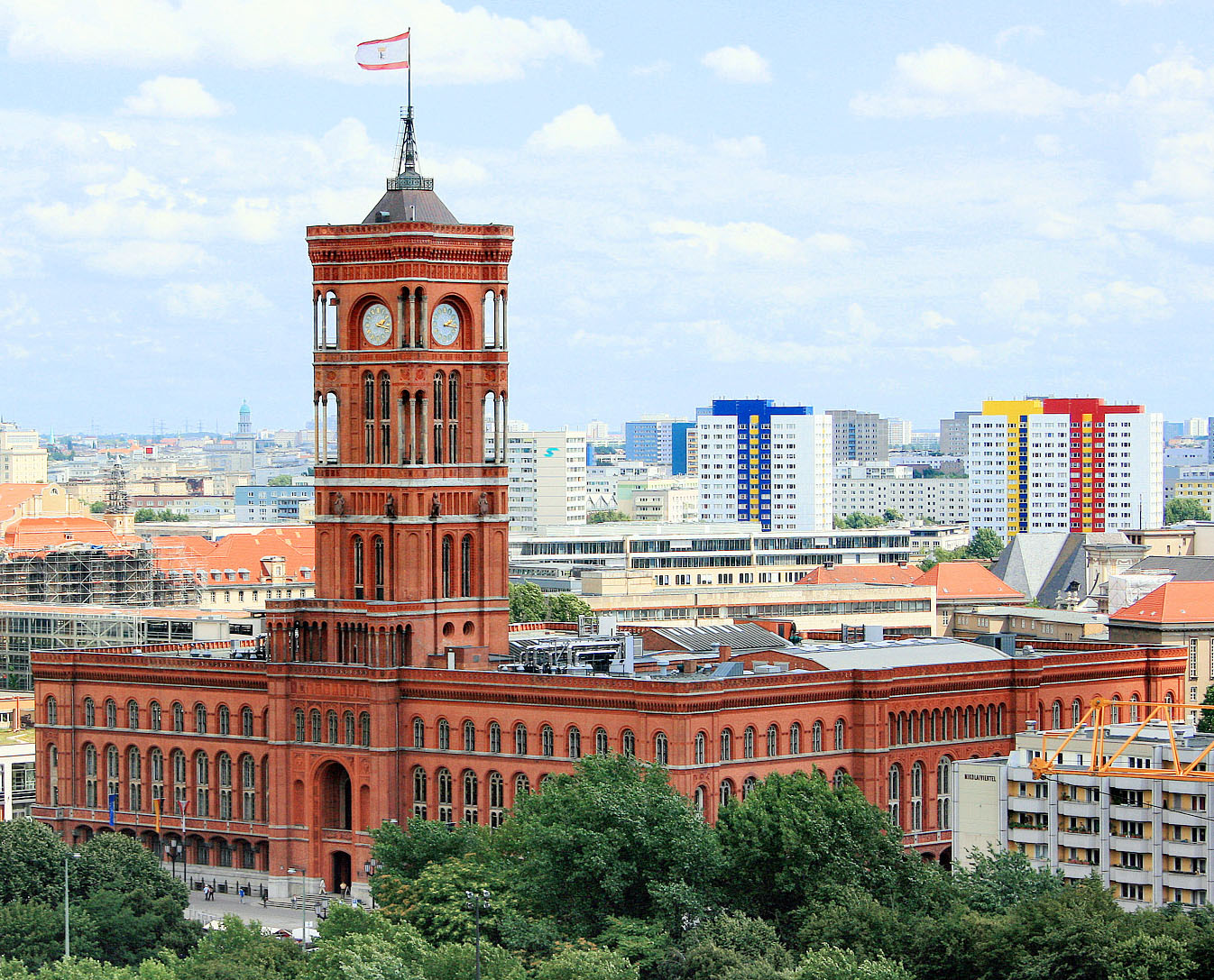
The Rotes Rathaus, the Red City Hall, is one of the most iconic buildings in Berlin, located in the heart of the city, in the Mitte district. This building, with its red brick facade and 74-meter-high clock tower, is a symbol of the German capital and a silent witness to the historical events that have shaped Berlin from its construction to the present day.
The idea of building the Rotes Rathaus was born in the mid-19th century, when Berlin, rapidly expanding, needed a new administrative building that reflected its growing importance as the capital of the Kingdom of Prussia. The project was entrusted to the architect Hermann Friedrich Waesemann, who drew inspiration from the Italian Renaissance and the model of municipal palaces in Northern Europe, creating a building that combined solemnity and functionality.Construction of the Rotes Rathaus began in 1861 and was completed in 1869. Its red brick facade, from which it gets its name, and its neo-Renaissance structure give the building an imposing and majestic appearance. The clock tower, visible from many points in the city, has become one of the most recognizable symbols of Berlin. During World War II, the building was severely damaged by bombings, but it was rebuilt after the war, maintaining its function as an administrative center. During the division of Berlin, the Rotes Rathaus became the seat of the government of communist East Berlin. This period left a deep mark on the building, which today is a symbol of the city’s tumultuous history.After the fall of the Berlin Wall in 1989 and the reunification of Germany, the Rotes Rathaus regained its role as the seat of the Berlin Senate and the mayor of the city. This return to its original function marked a new chapter in the building’s history, which is now a vital center of city administration and a venue for public events and official ceremonies.One of the most fascinating elements of the Rotes Rathaus is its Hall of Columns, a large room decorated with granite columns and frescoes depicting scenes from Berlin’s history. This room, used for official events and ceremonies, is an example of the building’s rich artistic and cultural heritage. The frescoes, created in the 19th century, tell the story of Berlin from its foundation to modern times, offering visitors a visual journey through the centuries.The Rotes Rathaus is also known for its collection of public art. The building houses numerous works of art, including sculptures, paintings, and installations that reflect the history and culture of Berlin. This collection, accessible to the public, is an example of the Rotes Rathaus’s role as a guardian of the city’s historical memory.An interesting anecdote concerns the bell of the clock tower, which still rings today to mark the hours. This bell, known as the “Friedrichs-Glocke,” was installed in 1875 and has continued to ring through the tumultuous events of Berlin’s history. The sound of the bell has become a symbol of the city’s resilience and continuity, a sign that, despite difficulties, Berlin continues to live and thrive.
Read More