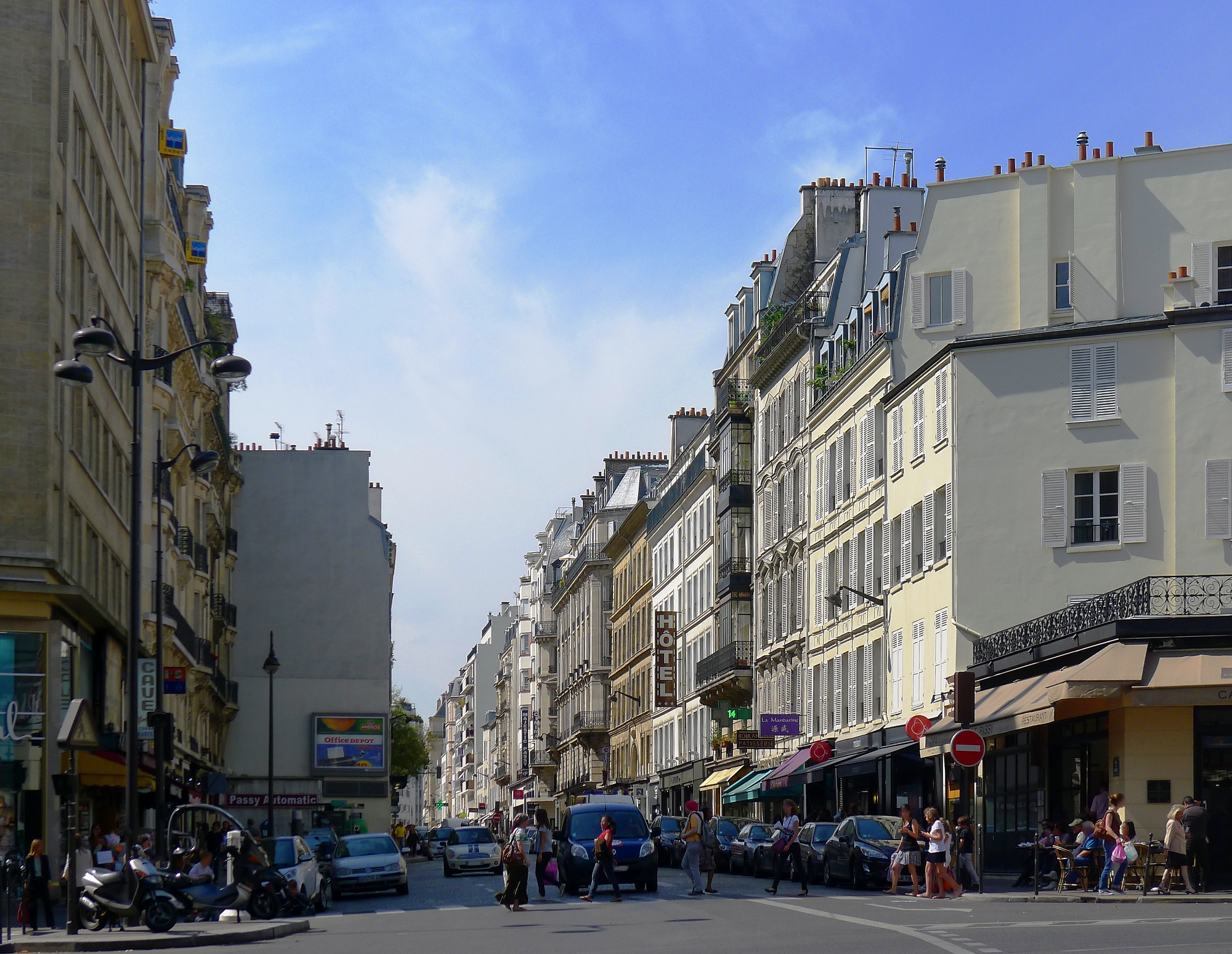
Rue de Passy
Europe,
France,
citta,
XVI arrondissement
Rue de Passy, located in the 16th arrondissement of Paris, is one of the most fascinating and historically rich streets in the French capital. This street, which stretches for about a kilometer from Jardin du Ranelagh to Rue de l’Assomption, is not only a popular shopping destination but also an important window into the history and culture of Paris.
The name “Passy” comes from an ancient village that existed before its annexation to Paris in 1860. Passy was known for being a quiet and picturesque refuge, situated on the hills overlooking the Seine. During the 18th century, Passy became a fashionable destination for the Parisian aristocracy, attracted by its thermal waters and serene atmosphere. Distinguished figures like Benjamin Franklin, who lived in Passy during his diplomatic mission in France, helped make the area famous.With its annexation to Paris, Rue de Passy underwent a significant transformation. The street, which was originally a simple country path, was expanded and urbanized to accommodate the city’s growing population. During the Belle Époque, Rue de Passy became one of the favorite places of the Parisian bourgeoisie, who built elegant residences and luxury shops there.Architecturally, Rue de Passy offers a variety of styles reflecting the different eras of its history. The buildings along the street range from classic Haussmannian palaces, with their characteristic stone facades and wrought iron balconies, to elegant Art Nouveau and Art Deco style villas. These buildings not only testify to the evolution of Parisian architecture but also give the street a unique and distinctive charm.Rue de Passy is famous for being an important commercial artery. The street hosts a wide range of shops, from high fashion boutiques to gourmet grocery stores, as well as bookstores, jewelers, and antique shops. This mix of commercial activities attracts both local residents and tourists, making Rue de Passy one of the liveliest and busiest streets in the neighborhood.One of the main landmarks of Rue de Passy is the Passy Plaza, a modern shopping center offering a wide range of shops and services. This shopping center represents the perfect fusion of past and present, keeping alive the commercial spirit of the street while adapting to contemporary needs.The street is also an important cultural and social center. It is home to numerous cafes and restaurants where you can savor French cuisine in a refined atmosphere. Among the historic venues, the most famous is the Café de Passy, frequented by intellectuals and artists since its opening. The presence of theaters and art galleries further contributes to the rich cultural life of the area.An interesting anecdote concerns the Exposition Universelle of 1900, during which Rue de Passy and the entire surrounding neighborhood were the scene of events and exhibitions that attracted visitors from around the world. The exhibition not only celebrated the industrial and technological advances of the time but also transformed the image of Paris as a global center of culture and innovation.The street is also home to several prominent educational and religious institutions. Among these, the prestigious École Normale de Musique de Paris, founded in 1919 by pianist Alfred Cortot, continues to train internationally renowned musicians. Additionally, the Church of Notre-Dame-de-Grâce de Passy, with its neo-Gothic architecture, is a place of worship and gathering for the local community.
Read More