Saint-Cloud Park (Parc de Saint-Cloud)
Europe,
France,
citta,
Saint-Cloud
The Park of Saint-Cloud, located on the outskirts of Paris, is one of the most fascinating and historically rich places in the Île-de-France region. This vast park, spanning over 460 hectares, is an oasis of greenery and tranquility that offers visitors a unique experience of nature, history, and art.
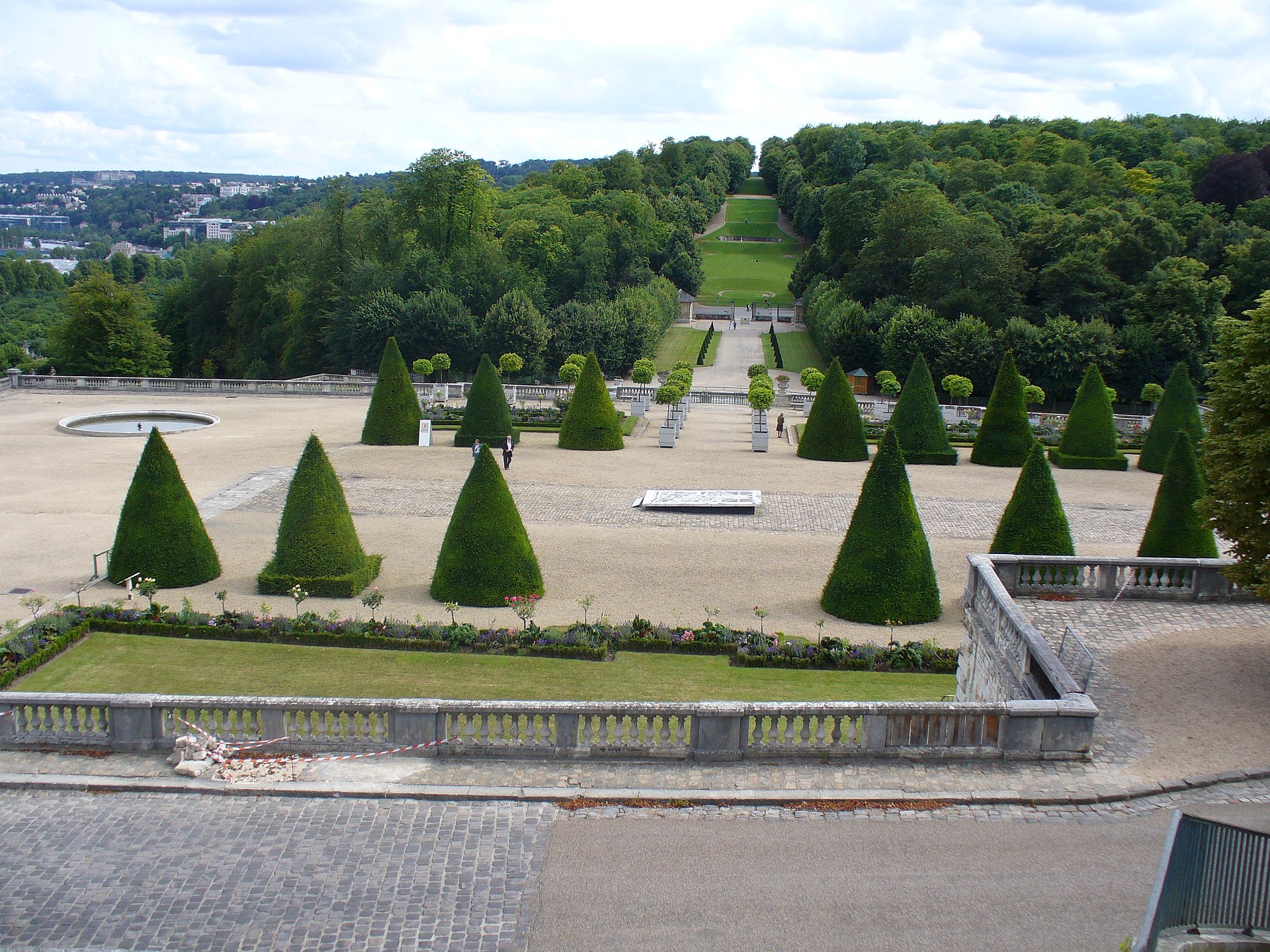
The Park of Saint-Cloud has its roots in the history of the 17th century, when the land was purchased by Maria de’ Medici to build a sumptuous palace. However, the true transformation of the site began under the reign of Louis XIV, when the land was acquired by Philippe of France, Duke of Orléans, brother of the Sun King. Philippe commissioned the famous architect Le Nôtre, the genius behind the gardens of Versailles, to design the park. Le Nôtre created an extraordinary example of a French garden, characterized by wide perspectives, elegant parterres, fountains, and tree-lined avenues.The original palace, unfortunately, no longer exists, having been destroyed during the Franco-Prussian War in 1870. However, traces of its splendor still survive today in the magnificent gardens and fountains that adorn the park. The Park of Saint-Cloud is known for its numerous fountains, including the Grand Cascade, designed by Le Nôtre, and the Nereids Basin, adorned with classical statues evoking Greek mythology.One of the most fascinating aspects of the Park of Saint-Cloud is its panoramic view of Paris. From the upper terrace, visitors can admire a breathtaking view of the French capital, with the Eiffel Tower towering on the horizon. This panorama has inspired numerous artists over the centuries, making the park a place of great cultural and artistic significance.The park is divided into different areas, each with its unique characteristic. The French Garden, with its geometric parterres and fountains, is a perfect example of Baroque classicism. The English Garden, created in the 19th century, offers a picturesque contrast with its winding paths, lakes, and ancient trees. This variety of landscapes makes the Park of Saint-Cloud an ideal place for walks, picnics, and moments of relaxation.The Park of Saint-Cloud is also a place of great historical and political importance. It was here that Napoleon Bonaparte seized power with the coup of the 18th Brumaire in 1799, marking the beginning of the Consulate and, subsequently, the Empire. This event is just one of the many historical episodes that have taken place in the park, making it a silent witness to France’s political transformations.Over the years, the park has undergone numerous restoration and improvement projects. During the 19th century, under the reign of Napoleon III, new landscape elements were added, including the English Garden. Additionally, new species of plants and trees were introduced, further enriching the park’s biodiversity.An interesting anecdote concerns the restoration of the Grand Cascade. In the 1990s, the waterfall, which was in a state of disrepair, was restored through a complex hydraulic engineering project. This restoration allowed the original water flow to be reinstated and restored the waterfall to its Baroque splendor. Today, the Grand Cascade is one of the most admired attractions in the park, with its waters cascading down a series of terraces, creating an extraordinary visual and auditory effect.
Read More