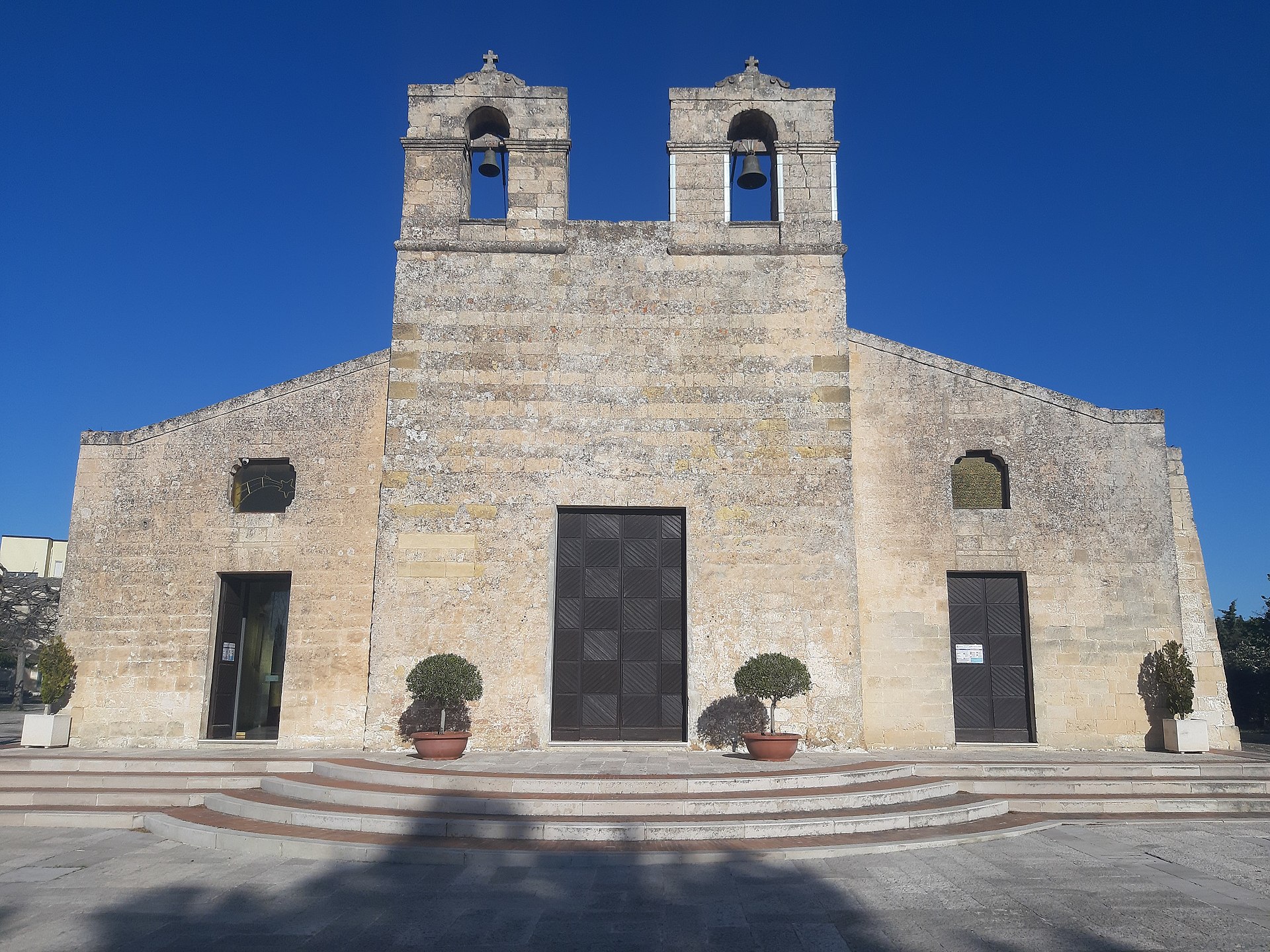
Sanctuary of Santa Maria di Picciano
Europe,
Italy,
citta, Matera,
Centro
The Sanctuary of Santa Maria di Picciano, located a few kilometers from Matera, is a place of worship of great historical and spiritual importance. Its foundation dates back to the 12th-13th century, when it was built by the Benedictine monks of the Olivetan Congregation. The sanctuary is situated on a panoramic hill overlooking the valley, offering a suggestive view and an environment of profound tranquility.
The original nucleus of the sanctuary was a simple oratory, but over the centuries it has undergone numerous modifications and expansions. The current basilica structure is divided into three naves, with sturdy pillars supporting the barrel vaults. During restoration works, remains of a medieval portal were discovered, testifying to the antiquity and historical importance of the site. The restoration interventions of the 17th century, led by Silvio Zurla from Crema, led to the creation of a large apsidal fresco depicting the Annunciation, saving the effigy of the Virgin Mary which was then placed in a side altar and protected by a crystal from Venice.The history of the sanctuary is closely linked to various religious orders that have succeeded in its management. After the Benedictine monks, in the 14th century the Knights of Malta, also known as the Hospitallers, took over, transforming the sanctuary into a Commandery, a religious and administrative center of great importance. During the period of the Knights of Malta’s rule, the sanctuary became an important burial place for the local nobility. The Commandery was active until the early 19th century, when the Murattian suppressions led to a period of abandonment.In 1966, the Benedictine monks returned to Picciano and began a reconstruction of the monastery, bringing life back to the sanctuary. Today, the monastic community continues to be a spiritual reference point, welcoming pilgrims and offering continuous religious assistance. The presence of the monks has increased the influx of faithful, thanks also to the numerous spiritual and cultural initiatives organized throughout the year.The sanctuary is dedicated to the Madonna Annunziata of Picciano, whose effigy is venerated in the side altar. This richly decorated altar is one of the focal points of the sanctuary. Among the works of art preserved in the sanctuary are also fragments of medieval frescoes and the Palace of the Knights of Malta, a historic building housing a small museum with artifacts and documents that tell the history of the place.An interesting anecdote concerns the Commander Gian Girolamo Carafa, who in the 16th century had a copy made of the venerated effigy of the Madonna of Picciano. This copy accompanied him on his travels and, upon his death, was placed in the co-cathedral of La Valletta in Malta, where it is still venerated today as the Madonna of Caraffa.The sanctuary also offers numerous services for pilgrims, including internal guest rooms, conference spaces, and camping areas. The monastic community promotes spiritual retreats, experiences of monastic life, and welcomes self-managed groups, offering a place of peace and reflection away from the city chaos.The most important religious festivities of the sanctuary include the Annunciation, celebrated on March 25, the Sundays of May, the feast of St. Benedict on July 11, and that of St. Bernard Tolomei on August 19. These celebrations attract numerous faithful who participate in the liturgical celebrations and processions, renewing a tradition of devotion that has lasted for centuries.
Read More