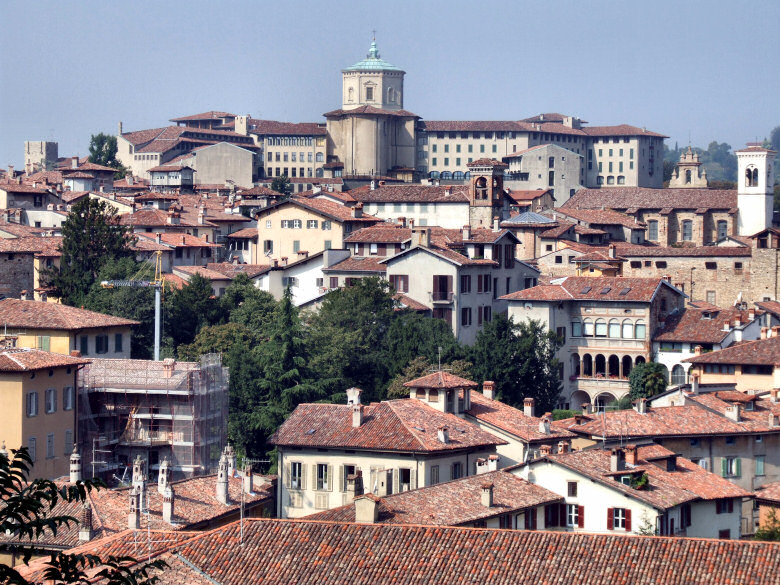
Shoe Market Square - Bergamo
Europe,
Italy,
Bergamo,
Piazza Mercato delle Scarpe, a charming corner of the city of Bergamo in Lombardy. This square is an integral part of the city’s identity, witnessing centuries of history and cultural transformations. Located a short distance from the historic center, it is known for its vibrant commercial activity and the numerous events hosted here. The history of this square is closely linked to the artisanal traditions of the region, particularly leatherworking, which dates back to the Middle Ages. Thus, the square plays a crucial role in narrating Bergamo’s economic past, making it a reference point for understanding the city’s evolution over time.Origins and HistoryThe origins of Piazza Mercato delle Scarpe date back to medieval times, a period when Bergamo, divided into Città Alta and Città Bassa, began to develop a thriving economy based on craftsmanship and trade. With particular reference to the shoe industry, the square became an important exchange center for the sale of shoes and leather accessories. The tradition of leatherworking in Bergamo is confirmed by historical documents that attest to its existence as early as the 13th century.Over the centuries, Piazza Mercato delle Scarpe underwent various transformations. During the Renaissance, the square gained new life thanks to commercial expansion and the construction of new buildings that enriched its architecture. One of the crucial moments in its history occurred in the 17th century when it was refurbished to make the market more functional and facilitate access for artisans and citizens. The following centuries saw a continuous renewal of the square, accompanied by significant public works that redefined its structure and usability.In the 19th century, with the advent of the industrial era, the shoe market thrived further, becoming one of the most frequented in the city. However, the square also experienced difficult times, including conflicts and wars that affected its use and functionality. In the 20th century, after several restoration interventions, the square returned to being a hub of city life, integrating new activities and events, such as markets and cultural festivals.The latest renovations, carried out in the 2000s, aimed to preserve the historical heritage, referring to local architectural styles and improving the aesthetic and functional aspects of the square. Today, Piazza Mercato delle Scarpe is a symbol of Bergamo’s commercial vitality, continuing to host events and manifestations that blend tradition and modernity.What to ObserveAs you enter Piazza Mercato delle Scarpe from the main entrance, you will find yourself in a vibrant and welcoming environment. To your left, you can notice the typical Lombard architecture, characterized by stone facades and large windows. These buildings reflect styles ranging from Gothic to Baroque, clear signs of Bergamo’s rich architectural history.Continuing along the square, to your right, you can admire the historic Church of Sant’Alessandro in Colonna. This church, dedicated to the patron saint of Bergamo, is an extraordinary example of religious art from the Renaissance and Baroque periods, with frescoed interiors and numerous works by local artists. Don’t miss the opportunity to enter and discover the artistic details that enrich this place of worship.As you continue your stroll, you may notice some street artists and artisans showcasing their creations. This is one of the most characteristic aspects of the square, which continues to host commercial activities related to the leather tradition, bringing together emerging and historic talents in the sector.If you look towards the center of the square, there is a large open space that often serves as a backdrop for public events and markets. This central area is the beating heart of the square, where everyday life and local traditions intertwine. It is typical to find small markets, where you can purchase artisanal shoes and other typical products from Bergamo.On the opposite side of the square, we invite you to observe an impressive fountain, which represents an important resource for the local community. This fountain, active since the 18th century, not only beautifies the place but also offers an opportunity to refresh during the hot summer days.Finally, don’t forget to look up to notice the balconies and architectural details of the surrounding buildings. Here, you can capture the essence of Bergamo’s historical heritage, with styles that speak of past epochs, each with a story to tell.Context and ConnectionsPiazza Mercato delle Scarpe is located in the vibrant heart of Bergamo, just a short walk from other significant attractions. Within walking distance, you can visit Via XX Settembre, famous for its shops and lively atmosphere. This avenue represents the main commercial artery of the city, perfect for continuing your exploration of Bergamo.Another fascinating place to visit nearby is the Basilica of Santa Maria Maggiore. This extraordinary church, one of the most important in Bergamo, is known for its beautifully frescoed interiors and profound historical significance. Its proximity to Piazza Mercato delle Scarpe makes it a must-visit for those wishing to immerse themselves in local culture and history.Lastly, the Castle of San Vigilio, situated a little higher than the square, offers a breathtaking panoramic view of the city and its surroundings. This ancient fortress, dating back to the medieval era, is an ideal place to conclude your visit to Bergamo, enjoying the beauty of its landscapes and the tranquility of its gardens.CuriositiesAn interesting aspect of Piazza Mercato delle Scarpe is its connection to the history of fashion. During the Renaissance, shoes were not only a practical item but also a symbol of social status. The best artisans in Bergamo worked alongside models and designers who influenced the trends of the time.Another intriguing fact concerns the daily life of the square: in the 1930s, during the Fascist era, Piazza Mercato delle Scarpe became a meeting place for political events and demonstrations. This change reflects the social importance of the square, which has served as a stage not only for commerce but also for the cultural and political dynamics of the city.Finally, the square also hosts local festivals celebrating artisanal and gastronomic traditions, such as the Cheese Fair and the Truffle Fair, attracting visitors from all over Italy. These events not only evoke the historical significance of the square but also enrich the connection between past and present, allowing everyone to experience an authentic Bergamo experience.
Read More