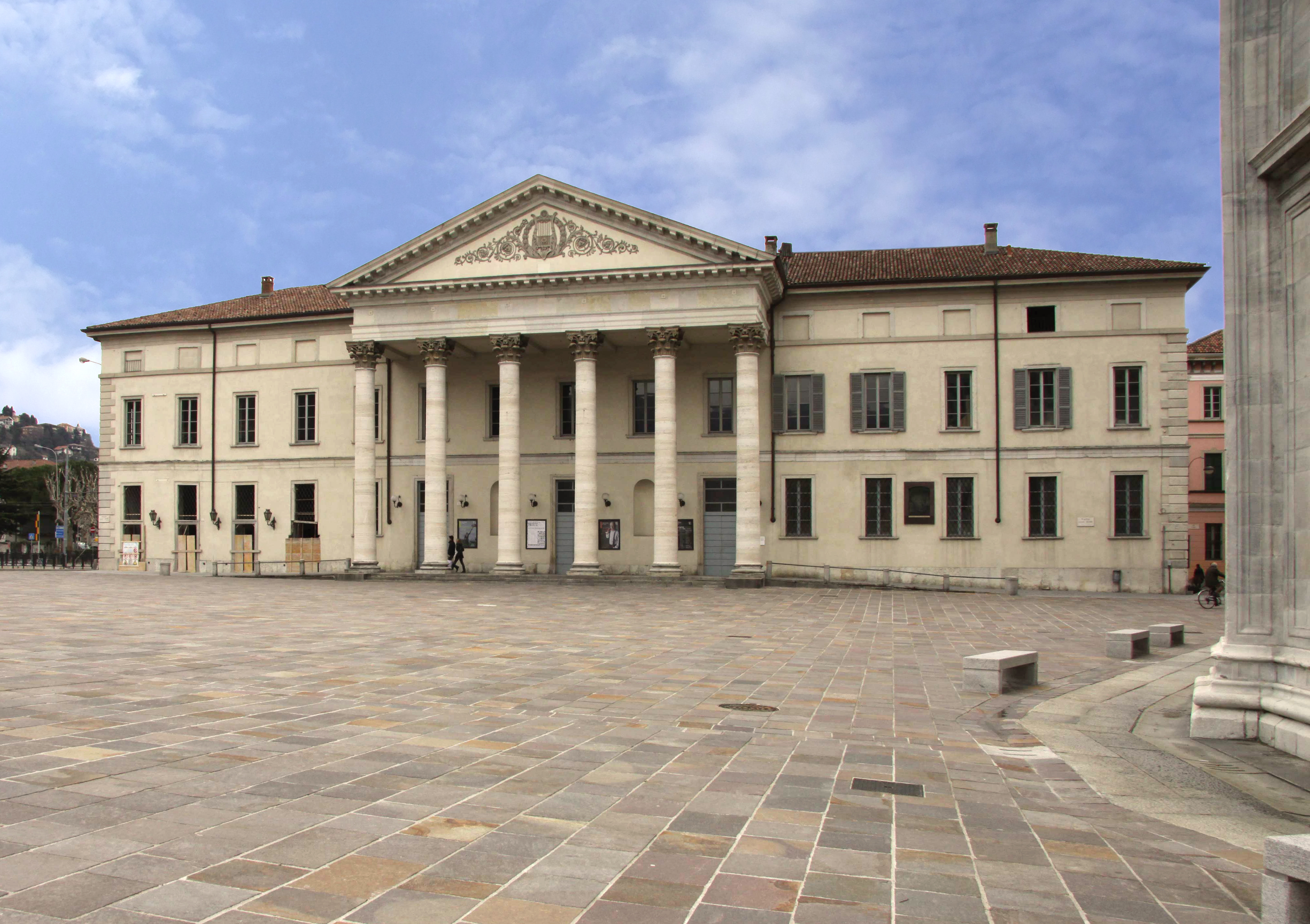
Social Theatre - Bergamo
Europe,
Italy,
Bergamo,
The Social Theater of Bergamo holds a special place in the identity of the city. Located in the heart of the upper town, it has been a symbol of Bergamo’s cultural and artistic life since its opening in 1770. It is famous for its exceptional acoustics and the elegance of its architecture, which reflects the neoclassical style. The theater has hosted operas, concerts, and performances of all kinds, becoming over time a landmark for music and theater enthusiasts. Throughout its history, the Social Theater has undergone numerous changes, transforming from a space for lyric performances to a venue for a wide range of cultural events.Origins and HistoryThe origins of the Social Theater date back to the second half of the 18th century, a period of intense cultural activity throughout Europe. The construction of the theater was commissioned by a group of noble Bergamasques, eager to create a space that could host performances and theatrical representations. Work began in 1768, and after just two years, the theater was inaugurated. Architect Giovanni Antonio Battaia designed the building, which featured neoclassical influences with an interior adorned with stuccos and frescoes.During the 19th century, the Social Theater became one of the main stages of Italian opera, attracting renowned artists and an ardent audience. In the 1920s, the theater underwent a major reconstruction. Restoration work, led by architect Giovanni Battista Gallo, allowed the building to be modernized without compromising its original charm. This intervention culminated in the reopening of the theater in 1930.In the following years, however, the Social Theater faced difficult times. World conflicts led to a reduction in theatrical activities, and the subsequent years were marked by a slow decline. It was only starting in the 1980s, thanks to a series of restructuring and revitalization programs, that the theater began to shine again as a cultural center. In the 2000s, the local administration continued to support significant restoration work that brought the theater back to its former glory.Today, the Social Theater is not only a venue for lyric events but also hosts concerts, ballets, and other cultural events, reaffirming its primary role in Bergamo’s cultural life. The theater is a meeting point for artists and audiences, as well as a place where tradition and innovation blend, creating a consistently vibrant and engaging atmosphere.What to ObserveAt the entrance of the Social Theater, one is welcomed by a magnificently decorated façade, characterized by Ionic columns and a grand portico. One immediately notices the distinctive mark of the neoclassical era, which conveys a sense of harmony and balance. Continuing inside, you will find a spacious hall where the sound of your footsteps will resonate between the decorated walls.In the foyer, also dating back to the renovation period of the 1920s, we observe a series of frescoes that tell the story of music and theater. The artists who contributed to these decorations were active in restoring the Social Theater’s dignity and beauty. These details clearly demonstrate the prestige that the theater has always held within the community.When you step through the threshold of the main hall, one of the first things that strikes you is the deep red velvet seats, arranged to ensure good visibility for all spectators. This space, with its frescoed ceiling and gold decorations, can accommodate about 500 people, making it the perfect venue for lyric and theatrical performances. The warm color palette conveys an intimate and welcoming atmosphere, creating the perfect backdrop for the magic of theater.Continuing on, we cannot help but admire the stage, which has been adapted over the years to meet the needs of various performances. Modern technology has been integrated without compromising the historical appearance of the building. This balance between tradition and innovation is what makes the Social Theater a unique place for artistic performances.As we approach the back of the hall, we notice the loggione, one of the most fascinating features of our theater. This space, typical of historic theaters, was once reserved for lower-income spectators and offers a special view of the stage, allowing one to observe the actors from an elevated position. Here, the past and present merge, attesting to how the theater was accessible to everyone.If you look up, you will admire the central chandelier, a standalone work of art. Made of crystal, it reflects light creating luminous plays that enrich the entire hall. This handcrafted wonder is an exceptional example of how design can elevate the beauty of a space.Finally, the lighting of the Social Theater is designed to enhance visual and auditory experiences, creating atmospheres that vary depending on the shows being performed. This adaptability has been crucial in maintaining the theater’s relevance in the contemporary cultural landscape.Context and ConnectionsThe Social Theater is located in the Bergamo Alta district, an area that is a true treasure trove of history and culture. Just a short walk from the theater lies the Citadel of Bergamo, a fortified complex that offers an exciting view of the city. This place, of great historical importance, is a perfect example of medieval and modern military architecture.Not far from the theater, one can visit the Basilica of Santa Maria Maggiore, a masterpiece of Romanesque and Baroque art. This basilica is famous for its frescoes and its sumptuous altar, and it is an important place of worship. The connection between the Social Theater and the basilica is significant, as both represent the rich cultural heritage of Bergamo.Another essential stop nearby is the Colleoni Chapel, one of the most celebrated works of Lombard Renaissance. Designed by architect Giovanni Antonio Amadeo, the chapel is an extraordinary example of how art and architecture can combine to create a place of spiritual beauty.These wonders contribute to making the Social Theater not only a place of entertainment but also a starting point for exploring the history and art of this fascinating city.CuriositiesOne of the most fascinating aspects of the Social Theater is its diverse repertoire, which over the years has included works by renowned composers such as Giuseppe Verdi and Giacomo Puccini. Each year, the theater attracts talents from around the world, making Bergamo an internationally significant center in the field of music and theater.Furthermore, the Social Theater has served as a set for various film productions. Its extraordinary beauty and historical atmosphere have made it an ideal location for filming movies set in past eras.Lastly, it is interesting to note that the theater has an active educational program aimed at involving schools and young people in theatrical culture. Through workshops and performances, the Social Theater is committed to passing on the love for art to new generations.
Read More