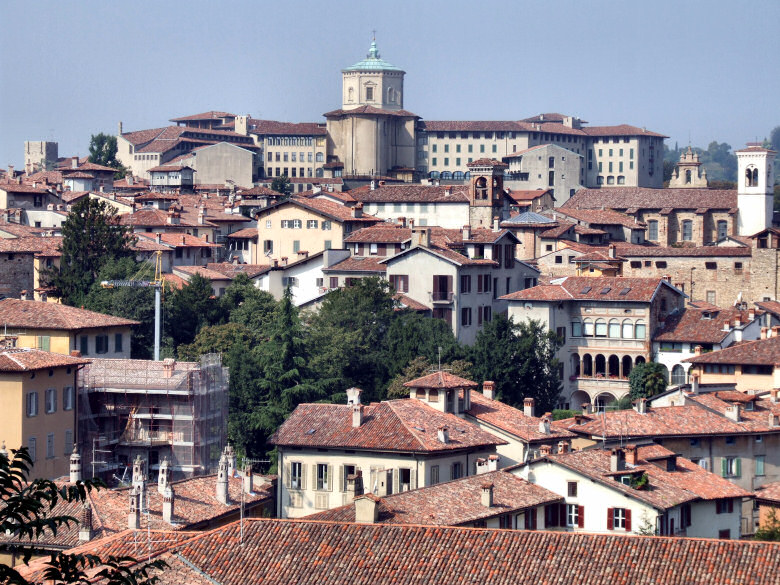
Suardi Gardens - Little Temple - Bergamo
Europe,
Italy,
Bergamo,
The Suardi Gardens and the Tempietto represent an important corner of beauty and history in the city of Bergamo. Located in the upper part of the city, these places are known for their charm and tranquility, offering a breathtaking view of the underlying plain. The Gardens were created in the 19th century by Giovanni Suardi, a noble from Bergamo, as a tribute to natural beauty and as a meeting place for the nobility of the time. The Tempietto, built in neoclassical style, stands at the center of the gardens and represents a symbol of Bergamasque culture and art. The combination of nature, architecture, and history makes this place a significant landmark in the cultural landscape of the city.Origins and HistoryThe Suardi Gardens date back to the 1800s, a period when the city of Bergamo began to transform and modernize. Giovanni Suardi, a physician and intellectual, decided to dedicate himself to the creation of these public gardens, inspired by the desire to offer citizens a place for recreation and contemplation. In 1823, Suardi purchased the area and, for several years, worked to create an English-style garden that met the needs of beauty and harmony with nature. This style is characterized by the use of soft and natural shapes, rather than rigid patterns, creating immersive and evocative landscapes.The Tempietto, located at the center of the gardens, was built in 1825 thanks to the contribution of Giovanni Suardi himself. This structure, in neoclassical style, is inspired by the temples of ancient Greece, symbolizing the search for aesthetics and classical culture that characterized the era. The layout of the Tempietto is circular, with a portico of Doric columns supporting a conical roof. This monument is not only an architectural element but also a social meeting place: many cafés and noble gatherings were organized in this charming setting.Over the years, the Suardi Gardens underwent various transformations and restorations. Between the late 19th and early 20th centuries, the area was expanded and enriched with new plant species, making it an increasingly interesting place for citizens and tourists. The Tempietto, unfortunately, faced several challenges, but it was restored in 2004 thanks to the commitment of the Municipal Administration, which wanted to revive this symbol of Bergamasque culture. Today, the Suardi Gardens and the Tempietto are an important public park and a landmark for the city’s history.What to ObserveAt the entrance of the Suardi Gardens, one can already sense a feeling of calm and beauty. The main avenue is lined with centuries-old trees, creating an atmosphere of serene shadows. At the entrance, on your left, you can notice an elegant wrought-iron gate, the result of local craftsmanship from the time of its construction. This gate represents a first sign of the care and attention to detail that characterizes the garden.Continuing along the central avenue, after a short walk, you will find the Tempietto. Its circular shape and Doric columns are truly captivating. On the triangular pediment, you find decorations that evoke classical mythology, symbols of wisdom and beauty. This work not only represents a monument but a true celebration of neoclassical art. The columns are made of local stone, a material that blends beauty and durability.Once inside the Tempietto, pay attention to the architectural details. The ceiling is adorned with stuccos that tell stories of mythological heroes and goddesses. These decorative elements are among the few examples of the late neoclassicism in Bergamo, highlighting the transition to more modern styles. This space, although small, conveys a strong sense of grandeur and significance.Add to your list of observations the terrace surrounding the Tempietto, an ideal place to admire an extraordinary panoramic view of Bergamo and the surrounding plain. From here, you can glimpse the silhouettes of the Alps in the distance and the red roofs of the old city. This panorama has inspired poets and artists over the centuries, becoming a true symbol of Bergamasque beauty.Another element not to be missed is the fountain located in the southern part of the garden. This was designed to evoke the sound and movement of water, creating an atmosphere of serenity. The flowing water is the emblem of life and regeneration, concepts highly valued in 19th-century romanticism.Finally, also explore the paths that wind through the gardens. As you walk, you will encounter various species of plants and flowers, many of which were introduced during the time of Giovanni Suardi. These gardens are a true outdoor botanical museum, where each plant tells a story.Context and ConnectionsThe Suardi Gardens are located in the Città Alta (Upper Town) of Bergamo, an area rich in history and culture. This part of the city is known for its ancient Venetian walls, a UNESCO World Heritage Site, which encircle the entire historic center. A short walk from the gardens, you can also visit the Basilica of Santa Maria Maggiore, one of the most important places of worship in the city, which houses artworks of great value.Another point of interest nearby is the Castle of San Vigilio, easily reachable with a walk near the gardens. This castle offers an even broader panoramic view of the city and the surrounding countryside and is a landmark rich in history and charm.CuriositiesOne interesting aspect of the Suardi Gardens is the originality of the landscaping project. The gardens were among the first examples in Italy of publicly accessible gardens created in the English style. This innovative approach at the time influenced many other parks and gardens throughout Italy.Furthermore, the Tempietto has been a source of inspiration for various artists and writers over time, many of whom found in this environment a refuge for their creativity. The place has also been the scene of cultural and social events, contributing to building a community around the theme of art and beauty.
Read More