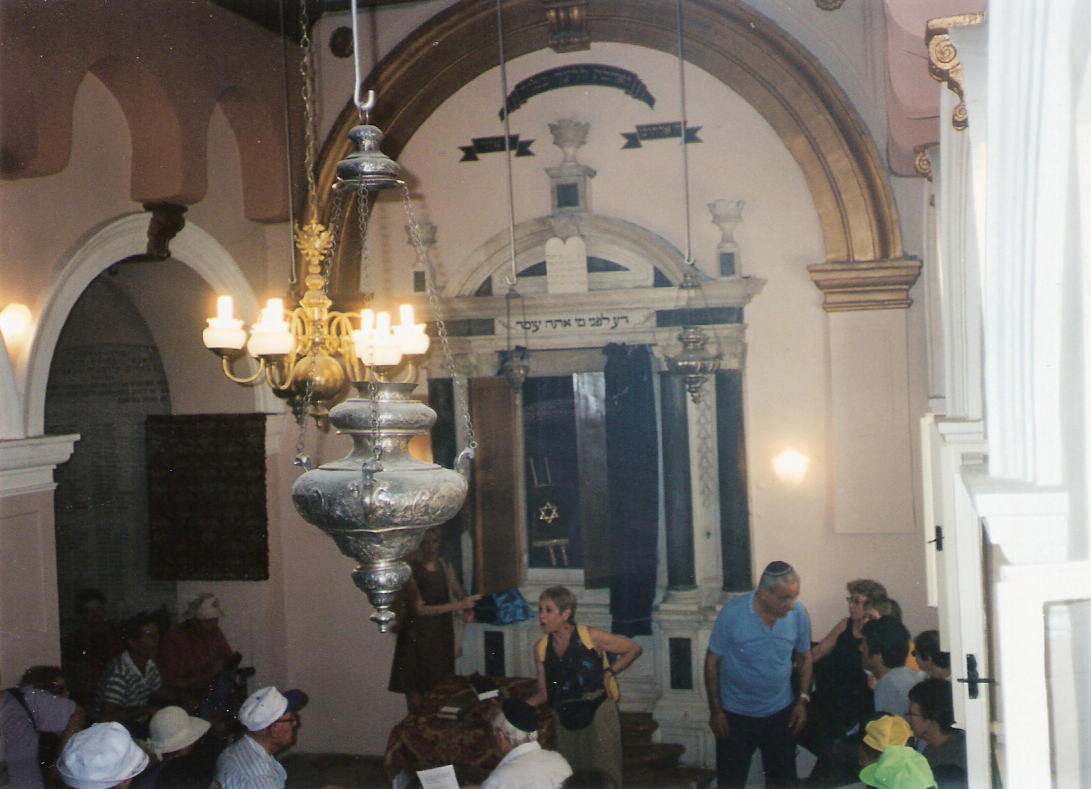
Synagogue of Split
Europe,
Croatia,
Split,
Diocletian’s Palace
The Synagogue of Split is one of the oldest Sephardic synagogues still in use in the world, dating back to the 16th century. Located in Židovski Prolaz, within the walls of Diocletian’s Palace, it represents an important testimony to the presence and resilience of the Jewish community in the city.
The Jewish history of Split begins long before the construction of the current synagogue. During the Roman period, the nearby city of Salona, present-day Solin, hosted a flourishing Jewish community, as evidenced by numerous archaeological finds, including Jewish candelabras and fragments of sarcophagi decorated with menorahs. When Salona was destroyed by the Avars in the 7th century, many of its inhabitants, including Jews, sought refuge within the walls of Diocletian’s Palace, marking the beginning of the city of Split.The current synagogue was built around 1500, using the upper floors of two medieval houses joined together. This building became a refuge for Sephardic Jews fleeing the Inquisition in Spain and Portugal. The Jewish community grew significantly during the 15th and 16th centuries, thanks to the arrival of these refugees. The synagogue is distinguished by its unique architecture: the aron hakodesh, the sacred ark containing the Torah scrolls, is embedded directly in the western wall of Diocletian’s Palace. The interior is characterized by a painted blue ceiling, elegant arches, and a large brass chandelier, which together create an atmosphere of solemn beauty.Over the centuries, the synagogue and the Jewish community have faced numerous challenges. A major fire in 1507 destroyed a previous place of worship, leading to the construction of the current synagogue. During World War II, the synagogue was severely damaged by Italian fascists, who destroyed many religious objects and historical documents in a bonfire in the city’s main square. Subsequently, during the Nazi occupation, many Jews from Split were deported and over 50% of the community perished.After the war, the synagogue was restored and further conservation work was carried out in 1996 and 2015. These interventions included repairing facades, replacing damaged shutters, and installing new drainage systems to prevent water infiltration. These restoration works have helped preserve this important historical site for future generations.The Jewish community of Split, although reduced in numbers, continues to be active. The synagogue is not only a place of worship, but also the center of community life, hosting cultural events and educational activities. The nearby Morpurgo bookstore, one of the oldest in Europe, founded by an important Jewish family, is another landmark of Split’s Jewish heritage.A place of particular interest is the old Jewish cemetery on Mount Marjan, established in 1573. This cemetery contains about 700 tombstones, with inscriptions in Hebrew, Italian, and Croatian, which testify to the long history of the community. The shape of the tombstones, some of which resemble a sarcophagus, reflects the centuries-old Sephardic traditions.
Read More