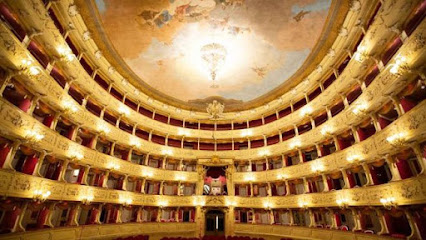
Teatro Sociale of Como, Como
Europe,
Italy,
Como,
Welcome to the audio guide dedicated to the Teatro Sociale di Como, a place that is not just a building, but a true symbol of the city’s cultural identity. Inaugurated in 1813, this theater has hosted operas, concerts, and performances that have marked the history of Italian art and music. Located in the heart of Como, the theater is a precious example of neoclassical architecture, known for its exceptional acoustics and the beauty of its interiors. Its history is filled with significant events that reflect not only the local culture but also the social and political transformations of Italy over the centuries. The Teatro Sociale was inaugurated in 1813, designed by architect Giuseppe Cusi at the initiative of a group of nobles and bourgeois from Como eager to equip the city with a state-of-the-art theater. The choice of the name “Sociale” reflected the intention to make the building accessible to all social classes. In the early decades of the 1800s, the Teatro Sociale became an important cultural center, hosting works by renowned composers of the time, such as Giuseppe Verdi. However, in 1905, the theater underwent significant renovations aimed at modernizing the spaces and making them more functional. The works involved architect Giacomo Moriggia, who maintained the aesthetics of the original while paying greater attention to new stage technologies. In the 1930s, the Teatro Sociale again underwent important renovations but suffered damage during the wartime period of the Second World War. Fortunately, after the war, the theater was restored and reopened to the public in 1947, resuming its central role in the cultural life of the city. Until 1970, the Teatro Sociale continued to host performances of operas and concerts, becoming one of the most important theaters in Italy. In 1983, a new restoration returned it to its former glory, with targeted interventions to preserve the original decorations and improve the functionality of the spaces. Today, the Teatro Sociale di Como is not only a tourist attraction but a vital center for the promotion of culture and music, hosting performances of all kinds, from operatic works to classical and folk music concerts. Upon entering the Teatro Sociale, the first thing that strikes you is the splendid neoclassical façade, characterized by columns and elegant architectural details. Notice the bas-reliefs that decorate the entrance; they serve as a tribute to art and culture. The façade is made of stone and develops over several levels, with a large attic overlooking the square. As soon as you pass through the entrance, you will find yourself in the foyer. This space is adorned with stuccos and frescoes that recall the art of the early 1800s, a true embrace of the artistic culture of the time. The decorative elements have been carefully maintained during recent restorations, and the chandeliers that illuminate the area with a warm and welcoming light are still visible. Continuing on, you enter the main hall. Here the view is breathtaking: the wide stage and the seating area that divides into various tiers of boxes. The hall can accommodate over 900 spectators. However, the peculiar feature of this hall is the acoustics, which has been designed and engineered to ensure each spectator has an optimal auditory experience. This aspect has contributed to the theater’s fame as one of the best in Italy. On stage, you can admire the original curtain of the Teatro Sociale, a work of art depicting the Trinity, restored in 2005 after years of neglect. Its beauty and vibrant colors capture attention and tell a story of tradition and renewal. During a visit, do not forget to look up. The ceiling decorations are equally fascinating. The frescoes depict mythological and allegorical scenes, created by local artists. These works add an extra dimension to your visual experience, taking you back in time. Another key area of the theater is the gallery. Here, you will find a privileged view of the stage, ideal for enjoying performances from a unique perspective. This space has been designed to host the audience comfortably, with unobstructed views. Finally, the backstage and technical areas deserve a mention. These spaces, although not always accessible to the public, are designed to ensure optimal functionality and are an example of how the theater has adapted to contemporary needs while preserving its historical significance and charm. The Teatro Sociale di Como is located in an area that pulses with cultural life. In the immediate vicinity, you can find various points of interest. Just a short walk away is the Duomo di Como, a majestic cathedral in Gothic style, worth a visit for its artistic stained glass windows and white marble façade. Another point of interest is the Tempio Voltiano, dedicated to Alessandro Volta, the famous inventor of the battery. This museum houses important artifacts and documents that tell the story of Volta’s life and discoveries, making the visit an enriching experience. For those who enjoy walking, the lakeside promenade of Como offers a stunning view of the lake and the surrounding mountains, creating a beautiful contrast with the urban architecture. Here, you will also find cafes and restaurants where you can refresh yourself and enjoy the view. An interesting curiosity about the construction of the Teatro Sociale is that it was among the first to introduce innovative engineering techniques to improve the acoustics of the hall. This pioneering approach has also influenced other Italian theaters. Moreover, the theater has been an important bridge for the dissemination of operatic music in northern Italy and has been frequented by many famous artists and composers. Today, the Teatro Sociale continues to be a benchmark for emerging and established artists. Finally, a detail that often escapes visitors is the tradition of the “soprano of the balcony.” In past centuries, it was customary for the most influential women to come and “sing” from their boxes, causing great stir and attention. Thank you for accompanying us on this exploration of the Teatro Sociale di Como. Don’t miss the opportunity to discover the nearby places that will further enrich your visit.
Read More