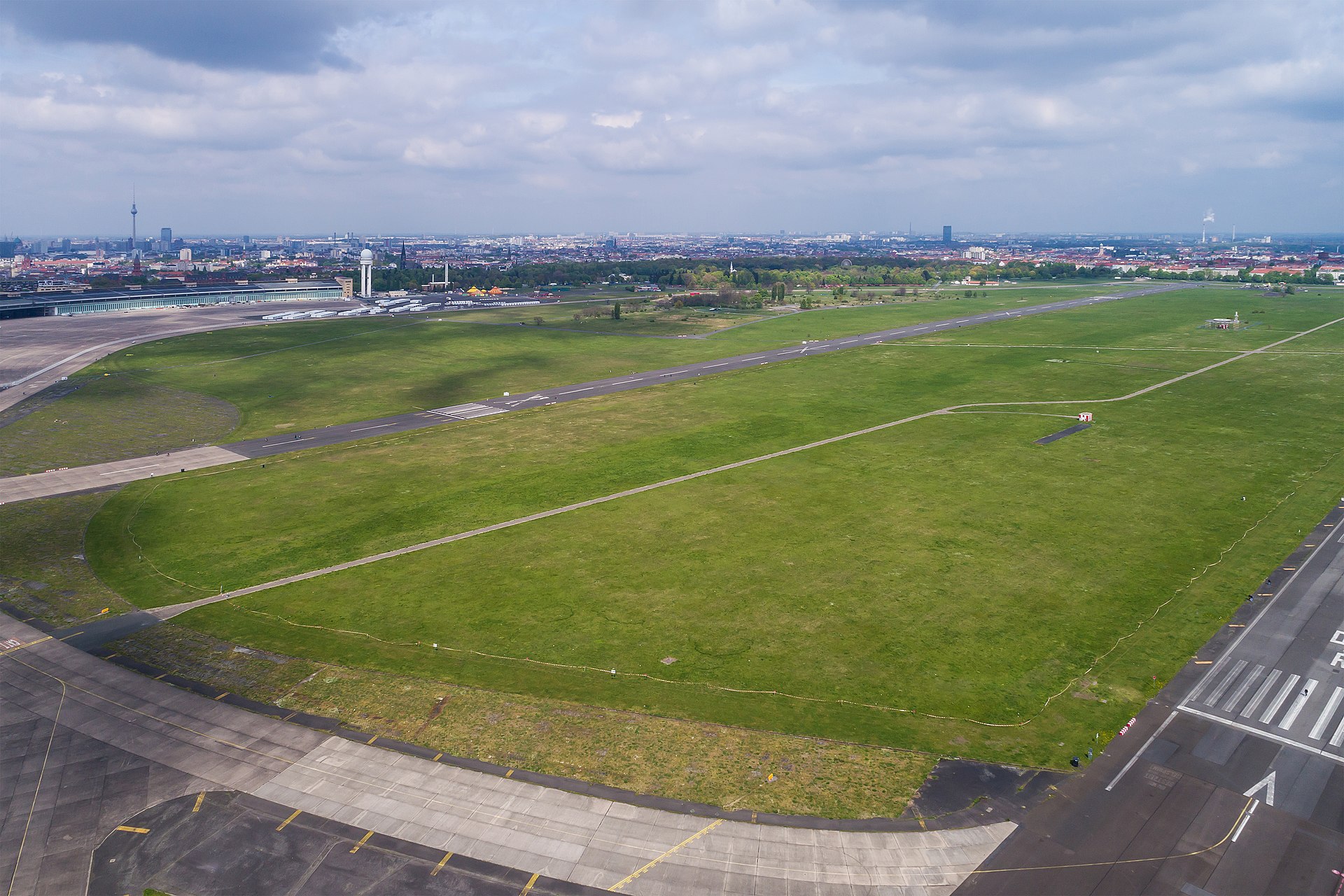
Tempelhof Camp (Tempelhofer Feld)
Europe,
Germany,
citta,
Tempelhof
The Tempelhofer Feld in Berlin is a place that extraordinarily embodies the historical, social, and cultural complexity of the city. Located in the Tempelhof-Schöneberg district, this vast open space of approximately 355 hectares is one of the largest public parks in the world and offers a fascinating glimpse into Berlin’s recent history.
The history of Tempelhofer Feld begins long before its current incarnation as a public park. Originally, the area was a Prussian military training ground in the 19th century. Later, in 1923, Tempelhof Airport was built, one of the oldest civilian airports in the world. The terminal building, completed in the 1930s during the Nazi regime, is an imposing example of monumental architecture and represented the symbol of Germany’s technological and logistical power at the time. Designed by architect Ernst Sagebiel, the terminal is one of the largest structures ever built and remains an icon of modern architecture.Tempelhof Airport played a crucial role during the Berlin Airlift of 1948-1949, when the Western Allies used the airport to supply the city blockaded by the Soviets. This event not only saved West Berlin from hunger and cold, but also solidified Tempelhof as a symbol of freedom and resistance against oppression.After the airport closed in 2008, the future of the site was uncertain. However, in 2010, Tempelhofer Feld was opened to the public as a park, quickly transforming into one of Berlin’s most beloved and utilized green spaces. This transformation is a perfect example of Berlin’s ability to reinvent itself, turning industrial and military spaces into places of community and creativity.One of the most fascinating aspects of Tempelhofer Feld is its ability to adapt and respond to the community’s needs. In 2014, a referendum blocked a real estate development plan that would have significantly reduced the park’s open space. The citizens of Berlin voted to keep Tempelhofer Feld as a public park, demonstrating the strong bond between the community and this green space.The historical aspect of the site has not been forgotten. The terminal building, with its imposing architecture and vast interior spaces, has been preserved and now hosts cultural events, exhibitions, and fairs. This mix of history and modernity makes Tempelhofer Feld a unique place, where the past and present harmoniously meet. An interesting anecdote concerns the role of Tempelhofer Feld during the refugee crisis of 2015. Part of the terminal building was used to accommodate thousands of refugees, providing temporary shelter in a time of great need. This gesture of solidarity reflects Berlin’s welcoming spirit and the importance of Tempelhofer Feld as a space for community support.
Read More