Temple Bar
Europe,
Ireland,
citta,
Temple Bar
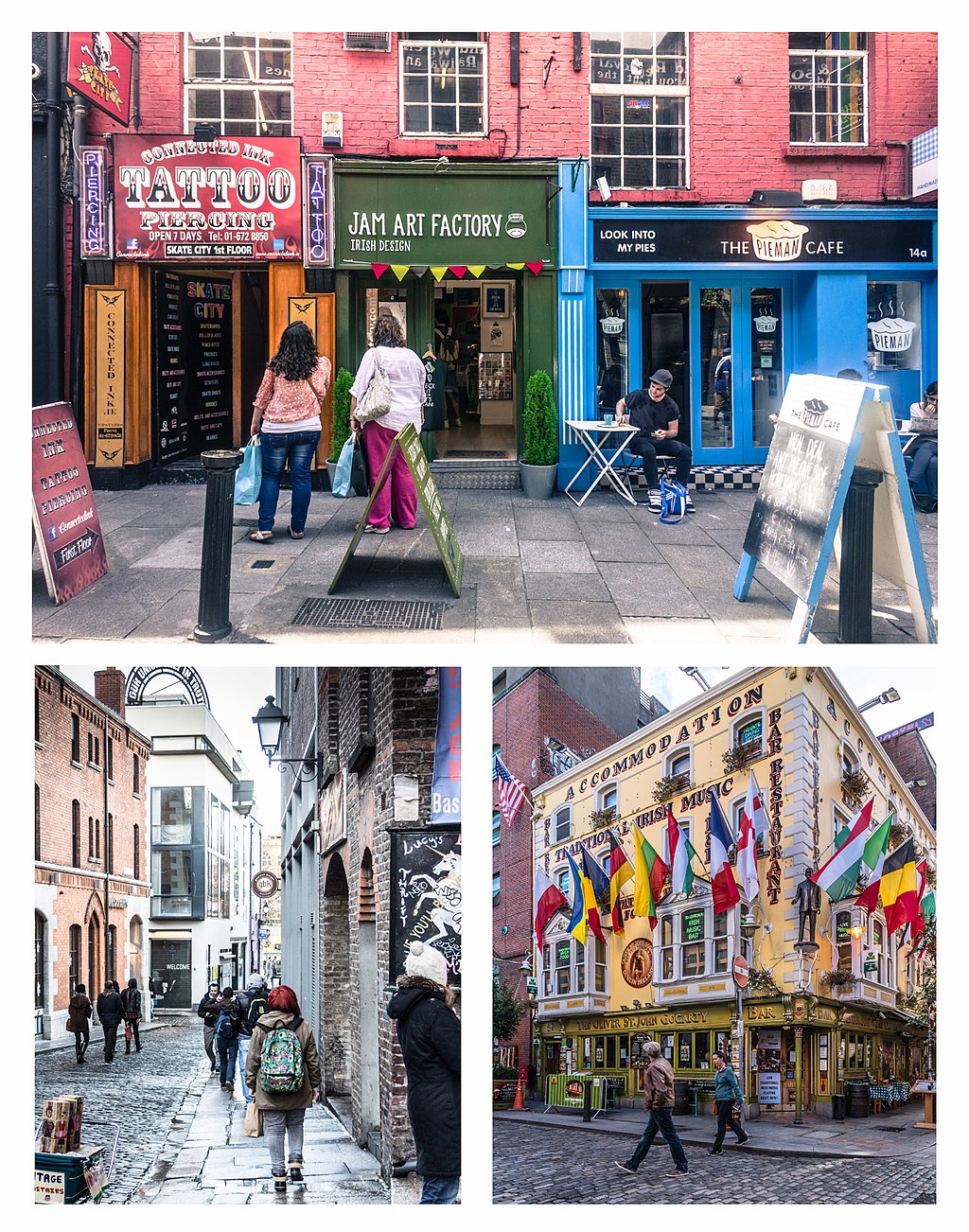
Temple Bar, the beating heart of Dublin’s cultural and nightlife scene, is a vibrant and historic district located on the south bank of the River Liffey. This corner of the city, now famous for its pubs, restaurants, art galleries, and theaters, has undergone an extraordinary evolution, transforming from an area of urban decay to a model of cultural regeneration.
The origins of Temple Bar date back to the 13th century, when the area was known as St. Andrews Parish. During the medieval period, it was a suburban area outside the city walls but fell into disuse at the beginning of the 14th century due to attacks by native Irish. The district was redeveloped in the 17th century, particularly thanks to Sir William Temple, who established his residence and gardens there, giving the area its name.In the 18th century, Temple Bar became a hub of commercial and social activity, hosting taverns, warehouses, and even brothels. However, with the relocation of the customs house to the north bank of the Liffey in 1791, the area began to decline. This decline continued into the 19th and 20th centuries, with Temple Bar becoming a run-down district, with many buildings in a state of abandonment.The turning point came in the 1980s when the state transport company Córas Iompair Éireann (CIE) purchased much of the area’s buildings with the intent of building a large bus terminal. While these plans were being developed, the buildings were rented out at low cost, attracting artists, small shops, and galleries, inadvertently transforming Temple Bar into a lively cultural center. Strong opposition from residents and cultural associations led to the abandonment of the bus terminal project and the beginning of a government-supported cultural regeneration program.In 1991, the Irish government established Temple Bar Properties, a non-profit organization with the goal of transforming Temple Bar into a cultural district. This project received funding from the European Union and led to the creation of numerous cultural institutions, such as the Irish Photography Center, the Ark Children’s Cultural Center, the Irish Film Institute, and the Temple Bar Gallery and Studios.Today, Temple Bar is a vibrant tourist district, known for its cobblestone streets, historic architecture, and a unique atmosphere that combines culture and entertainment. It hosts cultural events, outdoor markets, and festivals that attract visitors from all over the world. The district is also home to numerous famous pubs, such as The Temple Bar Pub, The Porterhouse, and The Oliver St. John Gogarty, where one can listen to live music and enjoy traditional Irish hospitality.Temple Bar is also an example of how urban regeneration can succeed through collaboration between the government, local communities, and private investors. The project has demonstrated that culture can be a powerful engine of urban development, capable of transforming run-down areas into attractive and thriving destinations.
Read More