Triana
Europe,
Spain,
Seville,
Triana
The neighborhood of Triana, located on the western bank of the Guadalquivir River in Seville, is a place steeped in history, culture, and traditions. Its origins date back to Roman times, when it was known as Traiana, and further developed during the Islamic period, becoming a neighborhood of fishermen, sailors, and artisans. Triana is famous for its strong sense of community identity, reflected in its narrow cobbled streets, white houses with flowered patios, and historic churches that dot the neighborhood.
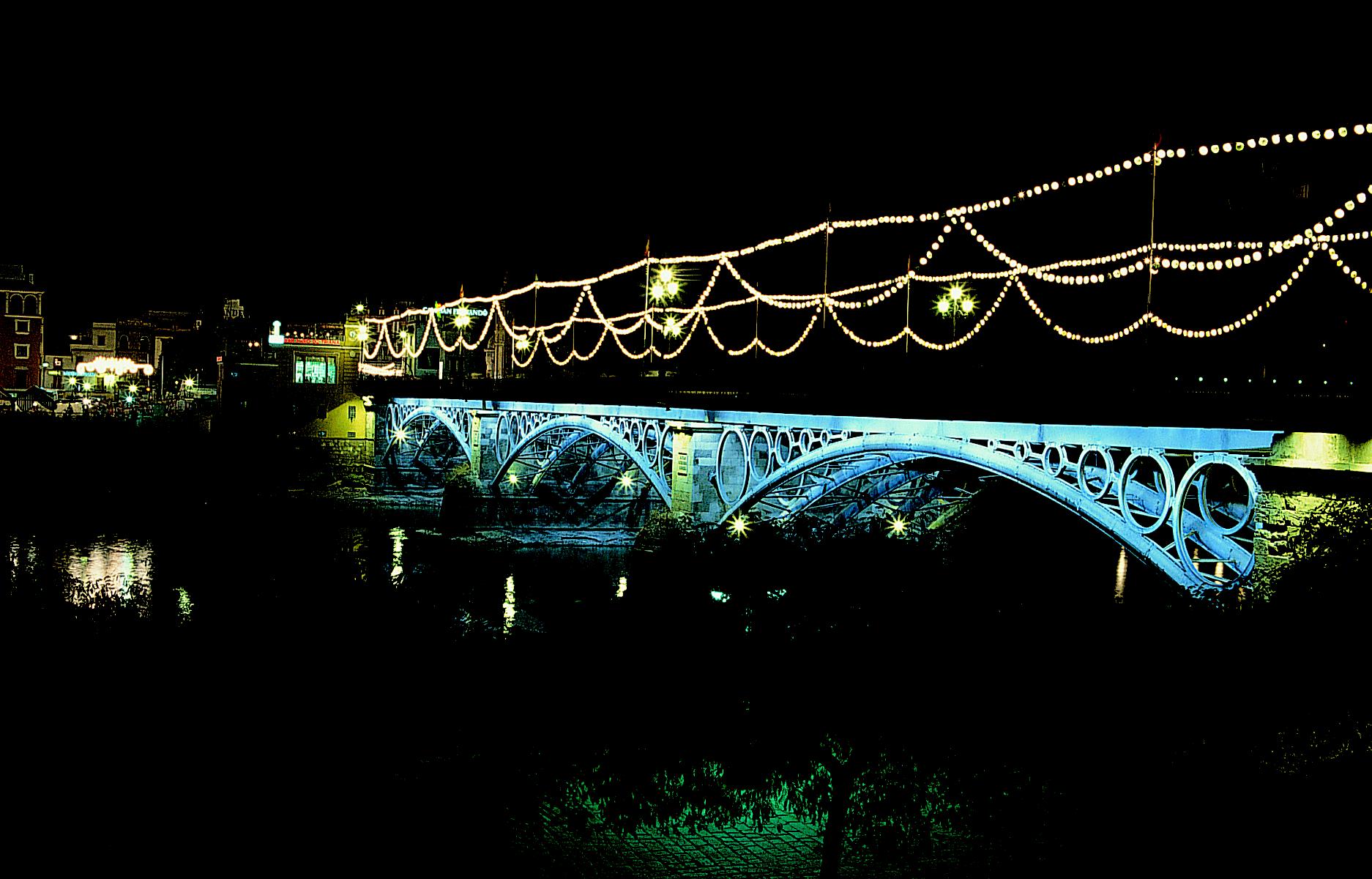
The heart of Triana is undoubtedly its market, the Mercado de Triana, built on the ruins of the castle of San Jorge, an ancient medieval fortress. This lively market is a microcosm of Sevillian life, where you can find fresh products, local specialties, and traditional tapas. It is a place where residents meet daily, making the market not only a center of commerce but also a point of social aggregation.One of the most distinctive elements of Triana is its long ceramic tradition. Since the Middle Ages, the neighborhood has been famous for its ceramics and azulejos, the decorated tiles that adorn many buildings in Seville. The artisan ceramic shops of Triana, such as the historic Fábrica de Cerámica Santa Ana, continue to produce unique pieces using traditional techniques passed down from generation to generation. Visiting these shops offers a fascinating glimpse into an art that is deeply rooted in local culture.Triana is also the beating heart of flamenco, a musical and dance genre synonymous with Seville. Many of the greatest flamenco artists in history were born and raised in this neighborhood. Tablao El Arenal and Casa Anselma are two of the most renowned places where you can witness authentic flamenco shows. These shows are not just artistic performances, but deep emotional experiences that reflect the passion and soul of Andalusian culture.The neighborhood is dotted with historic churches worth visiting, such as the Iglesia de Santa Ana, often called the “Cathedral of Triana.” This Gothic church, built in the 13th century, is one of the oldest religious buildings in Seville and houses numerous sacred works of art. Another significant church is the Capilla de los Marineros, home to the Hermandad de la Esperanza de Triana, one of the most important brotherhoods of the Sevillian Holy Week. The statue of the Virgen de la Esperanza, venerated with great devotion, is one of the main attractions during the Easter processions.Triana is also known for its connection to the Guadalquivir River. The river has always played a crucial role in the life of the neighborhood, providing livelihoods through fishing and trade. The Isabel II Bridge, commonly known as Puente de Triana, connects the neighborhood to the historic center of Seville and offers breathtaking panoramic views of the city. This bridge, built in the 19th century, is a symbol of the connection between Triana and the rest of the city.The history of Triana is rich in anecdotes and colorful characters. It is said that the famous explorer Christopher Columbus stayed in Triana during the preparations for his voyage to the New World. Additionally, the neighborhood has a tradition of resistance and rebellion, historically being a refuge for gypsies and the marginalized.In recent years, Triana has undergone a process of urban renewal that has led to a harmonious fusion of the old and the new. Alongside the ancient artisan shops and traditional taverns, modern cafes, designer boutiques, and gourmet restaurants have emerged. This mix of tradition and modernity makes Triana a dynamic and fascinating place, where every corner tells a story.
Read More