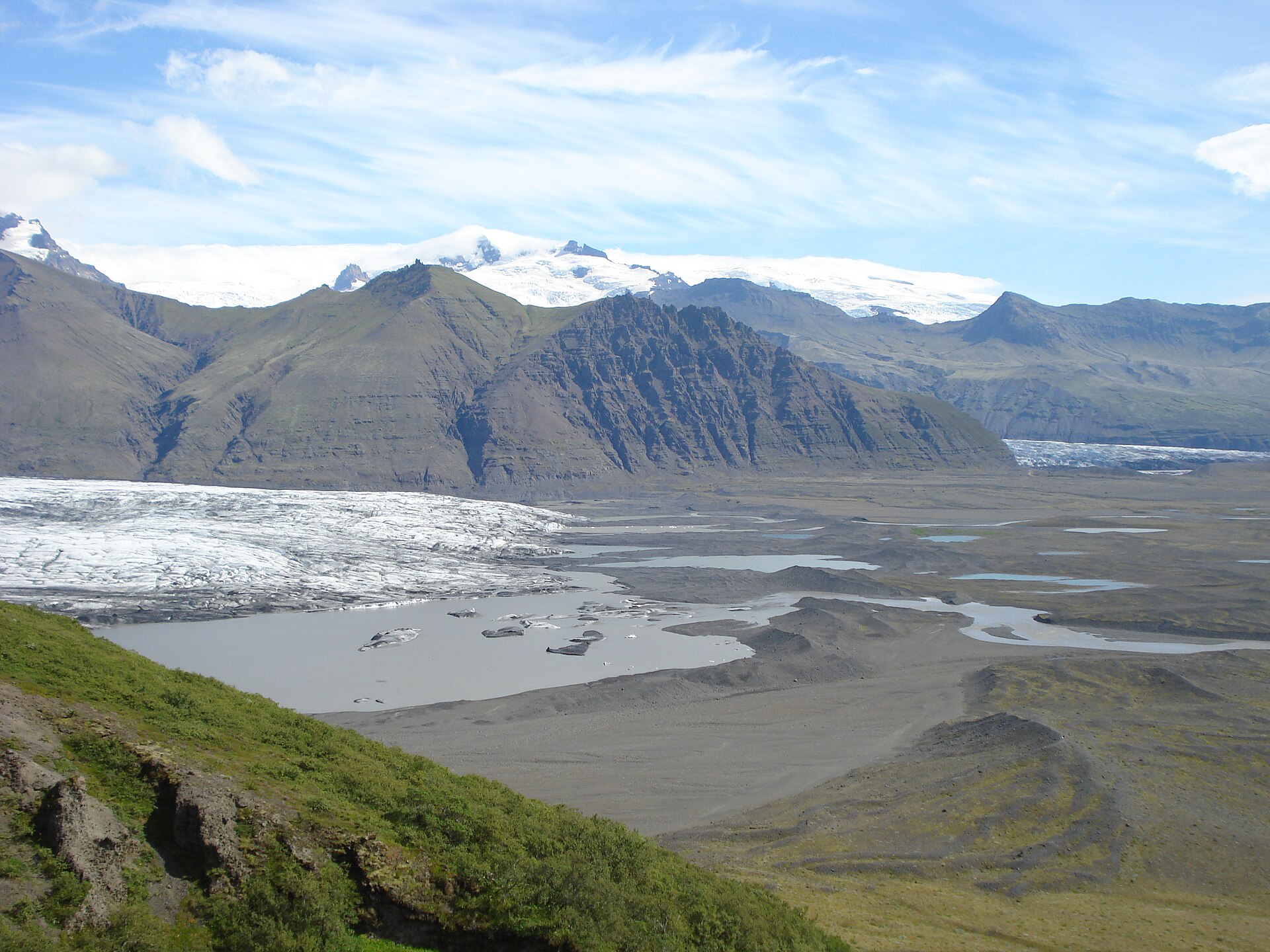
Vatnajökull National Park
Europe,
Iceland,
Iceland,
Vatnajökull
The Vatnajökull National Park, established in 2008, is one of the most spectacular natural wonders in Iceland and one of the largest protected areas in Europe. Covering an area of approximately 14,141 square kilometers, this park is a mosaic of landscapes that includes glaciers, active volcanoes, waterfalls, sand deserts, and lava fields, offering unparalleled biodiversity and geological variety.
At the center of the park lies the Vatnajökull glacier, the largest glacier in Europe by volume and the second largest by area. This ice giant dominates the landscape, with glacial tongues extending down to the valleys below, creating a breathtaking panorama. The glacier serves as a natural laboratory where scientists study climate change, glacial hydrology, and glacial geology. The ice caves that form in its depths offer an extraordinary natural spectacle, with sparkling tunnels and caves that appear to be carved from crystal.The park is home to some of Iceland’s most active volcanoes, including Grímsvötn, Bardarbunga, and Öræfajökull. These volcanoes, hidden beneath the glacier, have a significant impact on the landscape and the surrounding environment. Volcanic eruptions under the glacier can cause massive glacial floods, known as jökulhlaups, which continuously shape the terrain. These catastrophic events, while dangerous, also serve as a testament to the power of the natural forces that shape our planet.One of the most fascinating places in the park is the glacial lagoon of Jökulsárlón, where huge icebergs break off from the Breiðamerkurjökull glacier and float slowly towards the sea. This lagoon is a place of extraordinary beauty, where the bright white of the icebergs contrasts with the deep blue of the water and the black volcanic sand of the surrounding beaches. It is also an important habitat for marine fauna, including seals and numerous species of seabirds.The Vatnajökull National Park is a paradise for hikers and adventure lovers. It offers a wide range of hiking trails that vary in difficulty and length, allowing visitors to explore the park’s diverse features. Among the most popular routes are those leading to the waterfalls of Svartifoss and Dettifoss. Svartifoss, also known as the “black waterfall,” is famous for its hexagonal basalt columns that resemble an organ. Dettifoss, on the other hand, is Europe’s most powerful waterfall and an impressive display of natural strength.From a historical perspective, the park area is rich in archaeological sites that testify to human occupation since the time of the first Viking settlers. Remains of ancient farms, churches, and settlements offer a fascinating glimpse into the lives of Iceland’s early inhabitants and their interaction with an environment as hostile as it is generous.The management of the park focuses on the conservation of fragile ecosystems and the promotion of sustainable tourism. Park authorities collaborate with scientists, environmentalists, and local communities to ensure that human impact is minimized and that the park’s natural wonders are preserved for future generations. This includes regulating tourist activities, maintaining trails, and protecting native animal and plant species.An interesting anecdote concerns the creation of the park. When it was established in 2008, the park integrated previous protected areas such as Skaftafell National Park and Jökulsárgljúfur National Park, significantly expanding the protected area and creating one of the largest and most diverse natural areas in Europe.
Read More