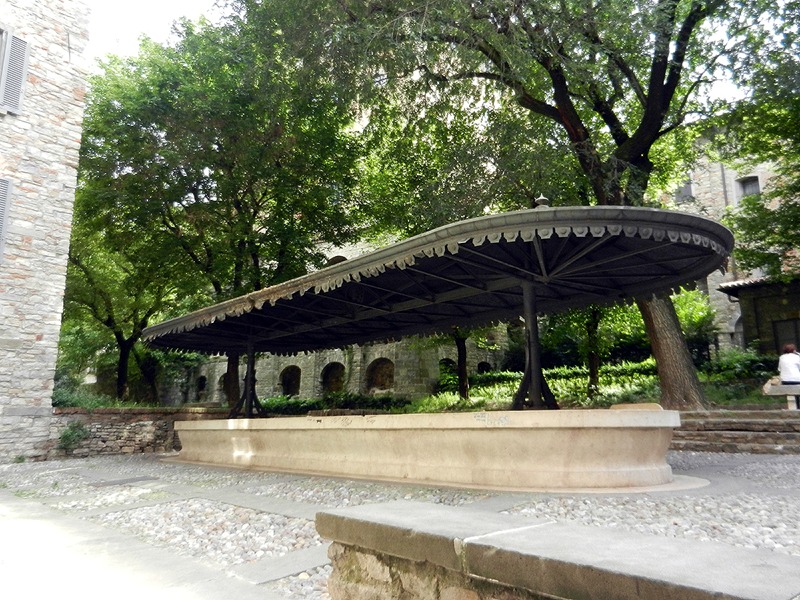
Via Lupo Washhouse - Bergamo
Europe,
Italy,
Bergamo,
The Lavatoio di Via Lupo is a true gem of the city of Bergamo, a place that carries the scent of history and the tradition of an era. Located in the Città Alta, this public washhouse dates back to the 17th century and is emblematic of a time when water and its uses played a central role in daily life. It is known not only for its architecture but also for its social function, reflecting the culture and organization of urban life at that time.Origins and History The construction of the Lavatoio di Via Lupo took place in 1619, in a context where running water represented not only a primary need but also a precious good. At the time, Bergamo was under the domination of the Republic of Venice and was experiencing a period of flourishing economic and cultural development. The building was designed to respond to the hygienic needs of the population and, thanks to its strategic position, quickly became a reference point for the citizens.The washhouse originally served as a space where women could wash clothes while enjoying a moment of socialization. It was not just a workplace, but also a meeting point, an area where stories, traditions, and interpersonal relationships intertwined. Over time, the Lavatoio di Via Lupo has undergone various transformations and restorations, reflecting how the use of the structure has evolved.In the 20th century, the washhouse faced gradual abandonment, along with many other similar structures across Italy, due to changes in washing methods and the advent of home washing machines. However, in the following years, it regained importance as a site of historical and cultural interest, becoming a heritage to be preserved for future generations. In recent years, restoration work has been initiated to maintain its beauty intact and to enhance the local historical heritage.What to Observe As we approach the Lavatoio di Via Lupo, we begin to appreciate its architecture. The facade is made of local stone, with elegant architectural lines that perfectly integrate into the surrounding context. As we get closer, we notice the stone arches adorning the entrance. This is a typical element of Lombard architecture, used to lend solidity and beauty to the buildings.Entering inside, on our left, we find the main basin. This basin, made of serpentine stone, is the heart of the washhouse. Here, the clothes were washed, a process that required time and patience. Historians argue that the serpentine stone, in addition to being resistant to water, gave the place a particular charm, reflecting light in a suggestive manner.As we proceed, we notice the various basins located around the perimeter of the hall. Each one served specific purposes: some were used for washing delicate fabrics, while others were for dirtier clothes. The differences in the sizes and materials of the basins tell us a lot about the organization of the daily work of the women of Bergamo at the time.In addition to the functional elements, we pay attention to the decorative details. The walls are enriched with frescoes and bas-reliefs depicting scenes of daily life, social life, and symbols of the city. These decorations not only beautified the washhouse but also served to tell stories and perpetuate traditions.Another point of interest is the water canalization system. A sophisticated setup for the time, allowing for the frequent exchange of water, essential for maintaining cleanliness and the functionality of the washhouse. Upon closer inspection, we can still see water flowing through the crevices today, testament to the ingenuity of ancient designers.Outside, the Lavatoio di Via Lupo overlooks a small square, a passage that unites the rural environment with the urban one. Here, the atmosphere is particularly evocative at sunset when the rays of the sun illuminate the ancient stone, creating a play of light and shadows that enchants visitors.Finally, we must not forget the importance of this place in the history of Bergamo. The washhouse is not just a building; it is a symbol of community life and social evolution. It represents the work of generations of women and a way of life that has transformed over time.Context and Connections The Lavatoio di Via Lupo is located in the heart of the Città Alta, a neighborhood rich in history and culture. This is a context we cannot overlook. Indeed, the Città Alta is surrounded by Venetian walls, a UNESCO World Heritage site, which highlight the strategic importance of Bergamo in past centuries.Just a short walk from the washhouse, we encounter the Palazzo della Ragione, a magnificent example of medieval architecture, which frames the market and cultural events, helping to keep alive the area’s social tradition. Continuing our journey, we also find the Cathedral of Bergamo, an architectural masterpiece that deserves a visit. The Cathedral, with its massive structure and frescoes, is a spiritual and cultural reference point.Another nearby attraction is the Museo del Cinquecento, where one can admire works of art that tell the story of Bergamo and its cultural evolution. Every corner of the Città Alta is filled with stories that intersect and intertwine like the threads of a fabric.Curiosities The Lavatoio di Via Lupo is not only a place of history but also a hub of curiosities. For example, the importance of public washhouses in the past is evidenced by numerous historical documents that attest to their use until the 1960s.Moreover, while many Italian cities have seen a gradual decline in washhouses, Bergamo has managed to preserve its Lavatoio di Via Lupo, transforming it into a symbol of resilience and tradition. This ability to keep the historical memory alive is a source of pride for the local community, which considers it a cultural asset to protect.Finally, we cannot forget the tradition linked to washing clothes, which was often accompanied by songs and moments of conviviality. This aspect reminds us how central the washhouse was in the everyday life of women, who gathered there to do their work but also to exchange gossip and maintain social relationships.
Read More