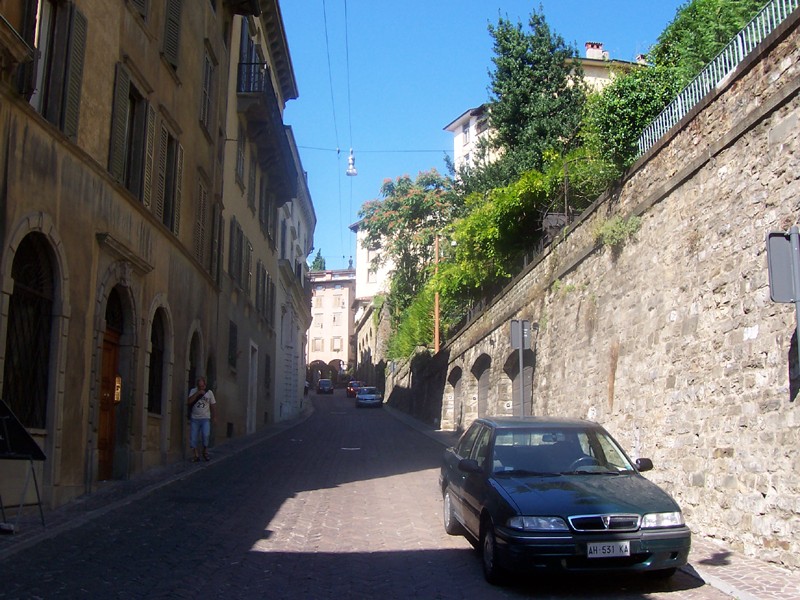
Via Porta Dipinta - Painted Houses - Bergamo
Europe,
Italy,
Bergamo,
Via Porta Dipinta, famous for its suggestive Painted Houses. This historic street represents one of the most fascinating expressions of Renaissance art and architecture, dating back mainly to the 15th and 16th centuries. The Painted Houses not only adorn the urban landscape but also tell stories of patrons, artists, and the daily life of a bygone era. With their vibrant frescoes and intricate decorations, these residences offer a privileged glimpse into the beauty and creativity of the Renaissance period in Bergamo.Origins and HistoryVia Porta Dipinta has its roots in the heart of Bergamo’s historic center, in an area that has held strategic importance since the medieval period. The street develops close to the ancient city walls, which were built in the Middle Ages to protect citizens from possible invasions. With the arrival of the Renaissance, Bergamo experienced a period of prosperity and cultural development, reflected in the architectural and artistic style of this area.The Painted Houses found along the street have been decorated with frescoes since the 15th century. This period is characterized by a renewed interest in classical art and a flourishing of humanistic culture. The artists commissioned to work here were influenced by the most avant-garde artistic movements of the time, pushing for innovation and experimentation. The houses were not just residences, but also symbols of social prestige for the noble families living in them.Over the centuries, Via Porta Dipinta has undergone various transformations. During the 16th and 17th centuries, the frescoes were enriched with new decorative elements, such as stuccoes and elaborate architectural motifs, creating a synergy of styles that makes these houses unique. By the end of the 19th century and the beginning of the 20th, the area experienced a period of abandonment and decay, but fortunately, many of the buildings have been restored thanks to targeted interventions starting in the 1980s.The restorations have breathed new life into these architectural masterpieces, allowing visitors to marvel again at the beauty of the frescoes, which depict everyday, mythological, and religious scenes. Thanks to these efforts, the Painted Houses are now an important tourist attraction, helping to keep the historical and artistic memory of Bergamo alive.What to Observe, in OrderAs you walk down Via Porta Dipinta, prepare for a visual journey that will take you to the heart of the Renaissance. As soon as you enter the street, you can notice a variety of architectural styles that blend harmoniously. The facades of the houses, adorned with frescoes and reliefs, tell different stories, each with its unique character.The first house that will catch your attention is the Casa del Caffè, with its frescoed facade featuring a series of mythological deities. This edifice represents a perfect example of how the artist managed to integrate mythological narrative with everyday life. The frescoes are a triumph of vibrant colors and elaborate details.Continuing, on your right you will find the Casa del Galletto, famous for a fresco depicting a rooster. This image is not just decorative but also symbolic, evoking themes of vigilance and protection. The accuracy of the details and the vibrancy of the colors are a testament to the talent of Renaissance artists.Another key stop is the Casa degli Antiquari, famous for its frescoes focusing on art and culture. Here you can admire scenes of daily life, intertwined with elements of art history that showcase the value and importance of antiquities at that time. The facade, with its rich ornaments, invites reflection on the interplay between art and social life.Don’t forget to observe the architectural details of the doors and windows. Many of these feature elaborate frames that reveal the influence of Gothic and Renaissance styles. Every corner of Via Porta Dipinta invites exploration of the minutiae of details.As you approach the end of the street, be sure to turn back to enjoy an aerial view of the houses, which seem to merge into one another in harmony of colors and styles. This panorama, made particularly striking by the sunlight, offers an idea of how light plays with the painted surfaces, creating an almost magical effect.Finally, before leaving this area, don’t overlook the historical photographs displayed along the street, showing the evolution of the road over the centuries. They provide further historical context and connect the past with the present, inviting deep reflection on the value of preserving cultural heritage.Context and ConnectionsVia Porta Dipinta fits into the broader context of Bergamo’s upper city, an important historical and cultural center. This area, with its cobbled streets and squares rich in history, contributes to an atmosphere that is both vibrant and rich in heritage.Nearby is the Cittadella of Bergamo, an imposing fortified structure that offers panoramic views of the city and the surrounding plain. The Cittadella, built in the 16th century, is a testament to an era of grand defensive works.Another point of interest nearby is Piazza Vecchia, considered the beating heart of Bergamo. This square is surrounded by some of the most significant historical buildings in the city, such as the Palazzo della Ragione and the Campanone. Here, architecture and social life intertwine, offering another dimension to Bergamo’s history.Lastly, don’t forget the Biblioteca Civica Angelo Mai, which houses a magnificent collection of ancient and modern texts, representing another expression of Bergamasque culture. The library is a perfect example of how history and knowledge can coexist within a single space.CuriositiesOne reason why the Painted Houses are so renowned is the variety of painting styles present. Some frescoes were executed using the “fresco” technique, a painting method that involves applying pigments onto fresh plaster. This technique allowed for greater durability of the colors.The most refined decorations are those inspired by the works of artists like Raphael and Michelangelo, demonstrating the influence of the great Renaissance masters on local artists. The artists of Bergamo knew how to adapt these influences to their culture and artistic sensibility.The Painted Houses, in addition to representing an important artistic legacy, also serve as a refuge for numerous popular stories. Some say that the frescoes depict local legends, while others claim that each house has a mysterious story to tell, passed down from generation to generation.In conclusion, we hope this stroll through Via Porta Dipinta has inspired you to further discover the history of Bergamo and its artistic treasures. Don’t forget to also visit the Cittadella and Piazza Vecchia, equally valuable gems of the city that deserve your attention. Happy exploring!
Read More