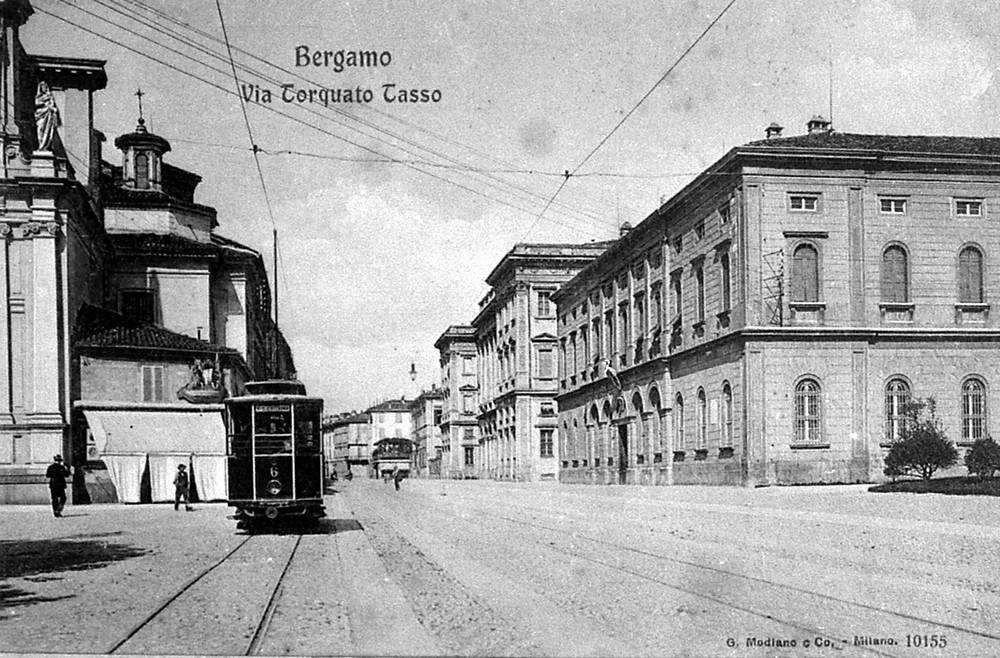
Via Torquato Tasso - Bergamo
Europe,
Italy,
Bergamo,
Via Torquato Tasso, an enchanting corner of the city of Bergamo, is known not only for its architectural beauty but also for its historical and cultural significance. This street is located in the heart of the Città Alta, famous for its medieval streets, vibrant squares, and stories that seep from every stone. Bergamo, with its origins dating back to the Etruscan and Roman eras, has witnessed a flourishing of art and culture over the centuries, making it a favored place for artists, intellectuals, and travelers. Torquato Tasso, after whom the street is named, is one of the most revered poets of the Italian Renaissance, known for his work “La Gerusalemme Liberata,” an epic poem that has had a lasting impact on European literature. In this context, we will explore the history of Via Torquato Tasso and its points of interest.Origins and HistoryVia Torquato Tasso is set within an urban context rich in history, with roots tracing back to the Middle Ages. The earliest documented news concerning Bergamo dates back to 888 AD, but the true expansion and recognition of the city as a cultural center began around 1200. During this time, Bergamo became an important reference point for the Republic of Venice, which governed the city from 1428 until the end of the 18th century. In this context, Via Torquato Tasso has undergone numerous transformations, with buildings reflecting various architectural styles, from Romanesque to Renaissance, and onto Baroque.One of the key figures associated with this street is the poet Torquato Tasso, born in 1544 in Sorrento but who spent part of his life in Bergamo. His work became a symbol of the Renaissance ideal, and his connection to Bergamo is such that it merits a street dedicated to him. The street was officially named after Tasso in 1868, honoring his undeniable importance to Italian culture.Over the years, Via Torquato Tasso has seen the construction of various buildings and palaces, which today constitute a true historical heritage. Some of the most significant date back to the period between the 16th and 17th centuries, when Bergamo established itself as a center of culture and art. The street has also experienced periods of degradation, especially during wars, but thanks to subsequent restorations and recovery interventions, it shines today in its original forms.The importance of the street is also manifested through the numerous events that take place in the vicinity, helping to keep the historical memory and culture of Bergamo alive. Among these stand out literary and artistic events celebrating the figure of Torquato Tasso, an occasion that underscores the city’s deep connection with its illustrious fellow citizen.What to ObserveMoving along Via Torquato Tasso, several key elements deserve attention.The Facades of the Buildings: Walking along the street, you will notice many facades of buildings showcasing varying architectural styles. Among the most interesting is Palazzo Ranzani, built in the 17th century, which features an elegant stone portal and decorated windows. These architectural details are signs of the craftsmanship of the time.Chiesa di San Bartolomeo: The church, located not far from the street, is one of the most significant places. Built in 1173, it displays the transition from Romanesque to Gothic architecture due to its structure and internal decorations, including frescoes of notable historical value. Upon entering, one can sense the atmosphere of centuries of devotion and art.Teatro Sociale: Just around the corner from the street is the Teatro Sociale, inaugurated in 180. This structure is an example of neoclassical architecture and has hosted numerous shows and concerts throughout its history, becoming an important cultural landmark for Bergamo.Piazza Vecchia: Continuing further, you will arrive at Piazza Vecchia, the true heart of the Città Alta. This square is surrounded by historical buildings, including Palazzo della Ragione and the Civic Tower. Here, one can breathe in the history of the 1500s and observe the remnants of the governance of the Republic of Venice. The square serves as a stage for cultural and social events, connecting the past to the present.Architectural Details: During your walk, do not forget to observe the decorative details of the doors and balconies, many of which feature symbols and sculptures that tell stories about the family that lived there. These details are a testament to a craft tradition that has withstood the test of time.The Venetian Walls: Finally, one cannot speak of Bergamo without mentioning the Venetian walls, designated a UNESCO World Heritage Site in 201. While at Via Torquato Tasso, you can easily imagine the fortifications that protected the city for centuries, offering breathtaking panoramic views. The walls are a symbol of the historical residence of Bergamo and deserve a thorough visit.Context and ConnectionsVia Torquato Tasso is located in the heart of Bergamo’s Città Alta, an area that retains its medieval charm and merits careful exploration. It is close to numerous other points of interest. A short distance away stands the Cathedral of Bergamo, dedicated to Saint Alexander, the city’s patron saint. Continuing in the same direction leads to the Colleoni Chapel, renowned for its magnificence and artistic decorations, which are of great value.The surrounding neighborhood is rich in historic cafés, artisan shops, and restaurants offering typical Bergamo dishes. These places add an additional level of exploration, linking the gastronomic culture with the historical and artistic culture of the city.CuriositiesThe figure of Torquato Tasso is intriguing not only for his artistic output but also for his life marked by tumultuous personal affairs. Despite being a renowned poet, Tasso also lived periods of misery and misunderstanding. His work “La Gerusalemme Liberata” has influenced generations of writers and poets, making him a central figure in European literature.Moreover, the Teatro Sociale is not just a place of entertainment but also a symbol of Bergamo’s cultural revival after the social and political transformations of the 19th century.Finally, the inclusion of the Venetian walls on the UNESCO World Heritage List is a recognition of the historical and cultural importance of Bergamo, which continues to attract visitors from all over the world.In conclusion, we invite you to discover the unique beauty of this corner of Bergamo, letting yourself be inspired by the stories and works of art that surround Via Torquato Tasso. Do not forget to visit the nearby Cathedral of Bergamo and the Colleoni Chapel, two precious treasures that will further enrich your experience. Happy exploring!
Read More