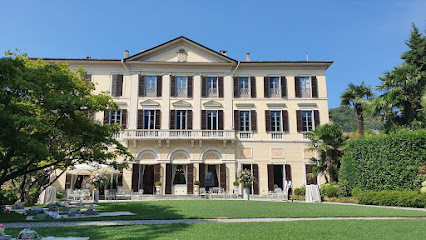
Villa Parravicini Revel, Como
Europe,
Italy,
Como,
The Villa Parravicini Revel is nestled in the enchanting landscape of the hills surrounding Como, a place that perfectly embodies the history and culture of this captivating city. Built in the 18th century, the villa is an extraordinary testament to Lombard noble residences, known for their elegance and grandeur. In particular, it is famous for its Italian gardens, which play a fundamental role in the identity of the place. The villa has witnessed significant historical events and has hosted illustrious personalities over the years, becoming a symbol of art and culture. Villa Parravicini Revel was built in 1750 at the behest of the Parravicini family, one of the most prominent noble families in the area. This residence was designed by architect Francesco Crotta, who was inspired by the then-fashionable neoclassical style. The palace features a rectangular plan, with a façade adorned by columns and decorations that make it particularly fascinating. In the years following its construction, the villa underwent several modifications and expansions. In 1795, Count Carlo Parravicini decided to further expand it by adding new rooms and enhancing the surrounding gardens. The latter, designed in the Italian style, spread over multiple terraces, offering a spectacular view of Lake Como and the surrounding mountains. The gardens became famous for their variety of plants and flowers, as well as for the geometric arrangement of the spaces, a typical aspect of noble properties of the time. During the 19th century, the villa passed into the hands of the Revel family, who maintained it until the mid-20th century. During this period, several restoration works were carried out to preserve the beauty of the structure. However, the abandonment of the villa in the subsequent years led to a rapid degradation of the interior and exterior spaces. Only in 1992 did the municipal administration of Como decide to acquire the villa, initiating a recovery and enhancement project. Thanks to these interventions, today, Villa Parravicini Revel is a cultural meeting point and hosts exhibitions and events, keeping the artistic and historical tradition of Como alive. Recently restored, the villa is once again accessible to visitors, who can immerse themselves in its history through guided tours and culturally stimulating activities. As soon as you pass through the entrance gate, you will be faced with the majestic façade of the villa. The structure features an elegant portico supported by a series of Ionic columns. These columns not only decorate the entrance but also lend a sense of grandeur to the complex. You will also notice the beautiful frescoes that adorn the ceiling of the portico, representing mythological scenes that reflect the artistic taste of the era in which it was built. At the entrance, on your left, there is a wide staircase leading to the upper floors. The staircase is adorned with frescoes and stuccos depicting floral motifs and mythological figures, a clear example of the decoration style of the 18th century. As you ascend, you will have the opportunity to admire the main rooms, many of which retain furnishings from the time, offering a fascinating glimpse into the aristocratic life of the past. Continuing the visit, you cannot miss the Hall of Festivities, located on the first floor. This large room was designed to host events and ceremonies and is decorated with frescoes celebrating the four seasons. The walls are lined with fine fabrics, making the hall an example of elegance and refinement. At the center of the room, a crystal chandelier illuminates the space, creating a romantic and enchanting atmosphere. Another area of interest is the garden at the back of the villa. These gardens, designed in the Italian style, extend over several levels and feature geometric flowerbeds adorned with aromatic plants and colorful flowers. Walking along the paths, you will have the chance to enjoy a panoramic view of Lake Como and the surrounding mountains. Do not forget to observe the central fountain, a typical feature of noble gardens, which serves as a landmark and a place for relaxation. Moving towards the eastern part of the villa, you will notice a series of marble statues that decorate the paths. These sculptures, dating back to the 19th century, represent mythological and historical figures, adding an artistic touch to the gardens. Each statue is a unique piece and contributes to telling the story of an era when art and nature united in perfect harmony. Finally, before concluding your visit, we invite you to discover the attic of the villa. This space, recently restored, houses a small art gallery hosting temporary exhibitions of contemporary artists. This contrast between the ancient and the modern represents a link between the villa’s past and its future, making it a dynamic cultural center that celebrates art in all its forms. Villa Parravicini Revel is set within a historically and culturally rich context. Located just a short walk from the center of Como, it is surrounded by other important tourist attractions. For example, the Cathedral of Como, one of the most beautiful Gothic churches in the region, is only a 15-minute walk away. It is undoubtedly worth a visit: its marble façade and architectural details are a symbol of the city. Another place of interest is the Volta Temple, dedicated to Alessandro Volta, the famous scientist from Como. This museum, located not far from the villa, preserves important artifacts and documents related to Volta’s life and discoveries, another testament to Como’s rich history. Finally, for those who love nature, the Spina Verde Park is an excellent choice. This park offers scenic trails and breathtaking views of the lake and the surrounding mountains, making it an ideal place for a walk after visiting the villa. One of the most interesting elements of the history of Villa Parravicini Revel is its evolution through various epochs. While the villa was in the hands of the Revel family in the 19th century, it hosted a small group of artists and intellectuals who often gathered to discuss art and literature. This helped create a vibrant and stimulating cultural environment, similar to the literary salons of other European cities. Another curiosity concerns the gardens of the villa. During restoration work in the 1990s, ancient documents were discovered that testified to the presence of exotic plants from around the world. These trees and shrubs were imported by the nobles to create a true botanical garden, reflecting the interest in discovering new species and plants typical of the era.
Read More