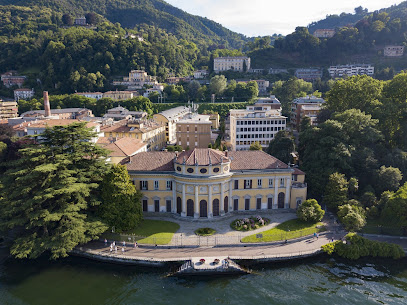
Villa Saporiti, Como
Europe,
Italy,
Como,
Welcome to Villa Saporiti, an architectural gem located in Como, Lombardy. This villa is an extraordinary example of how art and nature can intertwine in a single space, creating an atmosphere of beauty and tranquility. Built in the 18th century, Villa Saporiti is known for its Italian garden and captivating interior decorations, which reflect the era’s taste for neoclassicism. The villa has played an important role in the history of Como, not only as a noble residence but also as a cultural meeting place, witnessing the evolution of the city through the centuries. The history of Villa Saporiti begins in the mid-1700s when Giovanni Maria Saporiti, an important entrepreneur from Como, decided to build a new residence for his family. The villa was designed in neoclassical style, an architectural movement inspired by the art and architecture of ancient Greece and Rome, which was very fashionable at the time. Construction work lasted until the end of the 18th century, and the villa was completed in 1780. Over the years, Villa Saporiti underwent several transformations. Between the late 19th century and the early 20th century, the villa was enlarged, and significant modifications were made to the furnishings and gardens, always following the prevailing fashion of the moment. One of the most relevant interventions was the creation of the Italian garden, with harmoniously trimmed hedges and fountains, reflecting the typical ornamental style of the period. During the fascist period, the villa was confiscated and used as a venue for official events and meetings, a change that profoundly altered its original function. After World War II, the villa was returned to the Saporiti family and became a private residence again, but this did not mark the end of its history. In the 1990s, the villa underwent significant restoration to preserve its architectural and historical features, making it shine again as an example of neoclassical art. Today, Villa Saporiti is used for cultural events, exhibitions, and public initiatives, thus uniting the past and present in a single vibrant space. At the entrance of Villa Saporiti, you will be greeted by an elegant facade. The structure features a classic portico with columns, perfectly embodying the neoclassical style. The Ionic columns rise to support a balcony on the upper floor, from which guests could admire the garden below. Notice the details of the decorations, which are crafted by skilled artisans. Once inside, head towards the main hall, located just to your right upon entering. This spacious area is adorned with frescoes depicting mythological and allegorical scenes, showcasing the refinement and artistic skill of the period. The frescoes are attributed to well-known artists from Como who worked to make the villa’s interiors a dreamlike place. Before stepping out to the garden, take a moment to admire the wrought iron spiral staircase located in the center of the house. This staircase is a precious example of local craftsmanship and, with its elegant design, represents a harmonious connection between the different floors of the villa. Stepping into the Italian garden, you will find yourself immersed in an atmosphere of serenity. The wide avenues are lined with flowerbeds and meticulously cared-for hedges. To your left, do not miss the impressive fountain surrounded by marble statues depicting deities and mythological figures. These sculptures further enrich the charm of the garden. Another notable element is the orangery, which is found on the opposite side of the garden. This space was used to host noble and exotic plants, creating an ideal microclimate for their growth. The orangery symbolically represented the owners’ attention to nature and their desire to combine beauty with functionality. Finally, if you look towards the back of the villa, you will have a spectacular view of Lake Como. This panorama is one of the villa’s highlights and has inspired artists and writers throughout the centuries. The meeting of the villa’s architecture with the surrounding natural landscape is undoubtedly an experience that moves and leaves a lasting impression on those who visit this place. Villa Saporiti is located in an area historically rich in attractions. The surrounding district is characterized by other historic villas, such as Villa Olmo and Villa Geno, which offer a comprehensive view of Como’s history and architecture. These places are not only fascinating from an architectural standpoint but also provide insights into the evolution of society over the centuries. Just a few steps from the villa is Lake Como, an important natural and cultural resource that has profoundly influenced the lives of the area’s inhabitants. The lake is known for its scenic beauty but also for the numerous cultural and sporting activities that take place throughout the year. Moreover, do not forget to visit the historic center of Como, rich in churches and historic palaces. The Cathedral of Como, with its magnificent Gothic facade, is just one of the many examples of how art and history intertwine in this city. Villa Saporiti is not just a residence; it is also a place of fascinating stories. Over the years, many illustrious personalities have visited the villa, making it a cultural and social landmark for Como. This has contributed to enhancing its fame and prestige. Another interesting aspect concerns gardening. The Italian garden of Villa Saporiti follows the classical principles of symmetry and proportion, elements that reflect not only the aesthetics of the time but also the philosophical thought of the era, which saw the garden as an extension of art. Finally, the villa has hosted significant historical events, such as meetings and strategic gatherings during the fascist period. These events helped weave the network of relations between Como and the rest of Italy. We invite you to continue your visit and discover other wonders nearby, such as Villa Olmo and the Cathedral of Como, for a complete and satisfying cultural experience. Happy exploring!
Read More