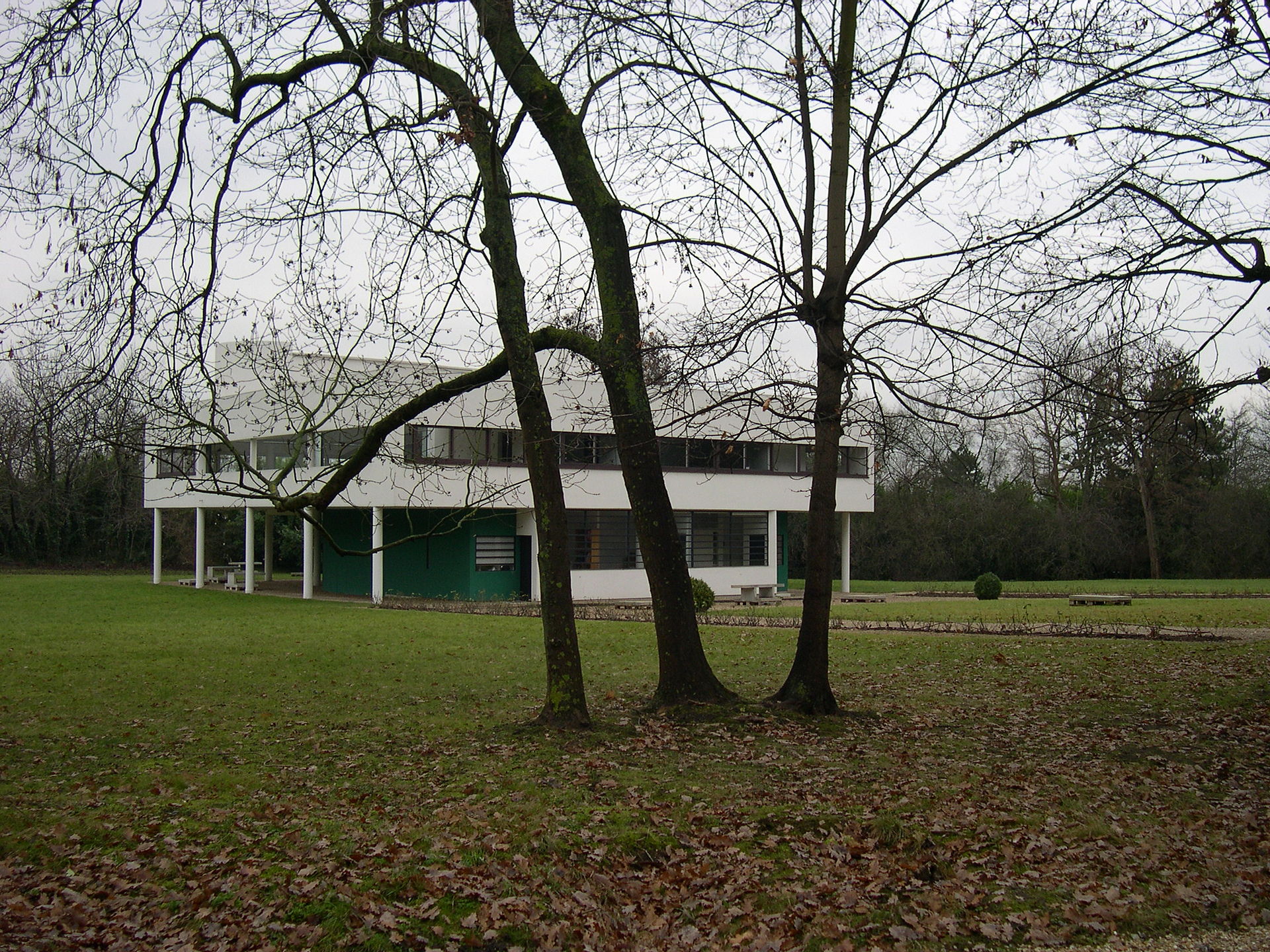
Villa Savoye
Europe,
France,
citta,
Poissy
The Villa Savoye, located in Poissy, a suburb west of Paris, is one of the masterpieces of modern architecture and an icon of the Modern Movement. Designed by the Swiss-French architect Le Corbusier and his cousin Pierre Jeanneret between 1928 and 1931, the villa represents one of the most accomplished realizations of the architectural principles outlined by Le Corbusier in his treatise “Towards a New Architecture”.
The history of Villa Savoye begins when Pierre and Eugénie Savoye, a couple from the Parisian bourgeoisie, commissioned Le Corbusier to design a country residence. The chosen site, a vast area of green meadow in Poissy, offered the opportunity to create a house that was in harmony with the surrounding landscape. The villa was meant to be a quiet retreat and a place of leisure for the Savoye family.Le Corbusier conceived Villa Savoye as a “machine for living”, a central concept in his architectural thinking. This concept is clearly reflected in the design of the villa, which incorporates the “Five Points of a New Architecture” elaborated by Le Corbusier. These principles, representing a radical break with architectural tradition of the past, include: pilotis (pillars) lifting the building off the ground, a roof garden, free plan, free facade, and ribbon windows.The pilotis are perhaps the most distinctive element of Villa Savoye. By raising the building off the ground, the pillars create an open and fluid space on the ground floor, allowing the garden to extend under the house. This element not only gives lightness and transparency to the building, but also meets hygienic and functional needs, ensuring better ventilation and protection from moisture.The roof garden is another key element of the design. By transforming the roof into a green space, Le Corbusier gave back to nature the space taken away by the building. The roof garden of Villa Savoye offers a panoramic view of the surrounding countryside and represents a place for relaxation and contemplation, in line with the idea of the house as a refuge.The free plan, made possible by the use of pilotis, allows for a flexible arrangement of interior spaces. This concept eliminates the need for load-bearing walls, allowing greater freedom in the distribution of rooms and their functionality. The interiors of Villa Savoye are characterized by a spatial fluidity that promotes movement and connection between different environments.The free facade is another distinctive element. Without the need for load-bearing walls, the outer walls can be treated as light and flexible surfaces. In Villa Savoye, the facades are designed with geometric precision, with large white surfaces interrupted by ribbon windows running along the entire perimeter of the building. These horizontal windows allow a large amount of natural light and offer spectacular views of the outside.The influence of Villa Savoye on modern architecture is immense. Its innovative design has inspired generations of architects and has helped define the language of the Modern Movement. The villa has been recognized as a masterpiece of 20th-century architecture and in 1965 was declared a historic monument by the French government. More recently, in 2016, Villa Savoye was included in the UNESCO World Heritage List, along with other works by Le Corbusier, in recognition of its exceptional universal value.From a social and cultural perspective, Villa Savoye represents a manifesto of modernist values of functionality, rationality, and integration with nature. Le Corbusier’s approach to design was not only aesthetic, but also deeply social and humanistic. He believed that architecture could improve the quality of people’s lives by offering healthy, efficient, and pleasant living spaces.An interesting anecdote about Villa Savoye concerns its fate during World War II. The building was occupied and damaged by the Germans before being used as a stable by the Americans. After the war, the villa was abandoned and fell into disrepair. It was only thanks to the efforts of architecture enthusiasts and local authorities that the villa was saved from demolition and restored.Today, Villa Savoye is open to the public as a museum, allowing visitors to explore its innovative design and appreciate Le Corbusier’s vision. A visit to the villa offers a unique opportunity to understand the fundamental principles of modern architecture and to reflect on the importance of integration between man, nature, and technology.
Read More