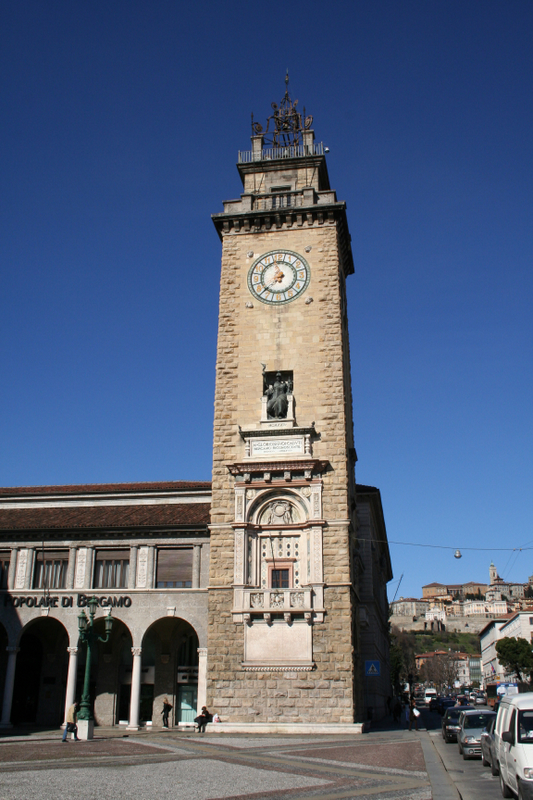
Vittorio Veneto Square - Bergamo
Europe,
Italy,
Bergamo,
Piazza Vittorio Veneto, one of the most significant squares in the city of Bergamo. This square represents not only an important gathering center for citizens but also a historical and cultural landmark. The area is known for its elegant architecture and the vibrancy of events that take place there. Built in the 19th century, the square experienced a cultural rebirth in the 20th century and is still today a meeting place for different generations of Bergamasques. We find ourselves in a strategic location, between the upper town and the lower town, thus symbolizing the link between these two worlds that characterize the beauty of Bergamo.Origins and historyThe construction of Piazza Vittorio Veneto began in the 1880s, as part of the expansion of the lower town, aimed at facilitating better integration between the various neighborhoods and creating public gathering spaces. The square was conceived to celebrate progress and modernize the city’s image, influenced by European architecture of the time. The urban planner who oversaw the project was the famous architect Giuseppe DαlFerro, who helped give the square its current shape.The area was originally occupied by older buildings, which were demolished to make way for this new structure. Piazza Vittorio Veneto, dedicated to the fallen of World War I, was inaugurated in 1922 and has since undergone various transformations. In the 1930s, the square was further beautified with fountains and flowerbeds that enriched the surrounding environment. During World War II, the square suffered damage, but thanks to a careful restoration plan in the 1950s, it returned to its former splendor.In the 2000s, the square witnessed a range of cultural events and popular festivals, becoming a vibrant center of Bergamo’s social life. Its history reflects the socio-cultural transformations of Bergamo, and the square remains a symbol of unity and development for the community.What to observeNow let’s move on to observe the main details of Piazza Vittorio Veneto. As you approach, the first thing that captures your attention is the grandeur and architectural harmony of the surrounding buildings. The square is surrounded by elegant neoclassical palaces, many of which date back to the time of the square’s construction. To your right, you will find the Palazzo del Podestà, a building that reflects the prestige and administrative importance of the area.Continuing down the square, you will notice the central fountain, an important element of the plaza, designed in the 1930s. With its sinuous design, the fountain is not just a visual attraction, but also represents an idea of movement and freshness that invites visitors to linger. It is surrounded by well-kept flowerbeds, adding a touch of greenery.Proceeding to the left, we find another significant building: the Teatro Donizetti. This theater, dedicated to the famous Bergamasque composer Gaetano Donizetti, is not only a performance venue but also a symbol of the city’s cultural identity. Founded in the 19th century, the theater regularly hosts operas and concerts, thus becoming a premier cultural center.At this point, looking towards the center of the square, you can admire the ornamental sculptures that adorn the buildings. These architectural details are not just decorative; they tell stories of the city, representing historical figures or elements of local culture. The variety of architectural styles reflects the different epochs in which the various palaces were built, creating a kind of open-air museum.Before leaving the square, don’t forget to observe the cafés and pastry shops that overlook the square. These places are very popular with both locals and tourists, providing a pleasant stop to savor a coffee or a typical sweet, perhaps a “bustrengo” or a “polenta cake.”Finally, if you turn towards the opposite end of the square, you can spot some streets branching off, leading you towards the heart of the lower town. These streets provide access to shops, restaurants, and other points of interest that are worth visiting.Context and connectionsPiazza Vittorio Veneto is located in the heart of the lower town of Bergamo, surrounded by a vibrant and dynamic atmosphere. This area represents an important link between various neighborhoods and serves as a meeting center for various cultural and social activities. The liveliness of the square is amplified by the presence of other nearby institutions, such as the Civic Library and the Science Museum, which offer opportunities for learning and entertainment.If you are interested in exploring further, I recommend visiting the Basilica of Santa Maria Maggiore and the Colleoni Chapel, located not far from the square. These places, rich in history and art, offer an extraordinary view of Bergamasque traditions and their evolution over the centuries.Another nearby attraction is the Parco della Trucca, a green oasis ideal for a stroll or a moment of relaxation after exploring the square. These places, all connected by a network of pedestrian streets, represent a continuation of the cultural and social fabric that characterizes Bergamo.CuriositiesOne curiosity to mention is that Piazza Vittorio Veneto hosts, during holiday periods, markets and fairs that attract visitors from all over the region. These events not only enliven the square but also provide a glimpse into local traditions, crafts, and Bergamasque cuisine.Another interesting fact concerns the Teatro Donizetti: throughout its history, it has hosted many world premieres, making it a reference point not only for the city but also for the Italian music scene. The importance of the theater is such that annual festivals are organized dedicated to its figure and lyrical music.Finally, it should be noted that the central fountain has undergone several restorations over the years to preserve its charm and integrity, underscoring the city’s commitment to keeping its history alive.
Read More