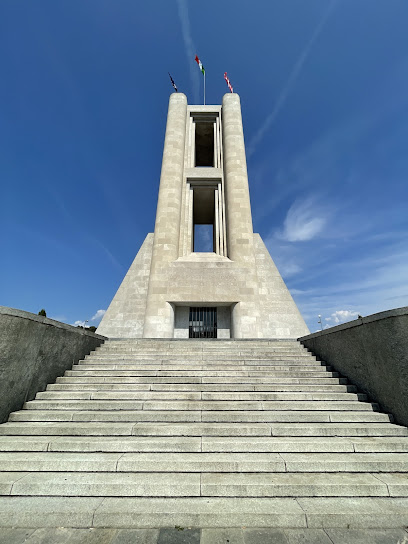
War Memorial, Como
Europe,
Italy,
Como,
In the heart of Como, the Monument to the Fallen represents a central element in the collective memory of the city and a symbol of the sacrifice of its citizens during wars. Inaugurated in 1932, the monument is dedicated to the fallen soldiers from Como during World War I and, later, also World War II. This monument is not just a historical testament, but also a cultural and artistic landmark for the city. Its neoclassical style reflects the ideology of the time, characterized by a strong sense of patriotism and commemoration of the fallen. Every visitor approaching this monumental construction can feel the weight of the history it represents. The Monument to the Fallen in Como stands in a privileged position, visible from various angles around the city. Its construction was commissioned by the Municipality of Como at a time when Italy was trying to honor those who had given their lives for the Fatherland. The choice of location was strategic: it is indeed located in Piazza Vittoria, a central area that welcomes numerous visitors and residents. The design of the monument was entrusted to the local architect Giuseppe Terragni, a well-known name for his innovative architectural choices. Terragni is also famous for his rationalist style, but in the case of the Monument to the Fallen, he embraced the neoclassical aesthetic that was very fashionable in the 1930s. The work is characterized by severe yet harmonious lines, which give the monument an air of majesty and solemnity. In the early years of the monument’s life, it was surrounded by a garden that further enhanced its beauty, offering a space for reflection to visitors. Over the years, the monument has undergone several restoration interventions to preserve its beauty and integrity. In 1995, for example, a restoration campaign was launched to restore the white Carrara marble of which it was made and to remove the signs of time and pollution. In addition to its commemorative function, the Monument to the Fallen has also taken on a civic role, becoming the site for official celebrations for the Liberation Day and other important anniversaries related to Italy’s history. Every year, various commemorative events take place at the monument, keeping alive the connection between the past and the present. As you approach the Monument to the Fallen, the first thing that strikes you is its imposing façade. Made of white marble, the structure rises majestically, expressing a sense of reverence and respect. Observing the monument up close, you will notice several sculptures that adorn it. In particular, the statues representing soldiers, allegorical figures, and symbols of peace and freedom. These representations are laden with meaning, conveying sacrifice and heroism. At the entrance of the monument, on each side, you can observe inscriptions commemorating the names of the fallen. Each name is a living memory of broken lives and untold stories, prompting the observer to reflect deeply on the meaning of sacrifice. Immediately after crossing the threshold, the feeling of solemnity intensifies. Proceeding inside the monument, it is interesting to note the atmosphere of calm and respect that pervades the area. Natural light filters through strategic openings, creating light plays that enhance the sculptures and decorative elements. The interior is not only functional but has been designed to invite contemplation. Seen from above, the monument offers a breathtaking panorama of the city of Como. Climbing the steps that lead to the highest part of the structure, one can enjoy the evocative view of the lake and the surrounding mountains. This viewpoint represents a fusion of the beauty of nature and the strength of historical memory. Finally, do not miss the architectural details that reflect the neoclassical style. The elegant columns and cornices, decorated with reliefs and ornamental motifs, testify to an era when art and architecture merged to express ideals of greatness and nobility. The Monument to the Fallen in Como is set in a context rich in meaning. Piazza Vittoria, where it stands, is surrounded by historic buildings representing various architectural and cultural periods. This neighborhood is an open-air museum. Not far from the monument, we find the Voltiano Temple, dedicated to the inventor Alessandro Volta. This place not only honors one of Como’s most illustrious citizens but also offers an interesting perspective on the science and culture of the city. The Temple, with its neoclassical architecture, reflects the desire to celebrate the history and discoveries that have marked the life of Como. Another nearby attraction is Como Cathedral, whose Gothic façade is a masterpiece of architecture. Here, the interaction between the Monument to the Fallen and the Cathedral offers an interesting reflection on spirituality and memory, evoking the bond between daily life and the sacredness of sacrifice. An interesting aspect of the monument is that it was inaugurated during a period of intense re-evaluation of public spaces, in which many Italian cities sought to strengthen their cultural identity through commemorative monuments. Another interesting fact is that the monument was designed not only to commemorate local fallen soldiers but also to represent a broader vision of the sacrifice of Italian soldiers. The statues inside symbolize the different armed forces, from land to naval. Finally, the monument has witnessed many ceremonies over the years, including official celebrations and civil demonstrations that have made it a focal point of public life in Como. We invite you to continue your exploration of Como by visiting the nearby Voltiano Temple and the Cathedral, two places that tell fascinating and significant stories of the culture and history of this beautiful city.
Read More