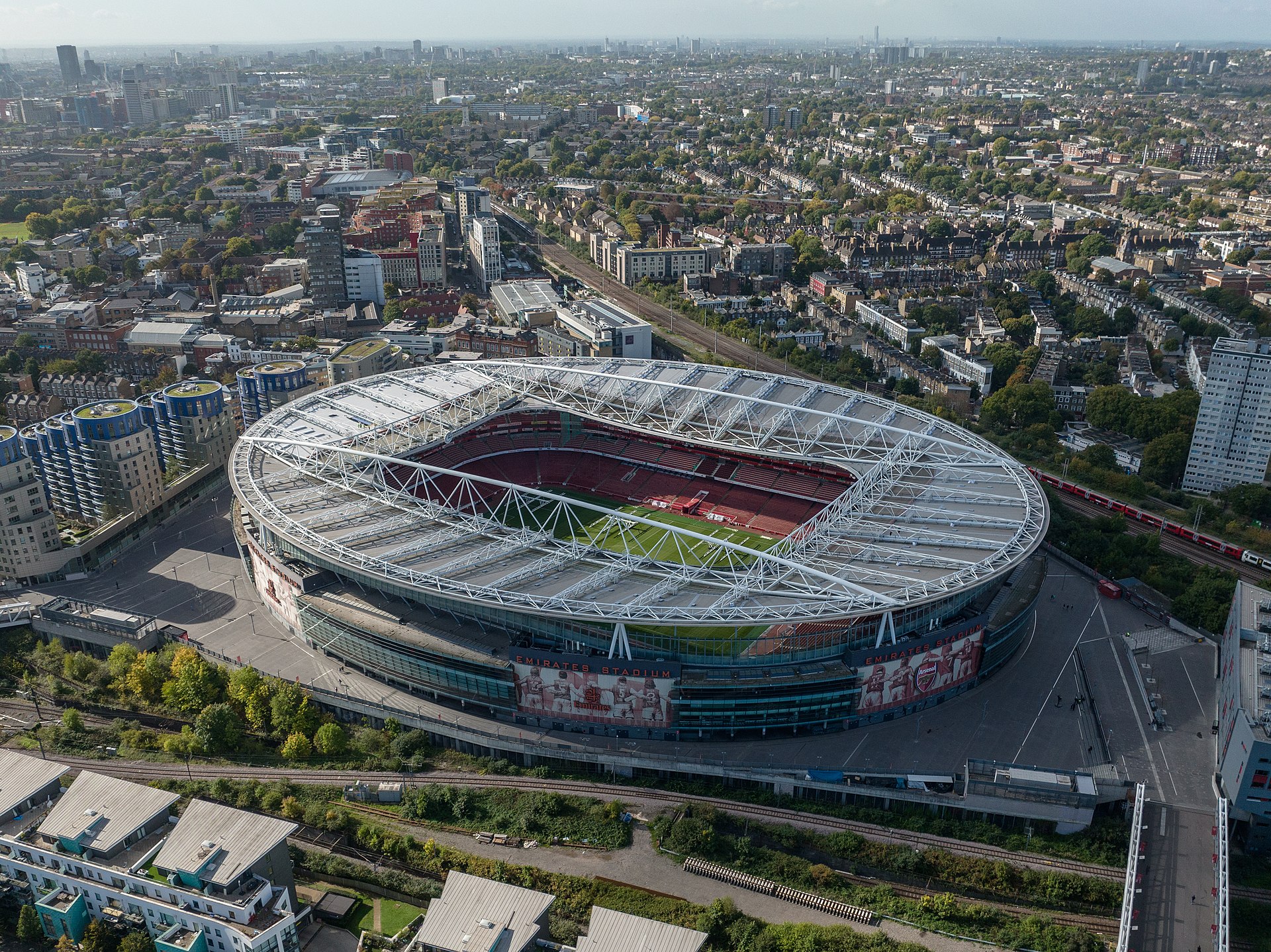
Emirates Stadium
Europe,
United Kingdom,
citta,
Holloway
The Emirates Stadium, located in the Holloway district of London, is one of the most modern and iconic stadiums in European football. Home to Arsenal Football Club, the Emirates Stadium has a capacity of around 60,000 spectators and is known for its cutting-edge architecture, high-level facilities, and vibrant atmosphere during matches.
The history of the Emirates Stadium began in the early 2000s, when Arsenal FC decided to build a new stadium to replace Highbury Stadium, which, despite its history and charm, could no longer meet the needs of a growing club. Highbury, with its limited capacity and outdated facilities, was no longer suitable for Arsenal’s ambitions, both in terms of financial capacity and international prestige.
The site chosen for the new stadium was located about half a mile away from Highbury, in the industrial area of Ashburton Grove. The construction of the Emirates Stadium, which began in 2004, was an ambitious project that involved not only the construction of the stadium, but also the redevelopment of the surrounding area. This process included the creation of new community facilities, improvements to public transportation, and residential development projects.
The stadium’s architecture was designed by the HOK Sport studio (now known as Populous), in collaboration with Buro Happold for structural engineering. The Emirates Stadium was completed in 2006 and was officially inaugurated on July 23 of the same year with a friendly match against Ajax, in a game that paid tribute to Dennis Bergkamp, an Arsenal legend.
One of the most distinctive aspects of the Emirates Stadium is its modern and functional design. The stadium consists of four main stands: the North Bank, the Clock End, the East Stand, and the West Stand, each with its own character and VIP areas. The stands offer excellent visibility from every point, thanks to the unobstructed design that ensures a clear view of the field for all spectators.
The name “Emirates Stadium” comes from a sponsorship agreement with the airline Emirates, which also included naming rights for the stadium for a period of 15 years, along with sponsorship of the club’s jerseys. This agreement, one of the most lucrative in football at the time, played a crucial role in financing the project.
In addition to the cutting-edge design, the Emirates Stadium is equipped with high-level facilities that enhance the spectator experience. These include a wide range of restaurants and bars, official Arsenal shops, and the renowned Arsenal Museum. The museum offers an in-depth overview of the club’s history, with interactive exhibits and a vast collection of trophies, historic jerseys, and memorabilia.
Another significant element of the Emirates Stadium is its commitment to sustainability and energy efficiency. The stadium is equipped with modern technologies for energy saving, recycling, and waste management, reflecting Arsenal’s commitment to environmental responsibility.
The atmosphere during matches is an aspect that distinguishes the Emirates Stadium. With a passionate and devoted fan base, Arsenal matches are events full of energy and emotion. The fans’ chants, the emotional wave that pervades the stadium during key moments, and the sight of the sea of red spectators create a unique and engaging experience.
Read More