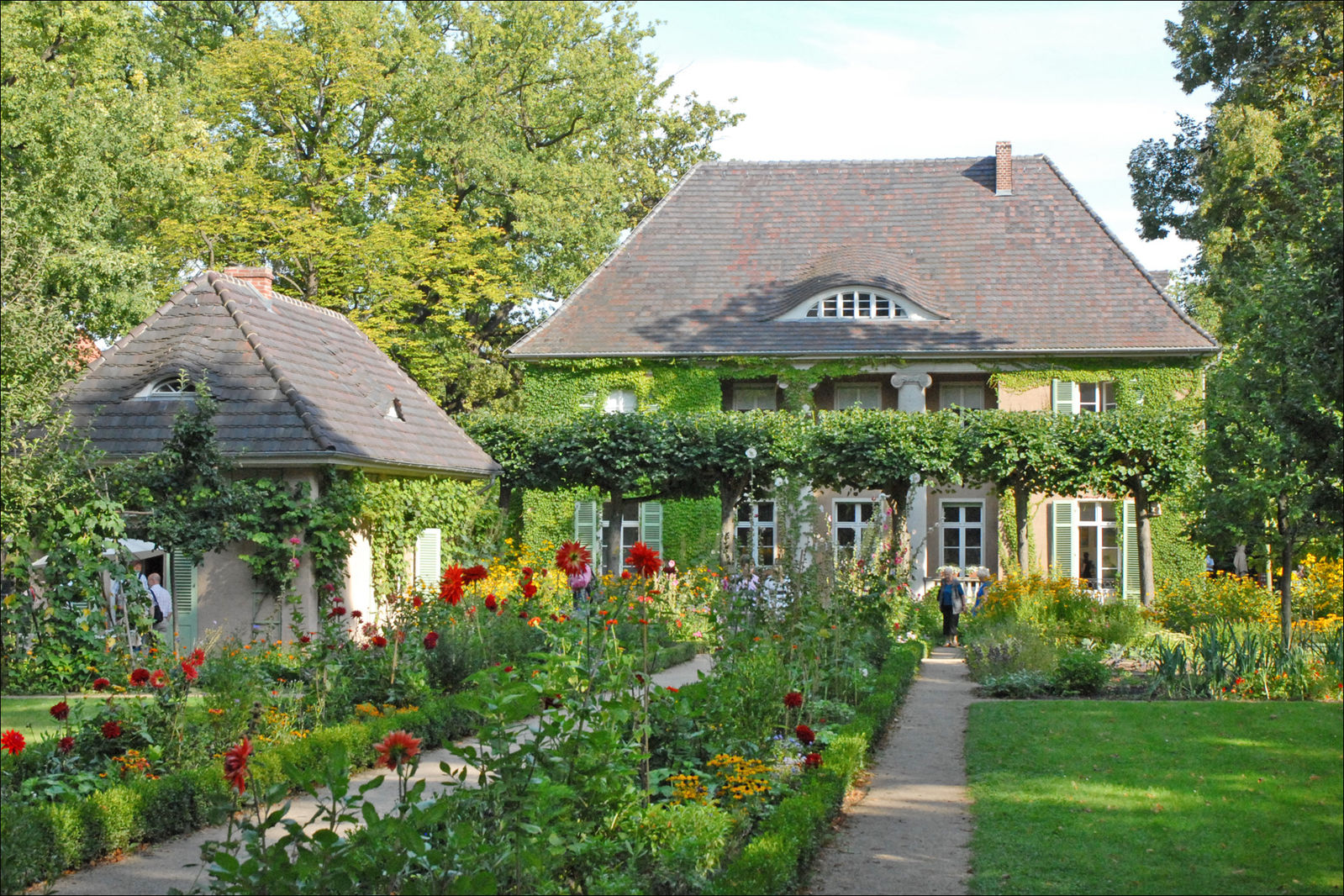
Villa Liebermann
Europe,
Germany,
citta,
Wannsee
The Liebermann Villa, located on the shores of Lake Wannsee in Berlin, is a place of extraordinary beauty and historical importance. This villa, with its enchanting garden, was the summer residence of Max Liebermann, one of the most important German Impressionist painters. Built between 1909 and 1910, the villa not only reflects Liebermann’s artistic taste, but also his love for nature and the landscape.
Max Liebermann, born in Berlin in 1847, was a prolific and influential artist, known for his bright landscapes and vivid portraits. After studying in Weimar and spending time in Paris and the Netherlands, Liebermann developed a distinctive style that combined French Impressionism with a uniquely German sensibility. His career was marked by numerous successes, including the presidency of the prestigious Academy of Fine Arts in Berlin.
The decision to build a villa on the Wannsee was motivated by Liebermann’s desire to have a quiet retreat away from the hustle and bustle of the city. The architect in charge of the project was Paul Baumgarten, who designed an elegant and functional structure, perfectly integrated into the surrounding landscape. The villa, with its simple lines and bright interiors, reflected Liebermann’s modern and sophisticated aesthetic.
One of the most fascinating aspects of the Liebermann Villa is its garden, designed by Liebermann himself. The garden is a masterpiece of landscape design, with geometric flower beds, well-kept lawns, and a breathtaking view of the lake. Liebermann found inspiration in the colors and shapes of the garden, which he often reproduced in his paintings. Scenes of children playing, flowers blooming, and the sparkling waters of the lake are recurring themes in his works, a testament to the deep connection between the artist and his environment.
During the Nazi period, Liebermann’s life and that of his family were marked by persecution. Being of Jewish origin, Liebermann was forced to resign from his public positions and was marginalized from the official art world. Despite these difficulties, he continued to paint until his death in 1935. After his death, the villa was expropriated by the Nazis and underwent various uses during and after the war.
Only in the 1990s, thanks to the efforts of the Max Liebermann Gesellschaft, the villa was restored and opened to the public as a museum. Today, the Liebermann Villa is a place of memory and celebration of the art and life of Max Liebermann. The rooms of the villa house a permanent collection of his works, including paintings, drawings, and preparatory studies. Temporary exhibitions explore various aspects of his career and the historical and artistic context in which he operated.
Visiting the Liebermann Villa means taking a journey through time and immersing oneself in the life and art of one of the greatest German painters. The villa and its garden offer a refuge of peace and beauty, where one can admire Liebermann’s art in the context he loved so much. Every corner of the villa and garden tells a story, intertwined with the larger history of art and 20th century Germany.
Max Liebermann’s legacy continues to live on through the activities of the villa, which include conferences, workshops, and educational programs. These initiatives not only keep Liebermann’s memory alive, but also promote knowledge and appreciation of Impressionist and modern art. The Liebermann Villa has become a vibrant cultural center, a place where art and history come together to offer visitors an enriching and inspiring experience.
Read More