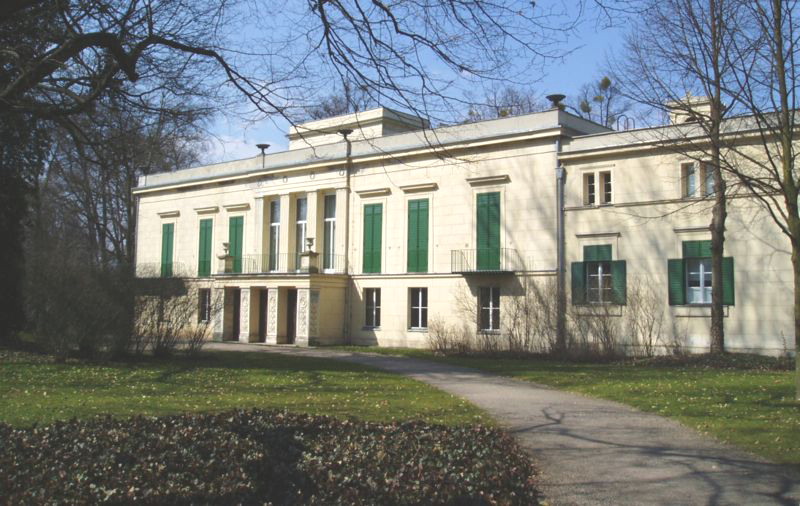
Glienicke Castle
Europe,
Germany,
citta,
Wannsee
The Schloss Glienicke, located on the banks of the River Havel in Berlin, is a magnificent example of neoclassical architecture, designed by the architect Karl Friedrich Schinkel and commissioned by Prince Charles of Prussia. Its history dates back to 1824, when Prince Charles purchased the estate and commissioned Schinkel to transform the existing building into a summer residence inspired by Italian villas. This commission marked the beginning of a series of transformations that led to the creation of one of the most refined architectural complexes of the period.
Schinkel, known for his sober and elegant style, designed the main castle, the casino, and a series of smaller buildings that harmoniously integrate into the surrounding landscape. The Italian influence is evident in the symmetrical facades and interiors decorated with high-quality frescoes and stuccoes. One of the most fascinating elements of the complex is the Große Neugierde, a belvedere inspired by the choragic monument of Lysicrates in Athens, which offers a breathtaking panoramic view of the River Havel.
The castle park, designed by the renowned landscape architect Peter Joseph Lenné, is a masterpiece of landscape architecture. Lenné created an English garden with expansive lawns, groves, and winding paths that lead to strategic viewpoints and picturesque monuments. The park is enriched by numerous statues, fountains, and pavilions, reflecting the romantic taste of the period and creating an environment of great beauty and tranquility.
During the 19th century, Schloss Glienicke became a culturally and socially significant center, frequented by artists, intellectuals, and members of European nobility. Prince Charles, an art enthusiast and patron, regularly hosted concerts, theatrical performances, and literary gatherings in the castle and its gardens. This golden period is still reflected today in the refined and welcoming atmosphere of the place.
With the advent of the 20th century and the end of the Prussian monarchy, the castle underwent a period of decline and transformations. During World War II, the complex was damaged and many of its artworks were lost. However, in the 1960s, significant restoration works were initiated to restore the castle and park to their former glory. Thanks to these interventions, Schloss Glienicke was inscribed on the UNESCO World Heritage List in 1990, a recognition that highlights its historical and artistic value.
The castle park continues to be a place of great charm and tranquility, ideal for relaxing walks and moments of contemplation. The perspective axes created by Lenné offer spectacular views of the surrounding monuments, such as Babelsberg Castle, Sacrow Church, and Peacock Island. These viewpoints, together with the botanical richness of the park, make every visit a unique and unforgettable experience.
An interesting anecdote concerns the construction of the Große Neugierde belvedere. During the works, Schinkel and Prince Charles had several discussions about the final design of the monument. The prince, influenced by his travels to Italy and Greece, wanted a work that reflected ancient classicism. Schinkel, while respecting the client’s wishes, managed to create a structure that combined classical elements with his personal style, giving life to a work of extraordinary beauty and originality.
Read More