Peacock Island (Pfaueninsel)
Europe,
Germany,
citta,
Wannsee
Peacock Island, or “Isola dei Pavoni”, is a hidden gem in the heart of Berlin, located on the Havel River. This small natural paradise, covering about 67 hectares, is a place of great beauty and history, combining the charm of nature with a rich cultural heritage. The island’s history dates back to the 16th century, when the area was known as “Kaninchenwerder” (Rabbit Island), used as a hunting reserve by the Prussian nobility.
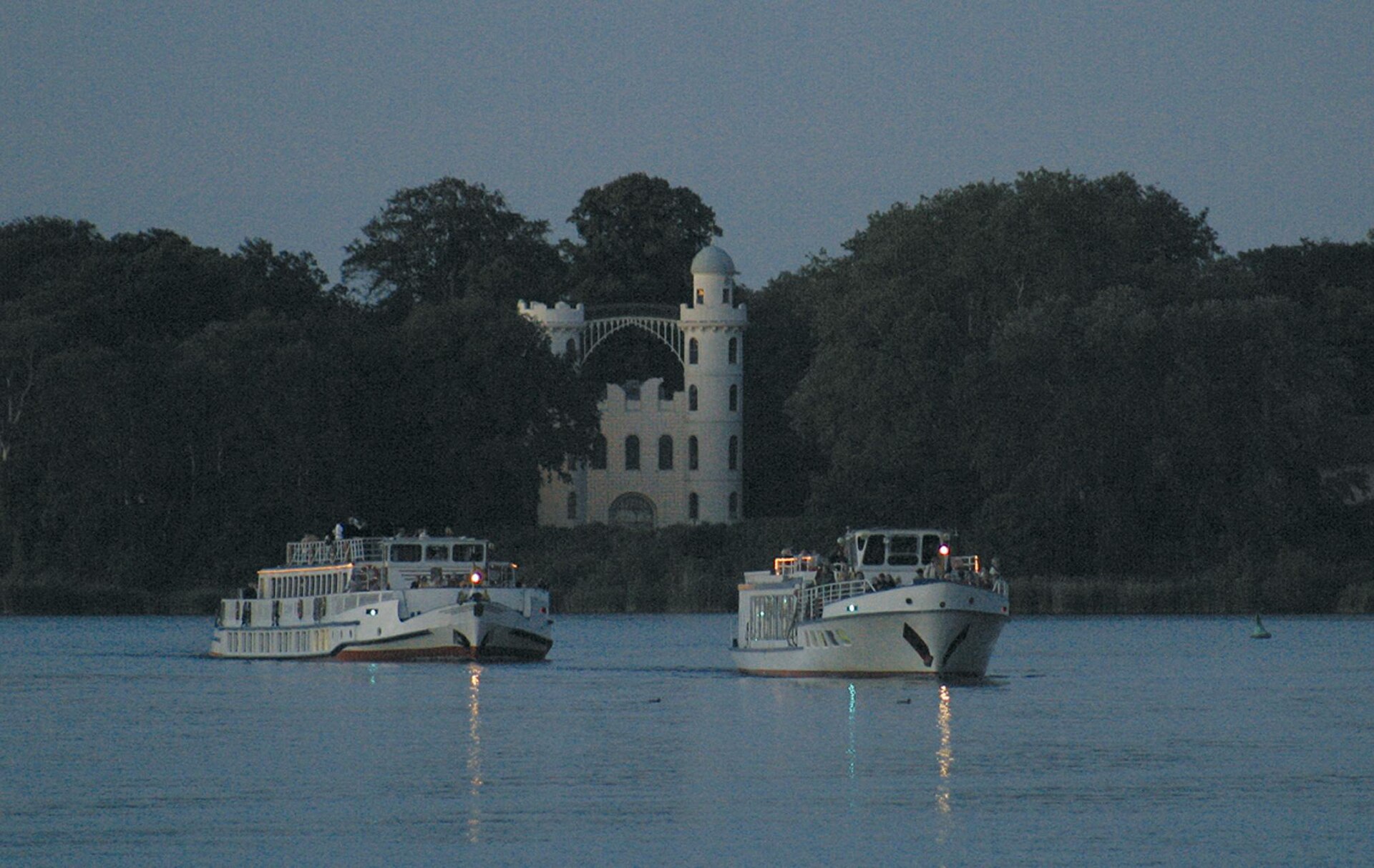
The transformation of the island into a place of leisure and wonder began in 1793, when King Frederick William II of Prussia acquired the island and decided to build a neo-Gothic style castle, intended to be a summer residence for him and his lover, Wilhelmine Enke. The architect in charge of this project was Carl Gotthard Langhans, known for designing the Brandenburg Gate. The castle, made of wood and painted white to imitate stone, stands as a fairytale vision with its twin towers and Gothic decorations. The interior of the castle, although modest compared to lavish royal residences, reflected the romantic and idyllic taste of the king.
During the reign of Frederick William III, successor to Frederick William II, the island underwent further transformations. The king commissioned the famous landscaper Peter Joseph Lenné to redesign the garden in English landscape style, creating winding paths, open meadows, and romantic groves. It was during this period that the island was named “Pfaueninsel” thanks to the presence of peacocks, imported to add an exotic and decorative touch to the park. These magnificent birds, with their iridescent feathers and majestic demeanor, became one of the distinctive symbols of the island.
Pfaueninsel was not only a royal retreat, but also a botanical experimentation laboratory. King Frederick William III was passionate about exotic plants and built a greenhouse, the “Königliche Pfaueninsel Gärtnerei”, where rare species from around the world were cultivated. This greenhouse became a center for botanical research, attracting scholars and gardeners from all over Europe.
During the 19th century, the island became a popular excursion spot for Berlin’s high society, who visited to stroll in the gardens, admire the peacocks, and enjoy the tranquility of the place. The island maintained its charm even during the period of the German Empire, when the Prussian royal family continued to use it for parties and receptions.
In the 20th century, Pfaueninsel went through periods of abandonment and decay, especially during and after World War II. However, thanks to conservation and restoration efforts, the island has been restored to its former glory. In 1990, Pfaueninsel was declared a UNESCO World Heritage Site, recognizing its historical and natural value.
An interesting anecdote concerns the famous scientist Alexander von Humboldt, who often visited Pfaueninsel and appreciated its natural beauty and botanical variety. Humboldt, known for his explorations and scientific research, found inspiration and tranquility on the island.
Read More