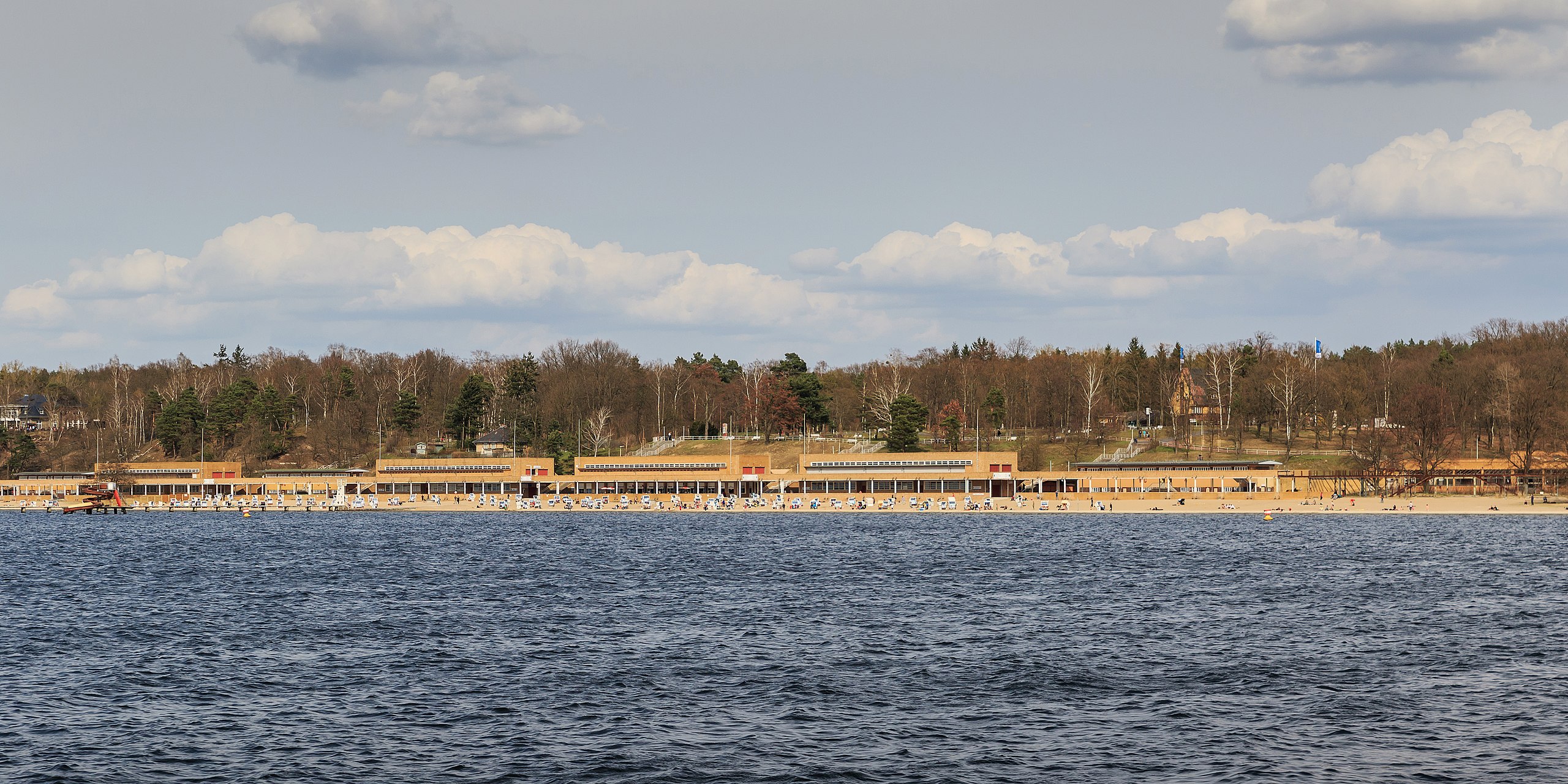
Wannsee lake
Europe,
Germany,
citta,
Wannsee
Wannsee, a charming neighborhood located in the southwestern area of Berlin, is famous for its natural beauty and its historical and cultural significance. Part of the Steglitz-Zehlendorf district, Wannsee is renowned primarily for its namesake lake, the Großer Wannsee, which attracts Berliners and tourists with its crystal-clear waters and numerous recreational opportunities.
The Großer Wannsee, a large bay of the Havel River, is the heart of the neighborhood. This lake, with its sandy beaches and picturesque landscapes, is one of Berlin’s main beach destinations. The famous Strandbad Wannsee, one of Europe’s largest and oldest lake beaches, is an iconic place where generations of Berliners have spent their summers swimming, sunbathing, and enjoying outdoor life. The beach, opened in 1907, offers a wide range of services, including restaurants, cafes, and boat rentals, making it an ideal place for a day of leisure.
But Wannsee is not just synonymous with summer fun. Its history is deeply intertwined with crucial events of the 20th century. One of the most well-known and historically significant places is the Villa Wannsee, or Haus der Wannsee-Konferenz. This elegant villa on the lake’s shore was the venue for the Wannsee Conference on January 20, 1942, during which high-ranking Nazi officials planned the “Final Solution,” or the Holocaust. Today, the villa houses a memorial and documentation center that educate the public about the horrors of the Nazi genocide and the victims of the Holocaust. The exhibitions, rich in historical documents and testimonies, offer a moving and educational experience, making the visit a moment of reflection and remembrance.
The Wannsee neighborhood is also known for its elegant villas and lush gardens. Many of these buildings date back to the late 19th and early 20th centuries, when the area became an exclusive retreat for Berlin’s bourgeoisie. Among these historic residences stands out Villa Liebermann, the home of the famous Impressionist painter Max Liebermann. Today, the villa is a museum dedicated to the life and work of the artist, with a collection of paintings depicting the villa’s gardens and life on the lake. Visitors can stroll through the beautifully restored gardens, which offer breathtaking views of Wannsee, and admire works that capture the light and colors of the surrounding landscape.
Nature is an essential component of Wannsee’s charm. In addition to the Großer Wannsee, the neighborhood boasts numerous parks and nature reserves that provide refuge to a wide range of flora and fauna. Among these, the Wannsee Lake Park and the Pfaueninsel Nature Reserve (Peacock Island) are particularly well-known. Pfaueninsel, an island in the Havel River, is a nature reserve and a UNESCO World Heritage Site, famous for its free-roaming peacocks and picturesque romantic-style castle. The island is an ideal destination for day trips, offering peaceful trails, rich biodiversity, and an almost fairy-tale atmosphere.
Wannsee also offers numerous opportunities for water sports enthusiasts. Sailing, rowing, and kayaking are popular activities on the lake, and various yacht clubs and sailing schools offer courses and rentals for all levels of experience. These sports not only promote an active and healthy lifestyle, but also allow for exploring the lake from a unique perspective, enjoying the beauty of the surrounding landscape.
Wannsee’s connectivity to the rest of Berlin is ensured by efficient public transportation, including trains, buses, and ferries, making it easy for residents and tourists to access this beautiful area. The Wannsee station, a major hub of the Berlin railway network, connects the neighborhood to the city center and other regional destinations, facilitating the influx of visitors and commuters.
Read More