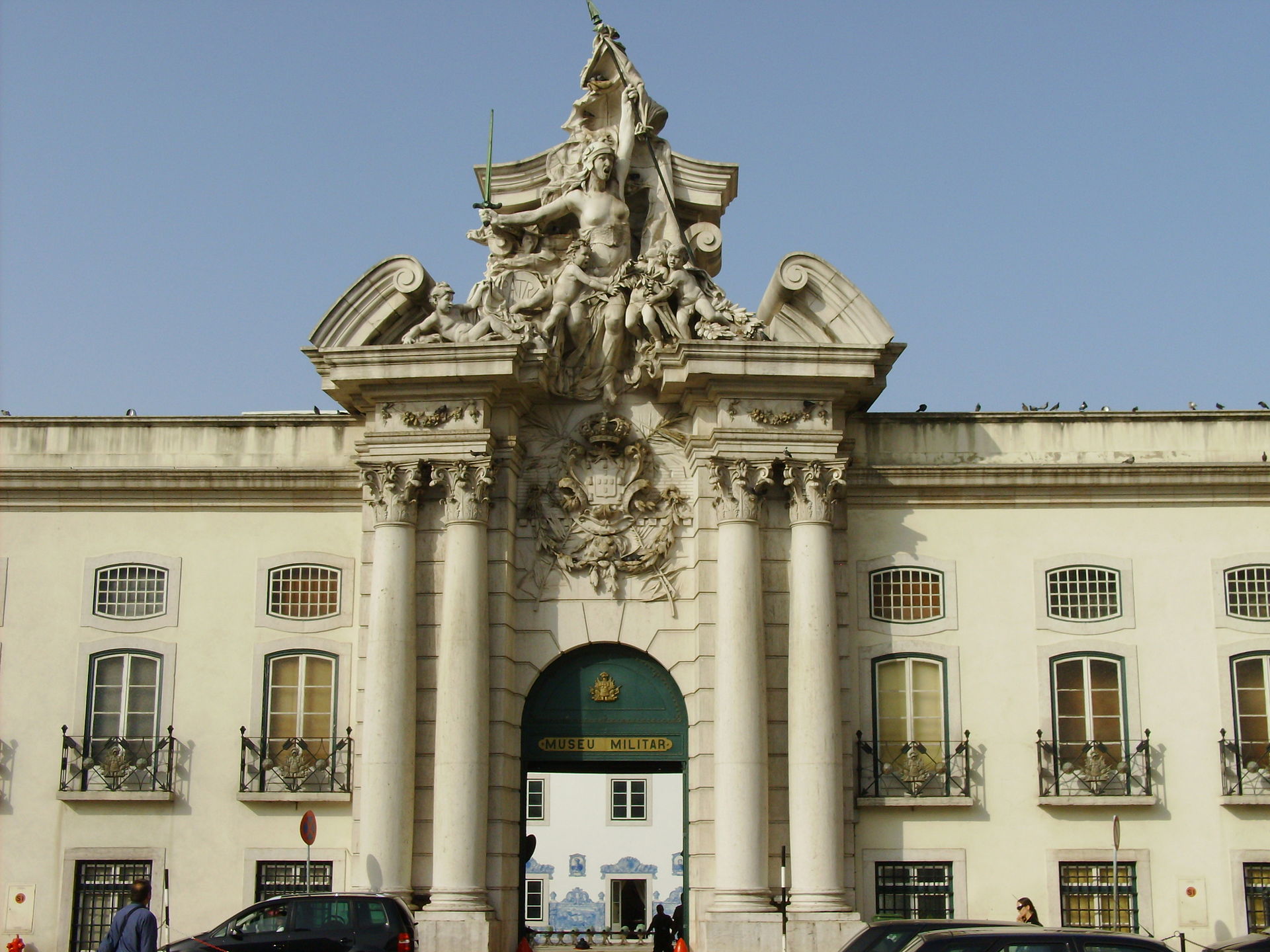
Military Museum of Lisbon
Europe,
Portugal,
citta,
Santa Apolónia
The Military Museum of Lisbon, located in the heart of the Portuguese capital, is one of the oldest and richest museum institutions in Portugal. Founded in 1851 by royal decree of D. Maria II, the museum initially started as an Artillery Museum, reflecting the strategic and historical importance of the preserved military material. Today, the museum offers visitors a vast collection covering centuries of military history, housed in a historic building located in front of the Santa Apolónia station.
Upon entering the museum, visitors are greeted by an impressive monumental portico designed by the French architect Ferdinand de Larre, which managed to survive the devastating earthquake of 1755. This majestic entrance immediately gives an idea of the historical and artistic richness that the museum contains.
The museum is famous for its collection of artillery, considered one of the most complete in the world. This collection includes bronze artillery pieces from various eras, each of which represents a valuable historical document thanks to its inscriptions and decorations. These pieces are not only war instruments, but also works of art that reflect the taste and technology of the times in which they were made.
In addition to artillery, the Military Museum of Lisbon houses a wide range of uniforms, weapons, and historical documents that tell the military history of Portugal. Among the most prized pieces is Vasco da Gama’s two-handed sword, one of the greatest explorers in history, and the armor of 16th-century knights, which testify to the craftsmanship and combat techniques of the time.
The museum’s collections are displayed in 34 rooms, each named after a Portuguese national hero, such as Vasco da Gama and Prince Henry the Navigator. Each room offers an overview of different aspects of Portugal’s military history, from ancient medieval weapons to modern equipment from World War I. Particularly fascinating are the rooms dedicated to the great conflicts of the 20th century, which include not only weapons and uniforms, but also detailed reconstructions of battle scenes and strategic maps. The museum also houses a rich art collection. Among the most notable works are paintings by famous Portuguese artists such as Columbano Bordalo Pinheiro, José Malhoa, and Carlos Reis. These paintings, many of which decorate the ceilings and walls of the museum, depict battle scenes and historical figures, adding a touch of grandeur and beauty to the exhibition spaces.
Another unique feature of the museum is the collection of azulejos, typical Portuguese decorated tiles. The 26 azulejo panels, dating back to the 18th and 19th centuries, depict crucial episodes of Portuguese history, from the kingdom’s foundation in 1139 to World War I. These panels, created by artists like José Estêvão Cancela and Leopoldo Batistini, offer a fascinating visual overview of Portugal’s most significant historical events.
The museum is also known for its Plaster Room, where plaster models of statues of important Portuguese historical figures are preserved. Among these, the model of the statue of D. José I, located in Lisbon’s Praça do Comércio, stands out. This room offers a unique look at the process of creating the great sculptural works that decorate the city.
Despite its vast collection and historical value, the Military Museum of Lisbon remains one of the least visited museums in the city. This could be due to its location or specific theme, but anyone who enters it does not leave disappointed. The baroque beauty of the building, combined with the richness of its collections, offers a cultural and historical experience of great value.
Read More