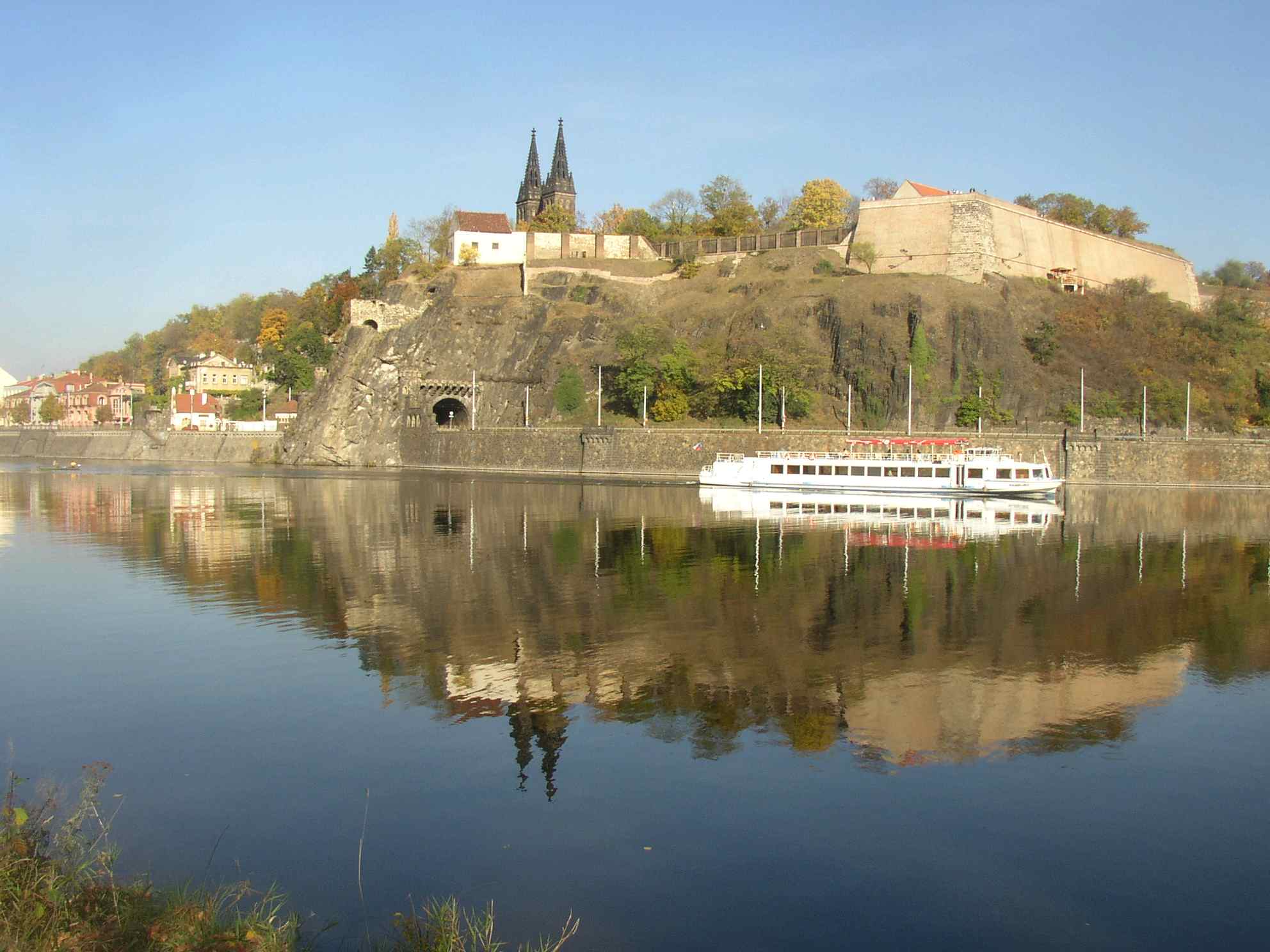
Vyšehrad Castle
Europe,
Czech Republic,
Prague,
Vyšehrad
Vyšehrad is one of the most fascinating and historically significant places in Prague. Located on a hill overlooking the Vltava River, this complex offers breathtaking panoramic views of the city and encapsulates centuries of history, legends, and art. Founded in the 10th century, Vyšehrad was originally a fortress and one of the first residences of the dukes of Bohemia. Its history is intertwined with that of the Přemyslid dynasty, who ruled Bohemia for centuries.
The importance of Vyšehrad in Czech history is legendary. According to tradition, the castle was the residence of the mythical princess Libuše, a prophetess who, along with her husband Přemysl, founded the Přemyslid dynasty. Libuše is famous for her prophetic vision of the city of Prague, which she described as a great city whose “glory will touch the stars.” This legend not only reinforces the historical importance of Vyšehrad but also contributes to its romantic and mystical charm.
Over the centuries, Vyšehrad underwent numerous transformations. After being a royal residence, it became an important military stronghold. During the reign of Charles IV in the 14th century, the fortress was rebuilt and integrated into the defensive system of the city of Prague. However, it was in the 17th century, during the Thirty Years’ War, that Vyšehrad assumed a crucial strategic function as a defensive bastion against Swedish troops.
One of the most iconic buildings in Vyšehrad is the Basilica of St. Peter and St. Paul. Originally built in the 11th century, the basilica was renovated several times over the centuries, taking on its current neo-Gothic appearance in the 19th century. The interior of the basilica is decorated with magnificent frescoes and colorful stained glass windows that tell the religious and cultural history of Bohemia. A fascinating feature of the basilica is its crypt, which houses the remains of important Czech historical figures.
Next to the basilica is the Vyšehrad Cemetery, founded in 1869, where many of the most illustrious figures in Czech history, including artists, writers, musicians, and politicians, are buried. Among the most visited tombs are those of the composer Bedřich Smetana, author of the symphonic poem “Vltava,” and the famous writer Karel Čapek. The cemetery is a place of great evocativeness, where the cultural history of the nation is tangibly present.
Another attraction of Vyšehrad is the Rotunda of St. Martin, one of the oldest buildings in Prague, dating back to the 11th century. This small Romanesque church is a rare example of medieval architecture that has survived the vicissitudes of the centuries. Its simplicity and austerity contrast with the decorative richness of the nearby basilica, offering a suggestive journey through time.
The Vyšehrad complex is surrounded by fortified walls that offer panoramic walks and spectacular views of the city and the river. The walls themselves are a remarkable engineering feat, enriched by bastions and towers that testify to their defensive function. Walking along these walls allows you to imagine the ancient battles and stories that have shaped this place. The connection between Vyšehrad and music is particularly significant. In addition to being the burial place of composers like Smetana, Vyšehrad has been immortalized in music itself. Smetana’s symphonic poem “Vyšehrad,” part of the cycle “Má vlast” (My Country), evokes with its notes the grandeur and beauty of the site, emphasizing its central role in the Czech cultural imagination.
Read More