Vyšehrad Cemetery
Europe,
Czech Republic,
Prague,
Vyšehrad
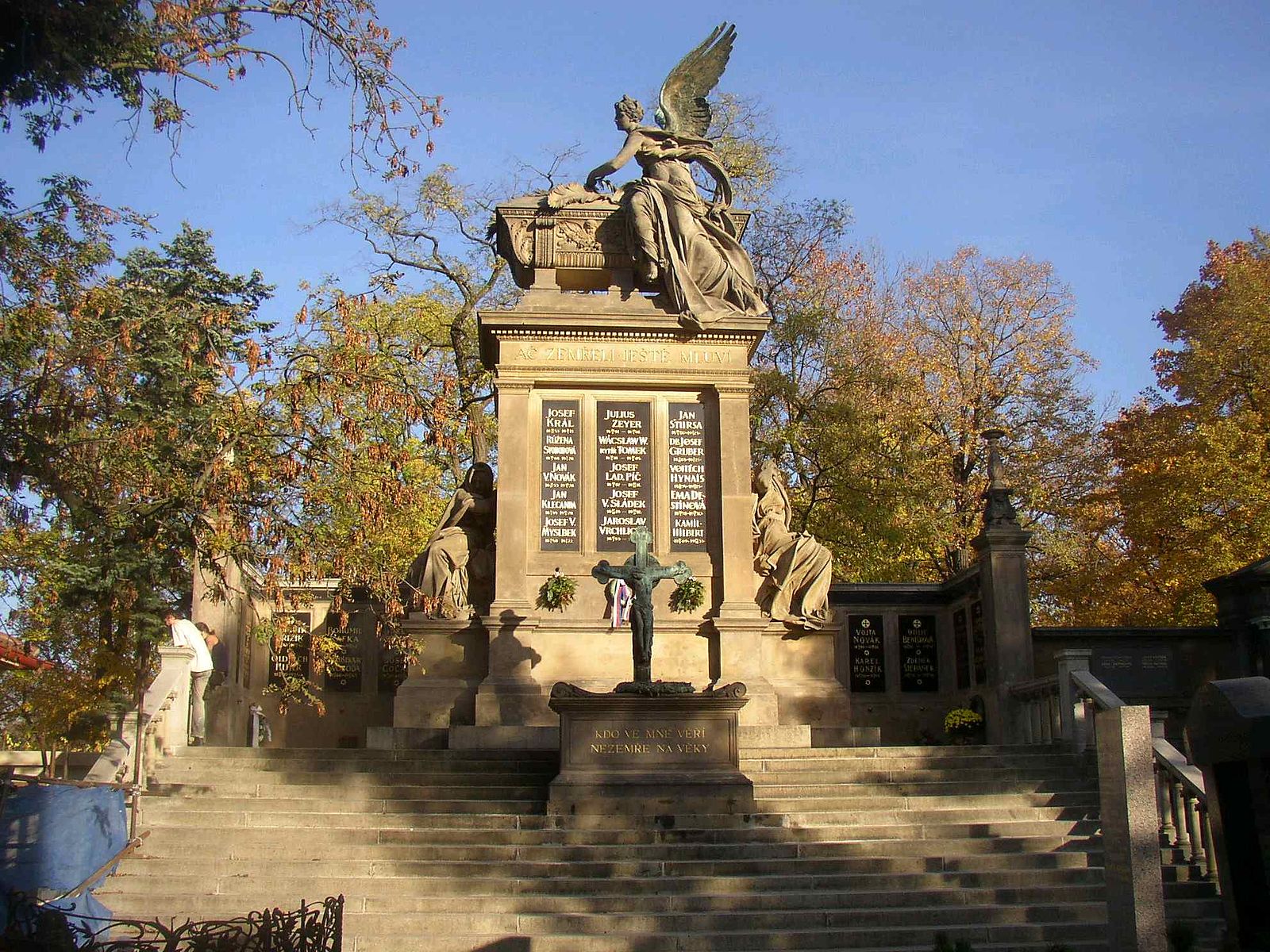
The Vyšehrad Cemetery, located within the Vyšehrad complex in Prague, is one of the most sacred and revered places in the Czech Republic. Founded in 1869, it is the burial place of many of the most illustrious figures in Czech history and culture. Located next to the Basilica of St. Peter and St. Paul, the cemetery is a place of great beauty and tranquility, where history, art, and memory intertwine in a unique and fascinating way.
The cemetery was conceived as a national pantheon, a place to celebrate and commemorate the great men and women who have contributed to the nation’s history and culture. Walking through its avenues, you can see the tombs of artists, writers, musicians, politicians, and scientists, each telling a story of talent, dedication, and passion. Among the most famous burials are those of composer Bedřich Smetana, known for his symphonic cycle “Má vlast,” which includes the famous symphonic poem “Vltava,” and writer Karel Čapek, author of fundamental works of Czech literature and the term “robot.”
One of the most impressive elements of the Vyšehrad Cemetery is the Tomb of Slavín, an imposing mausoleum built between 1889 and 1893 by architect Antonín Wiehl. Slavín is intended to house the remains of the most illustrious Czech citizens and represents a symbol of unity and national pride. The mausoleum is adorned with sculptures and reliefs celebrating the arts, sciences, and patriotism, creating a solemn and majestic atmosphere.
The layout of the cemetery reflects a mix of architectural and artistic styles. The tombs range from simple gravestones to elaborate monuments, many of which were designed by renowned sculptors and architects. The sculptures adorning the tombs are works of art in themselves, depicting allegorical figures, angels, and religious scenes that evoke spirituality and respect for the deceased.
The history of the cemetery is intimately linked to that of the Czech nation. During the period of the Czech national revival, the cemetery became a place of pilgrimage and reflection for those fighting for the nation’s identity and independence. Even during periods of occupation and repression, the cemetery has maintained its role as a sanctuary of memory and cultural resistance.
Every year, numerous events and ceremonies take place in the cemetery to honor the deceased and celebrate the nation’s cultural heritage. These events attract not only local residents but also tourists and scholars from around the world, interested in exploring the rich history and culture of the Czech Republic. Guided tours offer a unique opportunity to learn about the stories of those buried here and understand the historical context in which they lived and worked.
Among the figures buried in the cemetery, in addition to Smetana and Čapek, are composer Antonín Dvořák, writer Božena Němcová, and artist Alfons Mucha, known for his contributions to Art Nouveau. The presence of these illustrious figures makes the Vyšehrad Cemetery not only a place of eternal rest, but also an open-air museum of Czech culture and history.
The cemetery is also a place of great natural beauty. The centuries-old trees, flowers, and bushes that adorn the grounds create a serene and contemplative atmosphere. The panoramic views of Prague and the Vltava River add an additional element of charm, making the cemetery an ideal place for quiet walks and moments of reflection.
Read More