

Column of the Immaculate Conception

The Column of the Immaculate Conception, located in Piazza Mignanelli in Rome, is an imposing and significant monument that celebrates the Catholic dogma of the Immaculate Conception. This monument, inaugurated on December 8, 1857, stands next to the famous Spanish Steps and represents one of the most fascinating architectural and historical elements of the eternal […]
Roman College
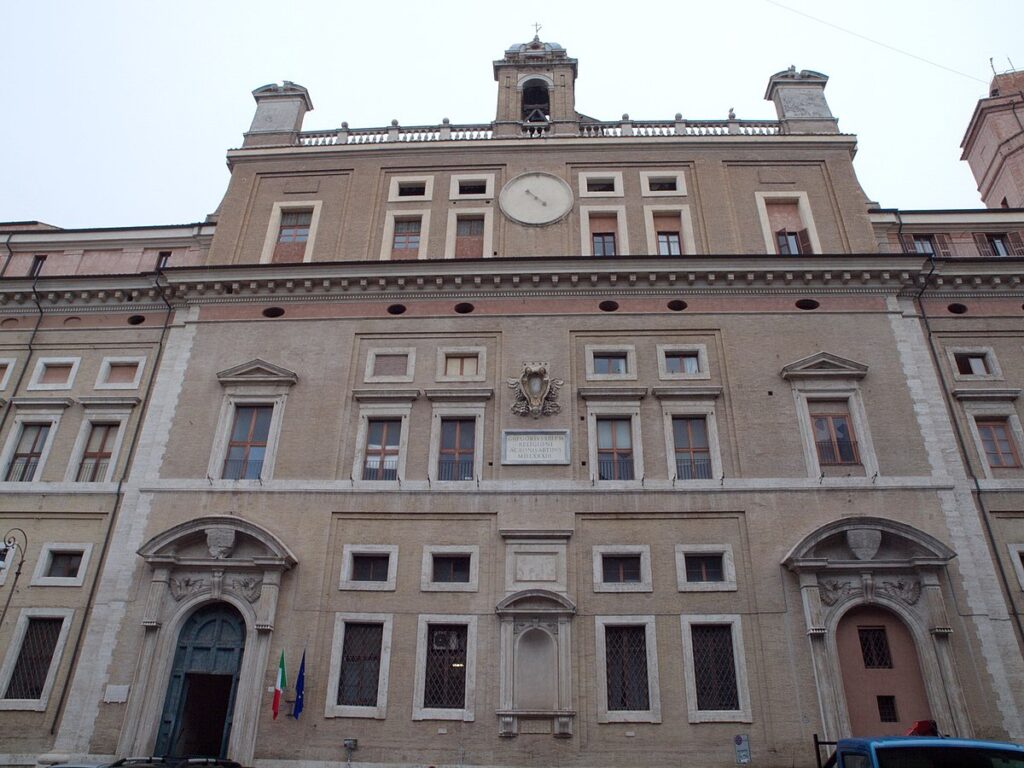
The Roman College is a historically important building located in the center of Rome, a few steps away from Piazza Venezia. Built between 1582 and 1584 by the will of Pope Gregory XIII, the Roman College was established as the headquarters of the school founded by Saint Ignatius of Loyola for the Jesuits and for […]
Clivus of Scaurus

The Clivus Scauri is one of the ancient streets of Rome, which offers an extraordinary journey through time, between Roman ruins and suggestive medieval testimonies. Located in the heart of the Celio district, the Clivus Scauri stretches between Piazza di San Gregorio and Piazza dei Santi Giovanni e Paolo, connecting some of the historically and […]
Circus Maximus
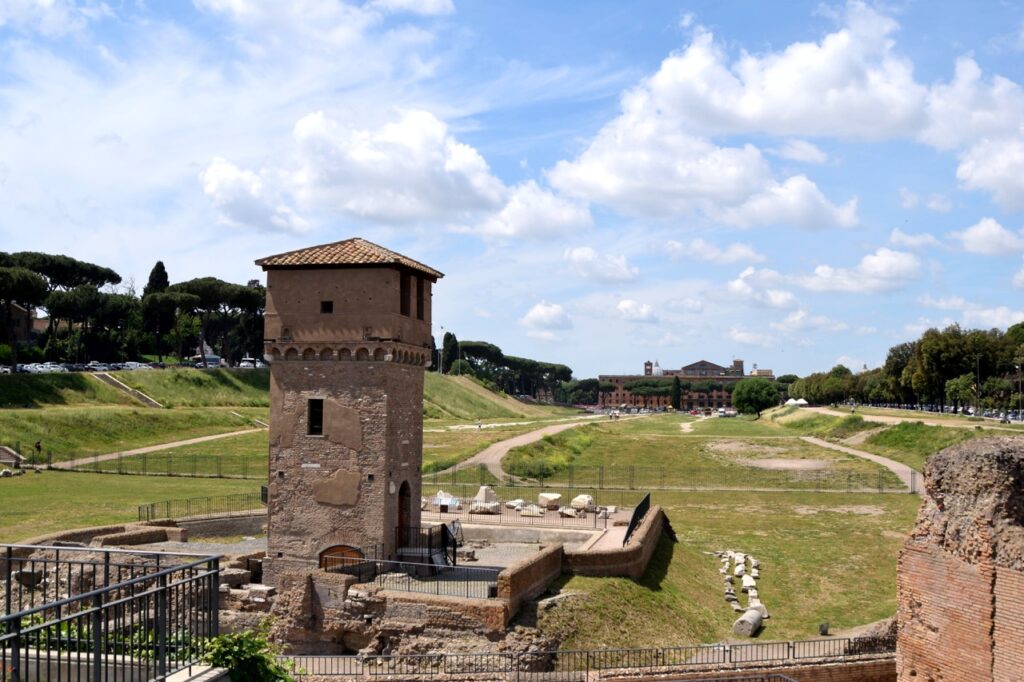
The Circus Maximus is one of the most emblematic monuments of Rome, a place that has crossed millennia of history and has seen the city grow and transform around it. Located in the valley between the Palatine and the Aventine, this ancient Roman circus was the largest entertainment building ever built and one of the […]
Circus Flaminio
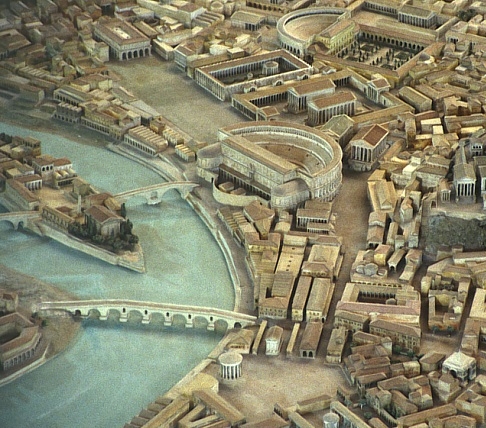
The Flaminio Circus is one of the lesser-known but extraordinarily fascinating structures of ancient Rome. Built in the Campus Martius, this structure was not a circus in the classical sense of the term, meaning it did not host chariot races like the Circus Maximus, but had a multifunctional purpose, hosting games, celebrations, and public spectacles. […]
Circus of Maxentius
Hidden among the shadows of the past, the Circus of Maxentius emerges as an imposing testimony of ancient Rome’s greatness. Located along the Appian Way, this extraordinary archaeological complex offers us a unique opportunity to immerse ourselves in the vibrant and engaging atmosphere of the games and chariot races of ancient Rome, transporting us back […]
Circus of Nero
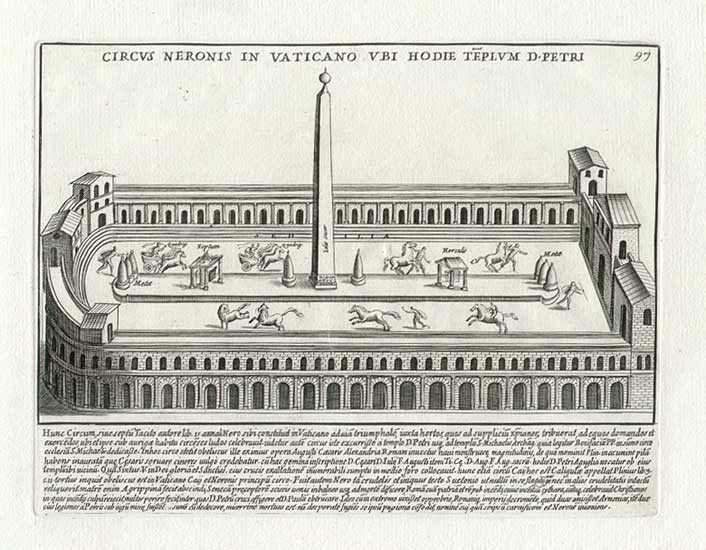
Nero’s Circus, also known as the Vatican Circus, is one of the most fascinating and historically rich ancient structures in Rome, despite only a few visible remains remaining today. Located in the area where the Basilica of St. Peter’s now stands, the circus was built by Emperor Caligula around 40 AD and later expanded by […]
Non-Catholic Cemetery
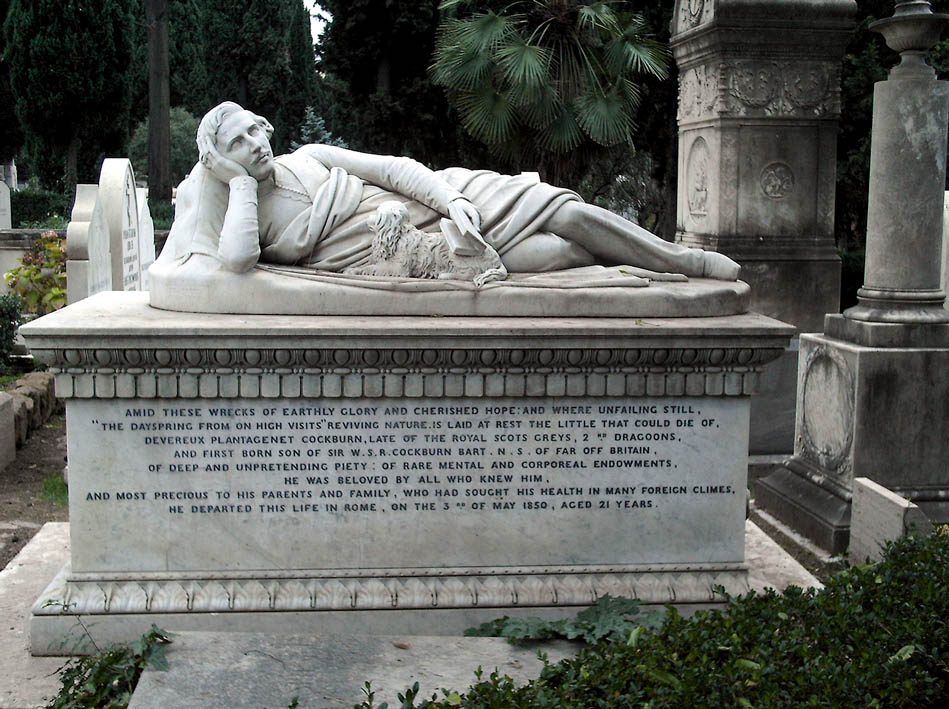
The Non-Catholic Cemetery of Rome, also known as the Protestant Cemetery, is a place of extraordinary beauty and tranquility, located in the Testaccio district, next to the majestic Pyramid of Caius Cestius and a section of the ancient Aurelian Walls. Founded in the early 18th century, it is one of the oldest continuously used cemeteries […]
Bramante Cloister
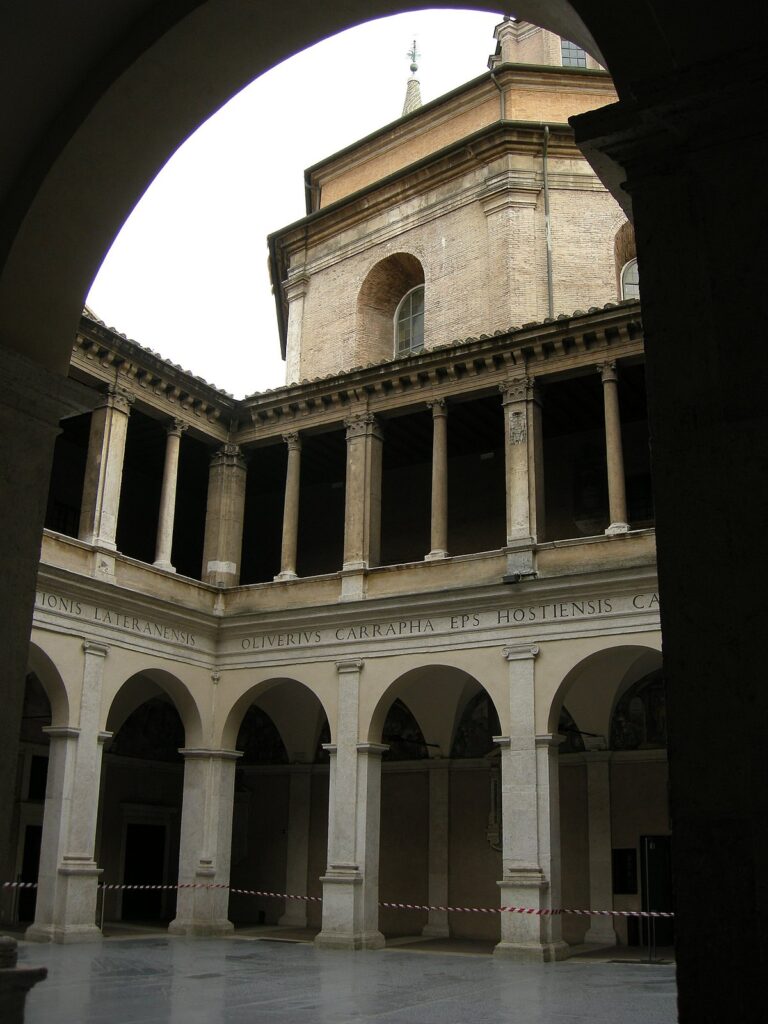
The Chiostro del Bramante, located in the heart of Rome, is one of the masterpieces of Italian Renaissance architecture. Commissioned by Cardinal Oliviero Carafa around 1500 and designed by Donato Bramante, the cloister is a perfect example of Vitruvian harmony and proportion. Its square plan and the portico with 16 pillars form an elegant central […]
Church of San Pietro in Vincoli

San Pietro in Vincoli is a Roman Catholic basilica located on the Oppian Hill in Rome, famous for housing the tomb of Pope Julius II and the statue of Moses, a work by Michelangelo. The church is dedicated to Saint Peter and takes its name from the chains (vincoli) that, according to tradition, were used […]
