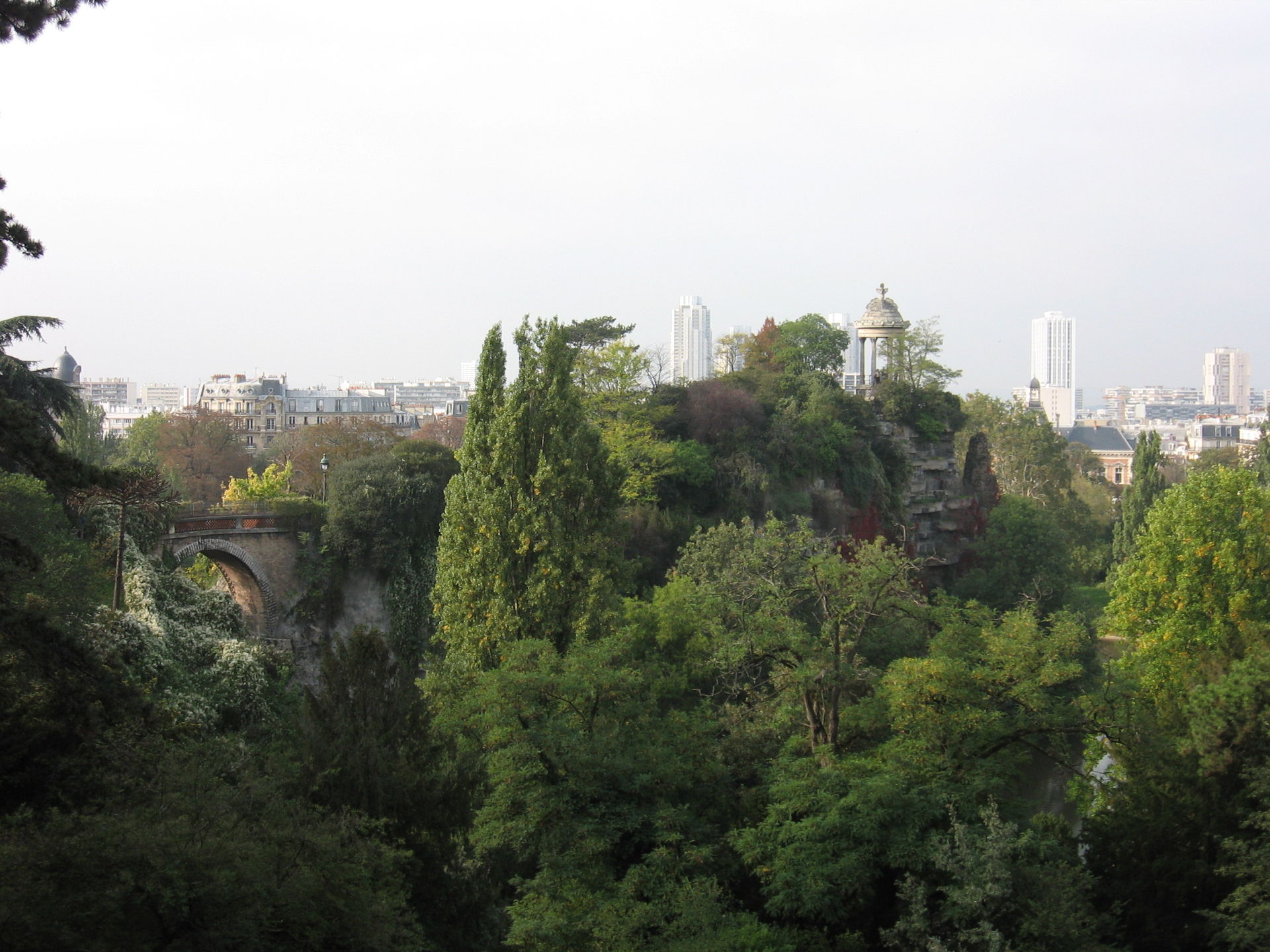
Buttes-Chaumont Park (Parc des Buttes-Chaumont)
Europe,
France,
citta,
XIX arrondissement
The Parc des Buttes-Chaumont, located in the 19th arrondissement of Paris, is one of the most picturesque and charming public parks in the city. Inaugurated on April 1, 1867 during the reign of Napoleon III, the park was designed by engineer Jean-Charles Adolphe Alphand, responsible for creating many of Paris’s major green spaces as part of Baron Haussmann’s restructuring of the city. The park covers about 25 hectares and is a masterpiece of landscape engineering, transforming a once degraded area into a green oasis in the heart of the city.
The land on which the park stands was originally a gypsum and limestone quarry, also used as a dump and disposal site for animal carcasses, giving the area a sinister and unhealthy character. The decision to create a park in this location was part of Haussmann’s broader plan to improve the living conditions of Parisians, providing recreational and healthy green spaces in the new urban areas annexed to the city.The design and construction of the Parc des Buttes-Chaumont required a huge engineering effort. Two years were needed just to shape the land, while over 200,000 cubic meters of soil were transported on site to create meadows and hills. Engineers used explosives to carve the rocks and create the park’s characteristic peaks and cliffs. One of the most spectacular features is the large cave with artificial waterfalls, a tribute to English romantic gardens, adding a picturesque and mysterious touch to the landscape.At the center of the park is the Île de la Belvédère, an artificial island in the middle of an equally artificial lake. On the island, at a height of 50 meters, stands the Temple of the Sibyl, a Roman-style temple inspired by the Temple of Vesta in Tivoli, designed by architect Gabriel Davioud. This monument offers a breathtaking panoramic view of Paris, becoming one of the favorite observation points for visitors.Another distinctive feature of the park is its bridges. The suspension bridge, designed by Gustave Eiffel, crosses the lake and connects the island to the mainland, while another stone bridge, known as the “suicide bridge,” offers a suggestive but less used passage due to its sinister reputation. These bridges, along with winding paths and sloping meadows, create a diverse and stimulating environment for walks and outdoor activities.The Parc des Buttes-Chaumont is also a place of great botanical interest. Chief gardener Jean-Pierre Barillet-Deschamps planted thousands of trees, shrubs, and flowers, transforming the landscape into a lush garden. The park is home to a variety of exotic and native species, including Lebanese cedars, Himalayan pines, and ginkgo biloba, adding a touch of exoticism and diversity to urban greenery.Culturally, the Parc des Buttes-Chaumont has always played a significant role in Parisian life. In addition to being a place for leisure and relaxation, it hosts cultural events and popular festivals. An example is the Silhouette short film festival, held every September, attracting film enthusiasts and emerging directors. Additionally, the park has been the setting for numerous films, including Éric Rohmer’s “The Aviator’s Wife,” highlighting its scenic charm.The park also has several facilities for visitors, including cafes and restaurants. One of the most famous is the Rosa Bonheur, a modern guinguette that offers a friendly environment for eating, drinking, and dancing, helping to keep alive the tradition of old taverns along the Seine.
Read More