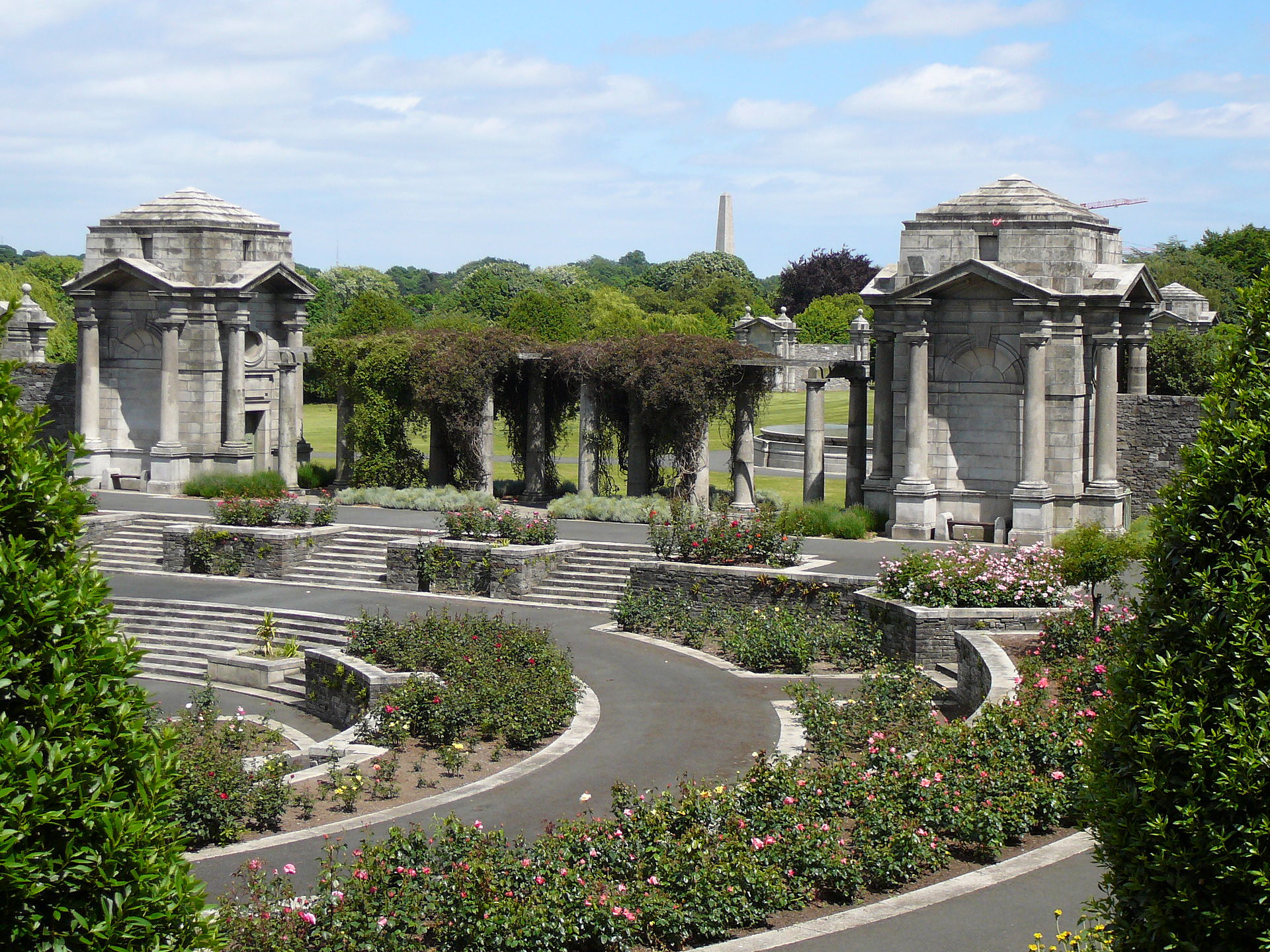
Gardens-Irish National War Memorial
Europe,
Ireland,
citta,
Islandbridge
The War Memorial Gardens, located in Islandbridge along the banks of the River Liffey in Dublin, represent one of the most solemn and evocative tributes to the Irish soldiers who fell during the First World War. Designed by the British architect Sir Edwin Lutyens, the gardens were completed and inaugurated in 1939. This green space not only honors the memory of over 49,000 Irish soldiers but also offers a place of peace and reflection for visitors.
The War Memorial Gardens cover an area of about 20 hectares and are distinguished by their classic and formal design, typical of Lutyens’ style. Upon entering the gardens, visitors are greeted by a tree-lined avenue that leads to a series of terraces and manicured lawns, surrounded by hedges and flower borders. The focal point of the garden consists of two large symmetrical quadrants, each with a large central lawn, surrounded by gravel paths and bordered by elegant flower beds. This rigorous and harmonious layout creates an atmosphere of order and serenity, ideal for contemplation.
One of the most distinctive elements of the War Memorial Gardens are the Celtic crosses and commemorative steles that dot the landscape. These monuments, carved with intricate designs and inscriptions, commemorate the Irish regiments and individual fallen soldiers. At the center of the gardens stands the great Cross of Sacrifice, an imposing stone cross that serves as the central symbol of remembrance. Its dominant position and simple elegance make it a focal point of the garden.
One of the most touching aspects of the gardens is the so-called “Circle of Remembrance,” a circular area enclosed by a low hedge, at the center of which is an urn containing soil from the battlefields of the First World War. This circle, with its symbolic connection to the land where so many soldiers lost their lives, offers a particularly intimate and solemn space for reflection and remembrance.
From a historical perspective, the War Memorial Gardens are deeply linked to the complex relationship between Ireland and Great Britain. Although many Irish fought with the British army during the First World War, the subsequent period was marked by the struggle for Irish independence and the civil war. The construction of the gardens, begun in the 1930s, took place at a time of reconciliation and recognition of the sacrifice of those Irish soldiers who had fought under the British flag. This project, carried out with the support of the Irish government, represents a gesture of respect and remembrance that transcends political divisions.
The artistic aspect of the gardens is equally significant. Sir Edwin Lutyens, one of the most important architects of the 20th century, brought his unique vision to the design of the War Memorial Gardens. Lutyens was known for his classical approach and the use of formal and symmetrical elements in his designs. In the Islandbridge gardens, he combined these elements with a strong sense of monumentality and symbolism, creating a landscape that is both beautiful and meaningful. The clean lines, balanced proportions, and skillful use of plants and architectural structures make the War Memorial Gardens an exceptional example of a commemorative garden.
An interesting anecdote concerns the participation of the local community in the maintenance and care of the gardens. Over the years, various volunteer groups have collaborated with local authorities to preserve and enhance the gardens, demonstrating a strong sense of belonging and civic engagement. This community involvement has helped keep the gardens in excellent condition and ensure that they remain a place of beauty and remembrance for future generations.
Read More