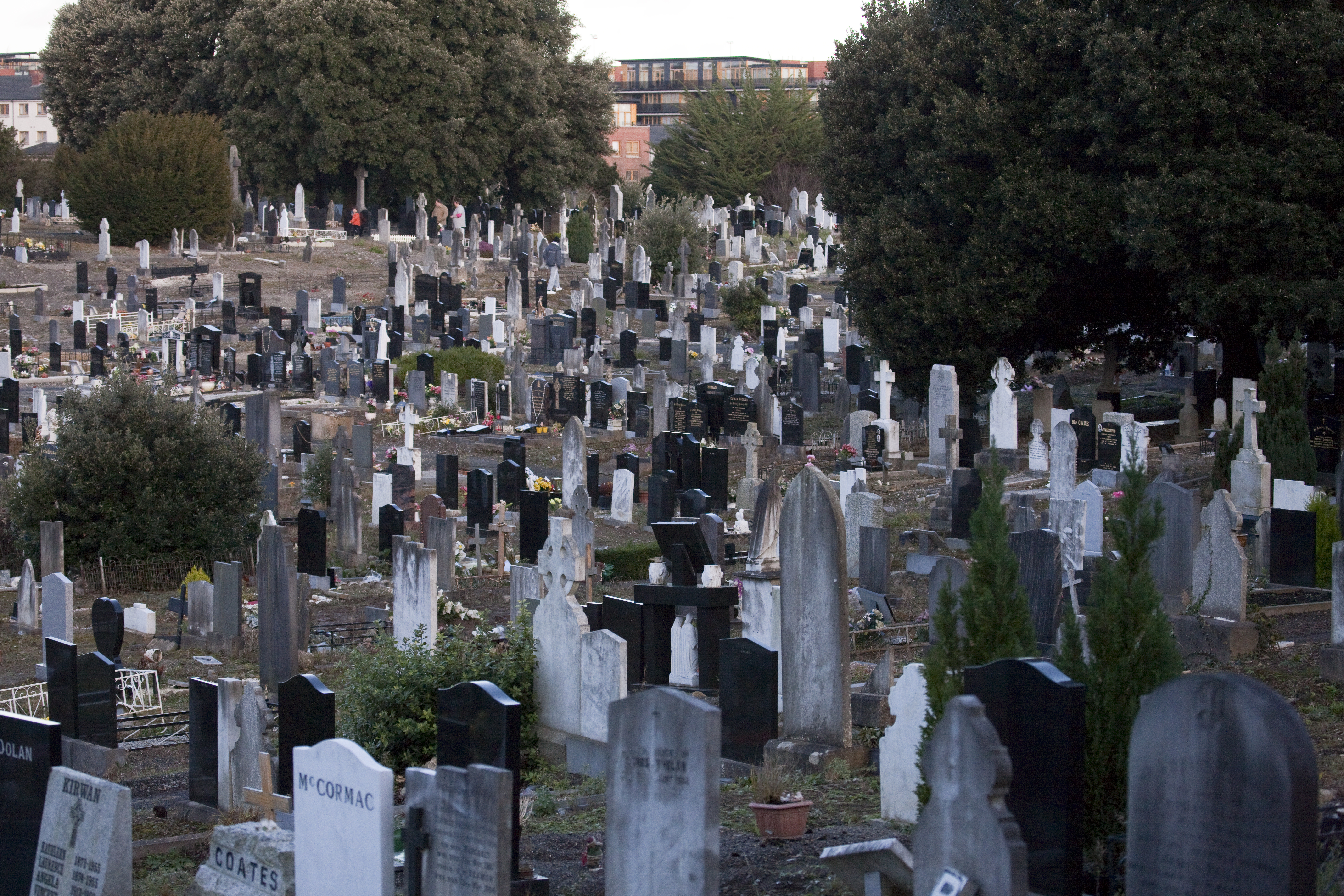
Glasnevin Cemetery
Europe,
Ireland,
citta,
Glasnevin
Glasnevin Cemetery, located in Dublin, is much more than just a cemetery: it is a place of national memory, an open-air museum, and a fundamental piece of Irish history. Founded in 1832 by Daniel O’Connell, one of Ireland’s most important political figures, the cemetery was established in response to the need for a burial place for Catholics during a period of severe religious discrimination.
Situated on 124 acres of land, Glasnevin Cemetery is the final resting place of over one and a half million people, including many key figures in Irish history. The cemetery’s architecture reflects its historical and cultural significance, with imposing mausoleums, Celtic crosses, and monuments commemorating the dead. One of the most notable features of the cemetery is the Daniel O’Connell Tower, a 51-meter-high column built in honor of the cemetery’s founder, which dominates the skyline and offers panoramic views of the city.Glasnevin Cemetery hosts the graves of many key figures in the struggle for Irish independence. Among these, the grave of Michael Collins, a revolutionary leader and one of the architects of the Anglo-Irish Treaty, is one of the most visited. The grave of Charles Stewart Parnell, another important political leader, is also located here. Parnell is remembered for his crucial role in the campaign for Irish self-governance.Another illustrious burial is Éamon de Valera, a prominent figure in 20th-century Irish history who served as the country’s president. His grave is a pilgrimage site for those wishing to pay homage to one of the architects of the Republic of Ireland. The cemetery is also the resting place of Constance Markievicz, the first woman elected to the British Parliament, and Maud Gonne, a noted revolutionary and muse of the poet W.B. Yeats. One of the cemetery’s most impressive features is its museum, the Glasnevin Museum, inaugurated in 2010. The museum offers a comprehensive overview of the cemetery’s and the nation’s history, with exhibits that include historical documents, photographs, and personal items of illustrious deceased. One of the most touching exhibitions is dedicated to the Great Irish Famine, which led to the death and emigration of millions of Irish people in the 19th century. The museum also offers guided tours that allow visitors to explore the stories behind the most famous graves.Glasnevin Cemetery is also known for its lush landscape. The wide lawns, ancient trees, and well-tended plants contribute to creating an atmosphere of peace and reflection. The Celtic crosses and intricate monuments, some of which were sculpted by famous artists, add an artistic and cultural element to the place.Safety and respect are important themes at Glasnevin. For many years, the cemetery had its own police force to ensure that the place remained sacred and respected. This reflects the importance that the Irish community attributes to the cemetery as a place of memory and honor.An interesting anecdote concerns the so-called “angel of Glasnevin.” It is said that during the construction of the cemetery, a worker discovered a statue of an angel buried in the ground. This event was interpreted as a good omen and helped to consolidate the cemetery’s reputation as a place of peace and sanctity.
Read More