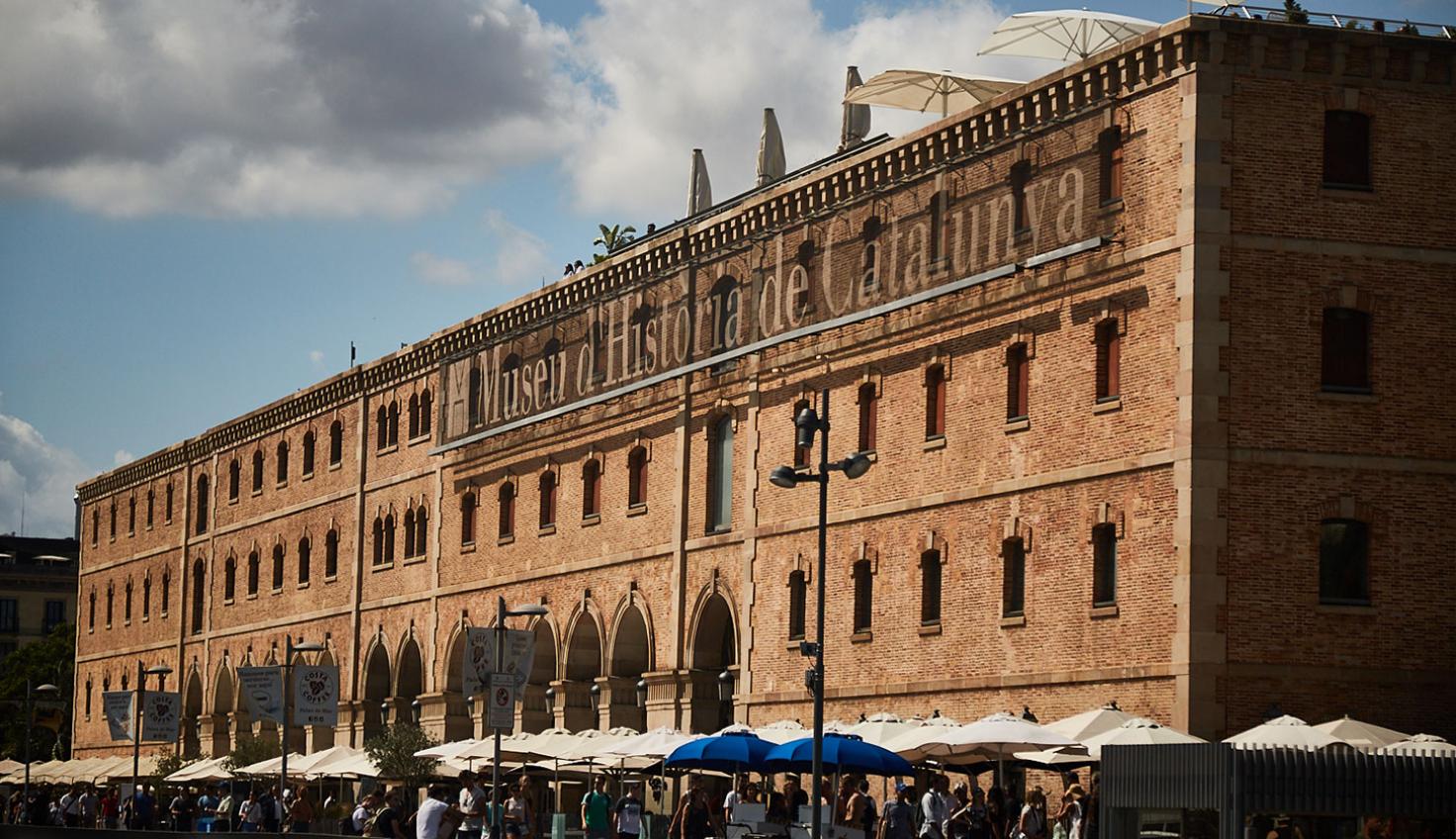
Guell Palace
Europe,
Spain,
Barcelona,
El Raval
The Palau Güell is one of the most representative buildings of Catalan modernism, designed by Antoni Gaudí and built between 1886 and 1890. Located on Carrer Nou de la Rambla, in the El Raval district of Barcelona, the palace was commissioned by the industrialist and patron Eusebi Güell, a great supporter of Gaudí, who financed many of his most iconic works.
The architecture of the Palau Güell is an explosion of creativity and innovation. Gaudí, in his oriental phase, drew inspiration from Islamic and Eastern art, incorporating elements such as pointed arches, domes, and decorative ceramics. The facade of the building, made of Garraf limestone, features a monumental central tribune supported by 21 corbels, giving the palace a majestic and imposing appearance. The entrance doors, topped with elaborate wrought iron motifs depicting snakes and the coat of arms of Catalonia, are designed to allow access to visitors on horseback or in a carriage, a detail that reflects Gaudí’s attention to functionality as well as aesthetics.
Inside, the Palau Güell is a masterpiece of luxury and sophistication. The building’s layout includes a basement for stables, a noble floor for social areas, upper floors dedicated to private apartments and service rooms, and a magnificent rooftop terrace with Gaudí’s characteristic decorative chimneys. Every interior detail has been carefully crafted, from coffered wooden and iron ceilings to intricate mosaics and stained glass windows.
One of the most fascinating features of the Palau Güell is its central hall, which extends the height of three floors, culminating in a parabolic dome decorated with wolf-mouth windows that filter light in a spectacular way. This space was used for concerts and receptions, and its acoustic design is a testament to Gaudí’s genius. On the noble floor, the reception rooms, with original furniture and sumptuous decorations, offer a glimpse of the elegance and splendor of Catalan bourgeoisie of the time.
The Palau Güell has had a tumultuous history, reflecting the social and political changes in Spain. During the Civil War, the building was used as a police station. In 1944, the palace was at risk of being dismantled and transferred to the United States, but fortunately it was acquired by the Diputació de Barcelona, which restored and preserved it as a cultural heritage. Over the years, the palace has undergone numerous restorations, the latest of which was completed in 2011, bringing it back to its original splendor.
Since 1984, the Palau Güell has been recognized as a UNESCO World Heritage Site, part of Antoni Gaudí’s works. This recognition highlights the historical and artistic importance of the palace, which continues to be one of Barcelona’s architectural gems.
Read More